Showing posts with label Oliver Stone. Show all posts

Friday, February 18, 2022

Film Babble Blog Fun Fact: Oliver Stone's JFK Flips The Script

The real Jim Garrison as Earl Warren in Oliver Stone's JFK (1991)

Oliver Stone’s 1991 conspiracy classic JFK was largely based on New Orleans District Attorney Jim Garrison’s 1988 book, On the Trail of the Assassins, that heavily criticized the Warren Commission’s handling of the assassination of JFK in the early to mid ‘60s. Garrison made a cameo in the film, JFK, as his adversary, the then Chief Justice of the United States Earl Warren.

The real Earl Warren of the infamous Warren Report in the '60s

This means that in the film, Garrison’s Warren was criticizing Garrison, played by Kevin Costner; for criticizing the Warren Report. Got that? 

There are other cases of actors or non-actors playing roles based on public figures that they oppose, but it’s getting late, and that’s all I got right now.


More later...

Saturday, January 23, 2021

R.I.P. Larry King: Legendary Broadcaster/King of Cameos


While largely known as an iconic radio and television host, the late Larry King, who just passed away earlier today at the age of 87, has been in nearly 70 movies and TV shows in small but crucial roles where he portrayed himself for the most part. So I thought that while others are celebrating his lengthy career of interviewing every imaginable celebrity from Presidents to criminals, and every kind of newsmaker there is on talk radio and CNN, we would take a look at his second career as the King of the Cameos.

King’s first foray into show business was in 1961, when at 27-years old he played a DJ (of course) named Sleepy Sam on Miami Undercover. Check out a clip featuring King from the mostly forgotten black and white crime drama that only lasted a season:


It was almost a quarter of a century later that he got his big break, one that led to him being the go-to in many comedies. In 1984, King appeared in GHOSTBUSTERS in the magazine cover montage that was a trope of many movies at the time. You know, when our heroes gain instant stardom, and we see them in a montage that shows them on the cover of every magazine? That’s right, you got it (see also: TOOTSIE).


While GHOST BUSTERS credited his name, his next motion picture gig just identified him as “TV Talk Show Host.” But since that move was the little seen, and little liked EDDIE AND THE CRUISERS II: EDDIE LIVES!, it so doesn’t matter.

King got his name credit back in his next several movie appearances: CRAZY PEOPLE, THE EXORCIST III, and DAVE. Ivan Reitman’s DAVE featured King in one of his juiciest cameos, though at the time it was most likely seen as an Oliver Stone cameo. The film involved Kevin Kline as an earnest everyman who, because of his strong resemblance, is brought in to take the place of the President, who is in a coma. Stone, at a time when the controversy over his 1991 film JFK was still in the air, the Director goes on King’s show to point out that there are distinct differences in how the President looks now compared to before his stroke. “Do you think that you’re a little paranoid, Oliver?”


King spent a good deal of the ‘90s making guest appearances on seemingly every show that aired including The Larry Sanders Show, Coach, Murder One, Murphy Brown, Spin City, Frasier, and, of course, The Simpsons.


King’s connection to the Muppets was cemented in his turns on Muppets Tonight, Sesame Street, and his allowing Kermit to guest host Larry King Live on April Fool’s Day in 1994.

During this same period, King showed up in THE LONG KISS GOODBYE, CONTACT, OPEN SEASON (not to be confused with the 2006 animated family film or its sequels), MAD CITY, PRIMARY COLORS, BULWORTH, ENEMY OF THE STATE, THE JACKYL, and the horrid oddity that is AN ALAN SMITHEE FILM: BURN HOLLYWOOD BURN.

King didn’t slow down in the next few decades, in fact, as if the Simpsons wasn’t enough, he doubled down on voicing cartoon versions of himself. In the animated 2007 Jerry Seinfeld comedy, BEE MOVIE, he appeared as Bee Larry King:


In the 2012-2016 seres, Gravity Falls, he played Wax Larry King:


But in the SHREK franchise, King played a character not based his persona: Doris, the Ugly Stepsister. King first played the part in SHREK 2 (2004), then reprised the role in SHREK THE THIRD (2007), and SHREK FOREVER AFTER (2010):


King’s cameos continued in such films as THE CONTENDER, JOHN Q, THE STEPFORD WIVES remake, a movie actually called THE REMAKE, SWING VOTE, CHLOE & THEO, THE POWER OF FEW, and something called DUDE BRO PARTY MASSACRE III, in which he played a character named Coach Handsey.

TV work during the same era was just as busy as he did more than one Law & Order series, poked fun at himself on the shows 30 Rock, Boston Legal, and 1600 Penn; got serious on multiple episodes of American Crime Story, and put in many hilarious appearances on Conan O’Brien’s TBS program, Conan, over the years.


King’s connection to the Muppets was cemented in his turns on Muppets Tonight, Sesame Street, and his allowing Kermit to guest host Larry King Live on April Fool’s Day in 1994.

King will be certainly be missed, but he left a lot behind in his stamps on so many movies and TV shows so we’ll keep seeing him pop up in unexpected (and expected) for ages. One interesting tidbit that I’m sure will delight fans of the Marvel Cinematic Universe is that comic book mastermind Stan Lee (1922-2018) portrayed King in a brief moment in IRON MAN 2:

Pretty neat to see one icon portray another, huh? I had actually forgotten about this as I’ve pretty much forgotten all of IRON MAN 2.

But back to the King:


R.I.P. Larry King (1933-1921)

More later...

Tuesday, September 20, 2016

Babblin’ ‘Bout BLAIR WITCH, SNOWDEN, & The Beatles


Clint Eastwood’s SULLY, starring Tom Hanks as that airline captain that water landed his plane in the Hudson river back in ’09, was the #1 movie at the box office this last weekend, beating out two sequels that opened last week: BLAIR WITCH and BRIDGET JONES’S BABY. I found the third BRIDGET JONES film to be a fine, just funny enough follow-up, but the third in the BLAIR WITCH franchise struck me as a bogus retread. 

Actually horror filmmaker Adam Wingard’s (YOU’RE NEXT, V/H/S) BLAIR WITCH is supposed to be seen as a direct sequel to the 1996 smash hit THE BLAIR WITCH PROJECT (the original filmmakers Daniel Myrick and Eduardo Sanchez executive produce), and we’re supposed to forget about or not count what happened in Joe Berlinger’s much maligned 2000 follow-up BOOK OF SHADOWS: BLAIR WITCH 2, which is easy for me as I’ve never seen it.

So this new entry is yet another reboot that’s also a remake (see: THE THING, ROBOCOP, INDEPENDENCE DAY: RESURGENCE, every other movie from the last five years), which deals with another group of 20-year olds getting lost deep in the woods near Burkittsville, Maryland on a quest to solve the mystery of what happened to the three people from the first movie. One of the characters, played by James Allen McCune, is the brother of the missing Heather Donahue who you may remember from this iconic image:


See? I knew you'd know that image!

McCune is joined by Callie Hernandez as his girlfriend, and another couple, Brandon Scott and Corbin Reid who all are equipped with headset cameras, GPS devices, walkie talkies, and an aerial camera drone on their hike inspired by an image on a videotape that was found in the forest by a couple of sketchy locals, played by Wes Robinson and Valore Curry.

Robinson and Curry invite themselves along on much to the annoyance of the others, but after they awaken the next morning to find those classic stick figures twined together hanging from the trees surrounding their camp, the four friends suspect the couple to be pranking them and they kick them out of their group.

If you’ve seen the first you can guess the rest – the gang tries to head back to civilization but they get even more lost and circle back to their same campsite again (just like the river in the first one), one of them disappears, and the remaining kids wind up at the same spooky house from the original, and despite more action involving tunnels and the freaky naked witch that you can only see in quick flases of light, it ends pretty much the same way.

It’s a pretty tedious exercise full of jump scares and the shakiest of shaky camerawork in the entire found footage genre. It’s been a long time since I’ve seen the first movie, and I only saw it once at the theatre (a multiplex in Greensboro if I remember correctly) but its imagery is burned into my brain as it was a fresh approach at the time. Despite all the new tech, BLAIR WITCH ‘16 doesn’t bring anything new to the table in terms of story or ideas, nor does it do anything to flesh out the series’ mythology.

We just get that there’s this supernatural, evil force that can uproot trees, change time and space, and can screw with your leg injuries (Reid sprains her ankle early on and the witch does what she can to make the wound worse just so there’s some gore) and these kids are stupid to think that they can solve any mystery about it, what happened to the previous party, and give us anything more than a bunch of jump scares. A found footage fail for sure.

I was also disappointed by Oliver Stone’s Edward Snowden biopic SNOWDEN, about the former CIA employee who in 2013 leaked tons of sensitive data about the scary extent of the United State’s mass surveillance, 
currently #4 at the box office. 


I’ve been a big fan of Stone’s work in the past (still think JFK is a masterpiece), and I love Joseph Gordon-Levitt, but their film falls way short of greatness. Pop culture critic extroadinaire Nathan Rabin once wrote that “there comes a moment in every cinephile’s intellectual and creative development when he or she comes to realize that Oliver Stone is full of shit.” And I laugh because, yeah, I remember when that happened for me (U-TURN).

But I wouldn’t say that SNOWDEN is full of shit, but just that it’s a by-the-numbers biopic that adds up to a preachy bore.

I’ll start with how takes too many liberties with its subject’s background. Stone dramatizes Snowden going through basic training as a candidate for Special Forces until he breaks his leg, but in real life he was only in the military briefly and had not undergone any training. Also Snowden’s role as a NSA security contractor is exaggerated, and the man most surely did not smuggle tons of classified CIA files on a SD card hidden inside one of the squares of his Rubik’s Cube. Actually that’s one of the better scenes in the movie but I still wasn’t buying it.

I also hear that Snowden’s relationship with his longtime girlfriend, Lindsay Mills played by Shailene Woodley, isn’t represented truthfully, but I was amused at how he becomes obsessed with the government spying on him, and everyone, through laptop webcams – one thing Stone does well is paranoia – but Woodley’s Lindsay doesn’t care and says things to him like “so what? I’ve got nothing to hide.”

By the time Gordon-Levitt morphs into the real Snowden (biopic rule #13: show the real person at the end) we’ve basically gone through all the ripped from the headlines motions and true story tropes Stone could squeeze out of the story. It does help that Stone has assembled a great cast – Gordon-Levitt is joined by the likes of Melissa Leo as filmmaker Laura Poitras, who made the Oscar-winning Snowden doc CITIZENFOUR, Zachary Quinto as journalist Glenn Greenwald, Tom Wilkinson as The Guardian writer Ewen MacAskill, and a bunch of fabricated characters or amalgams portrayed by Scott Eastwood, Logan Marshall-Green, Timothy Olyphant, Rhys Ifans and Nicolas Cage.

Stone’s SNOWDEN has noble intentions – to make a hero out of a man that exposed a great injustice – but it’s an underwhelming experience bereft of the epic angriness that gave his early work its “I’m mad as hell, and I’m not going to take this anymore” fire.

Lastly, I’m happy to report that Ron Howard’s THE BEATLES: EIGHT DAYS A WEEK – THE TOURING YEARS has been such a success that its run has been extended for another week at my local indie film venue, the Rialto Theater in Raleigh (it’ll run through September 29th). 

The wonderful rock doc, which I raved about in my review last week, is also currently available on Hulu, but I highly recommend making the pilgrimage to see it at an art house near you because the scores of great archival footage deserves to be seen on the big screen, and the 30-minute bonus film “The Beatles Live at Shea Stadium,” which looks and sounds amazing owing to its recent digital restoration, is an in-theaters-only exclusive.

More later…

Monday, October 13, 2014

KILL THE MESSENGER: The Film Babble Blog Review


KILL THE MESSENGER
(Dir. Michael Cuesta, 2014)


This thriller/biopic, now playing at an indie art house near me, comes off a bit like JFK Jr., and I’m not talking about John-John, the late offspring of John F. Kennedy. 

KILL THE MESSENGER plays felt like a lesser offspring of Oliver Stone’s 1991 classic of political paranoia in its depiction of a story based on real events involving a truth-seeking everyman uncovering a vast conspiracy involving a powerful governmental agency that could squash him like a bug. 

Here, a scruffy mustached Jeremy Renner passionately portrays investigative reporter Gary Webb, who caused quite a stir in the mid 90’s when he exposed the CIA’s involvement with the U.S. crack epidemic in a series of articles for the San Jose Mercury News.

The first half of the film, scripted by Peter Landesman (PARKLAND) has Renner's Webb following leads about drug trafficking through interviews with Michael Kenneth Williams (The Wire) as infamous '80s LA drug kingpin “Freeway” Rick Ross, Tim Blake Nelson as Ross's lawyer, Robert Patrick as an accused drug dealer whose property was seized by the feds, and Andy Garcia as an imprisoned drug lord who Renner travels to Nicaragua to speak to.

The second half deals with Webb publishing his story and initially being hailed as a hero, on both the homefront with his wife Rosemarie DeWitt and kids, and at the office with his editors (Oliver Platt and North Carolina native Mary Elizabeth Winstead), but then getting investigated and gradually discredited by the CIA. 

These sequences of Webb's decline, involving his estrangement from his family and being holed up in a sleazy hotel room with its walls lined with photos, newspaper articles, strings-tying-suspects-together, etc, (you know, like crazy yet righteous people like Carrie from Homeland do?), are tedious in their over familiarity. 

The case that the CIA worked with Central American drug dealers with profits from cocaine sales in the U.S. used to arm the anti-communist Contras in Nicaragua is a compelling one, but we're never given more of a breakdown of the mechanics that were at play. We, like Renner, are just supposed to take folks' words on these things, but a scene that intensely takes us into the operation would've been nice. I don't feel like I learned anything more about the inside workings than I did seeing the trailer.

Director Cuesta, who’s produced and directed episodes of Homeland, Dexter, and Six Feet Under, gets a good gritty mood going, but the power of the material dims as it tracks Webb’s decline. It sort of peters out.

And, again, like JFK, it has a scroll of text at the end that tells us that this guy was right about everything all along.

On the surface, this adaptation of Nick Schou’s 2006 book “Kill the Messenger: How the CIA's Crack-cocaine Controversy Destroyed Journalist Gary Web” and Webb’s “Dark Alliance” series of articles, is a solidly structured film with a powerful lead performance by Renner (possibly his best to date), but its overdone conspiracy thriller framework renders it into just a cinematic footnote to what really went down.

At least this'll have moviegoers looking up stuff on the real guy online. Maybe there they'll actually learn something.

More later...

Tuesday, March 04, 2014

New Releases On Blu Ray & DVD: 3/4/14


It what might seem like a piece of finely tuned timing, but what's more likely a bit of luck, Steve McQueen's 12 YEARS A SLAVE hits home video today fresh from winning the Academy Award for Best Picture Sunday night. The acclaimed historical drama, which also won Oscars for Best Supporting Actress (Lupita Nyong'o) and Best Adapted Screenplay (John Ridley) just like I predicted, is now available in 1-disc Blu ray and DVD editions. Special Features: a over 40 minute Making Of mini-doc entitled “12 YEARS A SLAVE: A Historical Portrait,” a 7 minute behind-the-scenes featurette (“The Team”), and a 4 minute bit about the music of Hans Zimmer in the film (“The Score”). Read my review from when the film first came out last year here.

The other heavy hitter out this week is Francis Lawrence's sci-fi sequel smash starring Jennifer Lawrence, THE HUNGER GAMES: CATCHING FIRE, in 2-disc Blu ray and single disc DVD editions. Special Features include an Audio Commentary with Director Francis Lawrence and Producer Nina Jacobson, a 2 hour and 24 minute doc made up of 9 Making Of featurettes, a little over 4 minutes of Deleted Scenes, and, for some reason, a almost 7 minute Sneak Peak into the upcoming Neil Burger movie DIVERGENT.

Spike Lee's remake of Chan-wook Park's 2003 cult classic OLDBOY also drops today. I was among many that missed the film that starred Josh Brolin, Elizabeth Olsen, and Samuel L. Jackson, as it flopped when it was released theatrically last Thanksgiving, but now we can all catch up with the release that's packaged with over 10 minutes of Extended & Alternate Scenes, The Making of Oldboy (17 min.), Talking Heads (2 minutes and 43 seconds of Cast and crew sound bites), something called Transformation (2:11), and a Workout Video (0:49).

Having never seen any of the FAST AND FURIOUS films, and being oblivious to him in anything else, Eric Heisserer's HOURS, also out today on Blu ray and DVD, was my first time seeing a performance by the late Paul Walker (I did see FLAGS OF OUR FATHERS, but don't remember him in it). Walker puts in some admirable acting in this thriller set in a hospital in New Orleans during Hurricane Katrina, but the film strains unsuccessfully for whatever suspense it can think to wring out of its spare premise concerning a man trying to protect his just born baby. Special Features: “All I Feel Is You” music video by Safran and a PSA for Paul Walker's charity Reach Out.

Another B-movie available this week is Ruairi Robinson's sci-fi thriller THE LAST DAYS ON MARS, starring Liev Schreiber, Elias Koteas, and Olivia Williams. It's no great shakes, as most movies set on Mars usually go, but at least it's a watchable retread of tropes from classics like ALIEN, and THE THING. Special Features: “The Making of THE LAST DAYS ON MARS” (15 min.), “Analyzing the Visual Effects” (6 min.), Behind the Scenes Comparisons (4 min.), and AXIS TV: A Look at The Last Days on Mars (3 min.).

Other notable releases today include Richard E. Robbins' documentary GIRL RISING (only on DVD), concerning the global campaign for girls' education; Wong Kar Wai's Hong Kong-Chinese martial arts drama THE GRANDMASTER, Tze Chun's crime thriller COLD COMES THE NIGHT, starring Alice Eve and Bryan Cranston;  
Giulio Paradisi's 1979 psychological thriller THE VISITOR, and Jamie Payne's Doctor Who TV event THE TIME OF THE DOCTOR, which was the 800th episode of the long running British series, and the last to feature Matt Smith as the iconic character.

Also on the TV front there's Venture Bros: Complete Season Five, Oliver Stone's 2012 10-episode Showtime series Untold History of the United States, Mr. and Mrs. Murder Series 1, Agatha Christie's Poirot: Series 11, Ancient Aliens Season 5 Volume 2 and the seventh season of the classic '60s Clint Eastwood Western series Rawhide gets released in 2 separate multi-disc volumes (DVD only).

More later...

Friday, November 22, 2013

The Cinematic Legacy Of The Kennedy Assassination

As today is the 50th anniversary of the JFK assassination, Film Babble Blog looks back at the cinematic legacy of the history changing event:


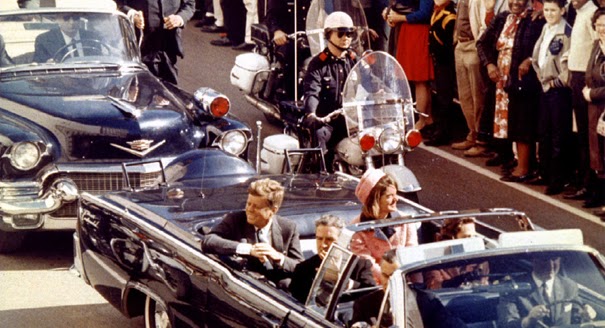
I’m 44 years old, so I wasn’t alive when President John F. Kennedy was assassinated. But since the events of that tragic day in November of 1963, 50 years ago today, have been so thoroughly covered from every conceivable angle in countless movies, TV shows, and documentaries, not only do I feel like I was alive then; I feel as if I had actually been there smack dab in the middle of Dealey Plaza, Dallas, Texas, on that fateful date with a better view of the historic hit than Abraham Zapruder had.

Oliver Stone’s 1991 conspiracy theory epic, JFK is largely to blame for planting such vivid yet false memories in my psyche, but it was an obscure film that I saw on television when I was a kid that laid the foundation. It was David Miller’s 1973 political thriller EXECUTIVE ACTION, the first film * produced about the assassination.


Told from the point of view of the evil men in power, including Burt Lancaster and Robert Ryan as shadowy co-conspirators who plot Kennedy’s killing right down to the last detail, the low budget docudrama postulates many of the same theories, mostly having to do with alleged murderer Lee Harvey Oswald being a patsy, that Stone would later do up with higher production values in JFK.

EXECUTIVE ACTION largely drew upon the work of New York Legislator Mark Lane, whose 1966 bestselling book “Rush To Judgement” heavily criticized the Warren Commission’s conclusion that Oswald acted alone. Throughout the ‘70s, the consensus that something much more sinister was up than what the public record allowed, was evident all over pop culture.

Alan J. Pakula's THE PARALLAX VIEW (1974) defined the label “paranoid thriller” (see also Sydney Pollack's THREE DAYS OF THE CONDOR, 1975) by building upon assassination theories with a premise about an evil company (the Parallax Corporation) that's behind pivotal political plots. Warren Beatty plays a reporter that tries to unravel the conspiracy, but ends up being unwittingly trained to be an assassin himself. A scene in which Beatty is brainwashed by a recruiting film, satirized in Ben Stiller's ZOOLANDER, gives a good idea of the movie's sinister tone:


In Woody Allen’s Oscar winning 1977 comedy ANNIE HALL, comedian protagonist Alvy Singer obsesses over the possibility that there was a second assassin to the point that a girl he briefly dates (Carol Kane) states bluntly the he’s “using this conspiracy theory as an excuse to avoid having sex” with her. This surely received a lot of laughter from hip in-the-know audiences at the time, since post Watergate distrust of the government was at an all time high.

That same year, John Landis' KENTUCKY FRIED MOVIE, the first film to feature the comedy stylings of ZAZ (David Zucker, Jim Abrahams, and Jerry Zucker) of AIRPLANE! and NAKED GUN fame included a commercial parody for a fictitious Parker Brothers' board game called Scot Free. A four member family is seated around a kitchen table playing the game, made up of a miniature mock-up of Dealey Plaza, as a voice-over announcer sets up the premise: “Your team has just assassinated the President - can you get away scot free? Shake the dice and see...


A few years later, a surreal and somewhat comical take on the clusterfuck of conspiracy theories came along: William Richert’s WINTER KILLS (1979), starring Jeff Bridges as Nick Keegan, the brother of a slain President, of course, the victim of secret forces. The controversial film didn’t get much of a theatrical run, VHS copies of it were rare, and its out of print now on DVD (a 2003 edition of it can be found on eBay) so it’s a bit of obscure title that few people have heard of, but it’s well worth seeking out.

Bridges’ very un-Dude performance as the Robert Kennedy-ish hero neatly heads an impressive cast including John Huston, Anthony Perkins, Sterling Hayden, Elizabeth Taylor and Toshirô Mifune in an outlandish scenario yet again involving evil men pulling the strings from behind the scenes. The usual suspects of mobsters, the military, and power hungry oil barons are trotted out, as Bridges investigates the wide-ranging suspected cover-up.

Apart from the TV miniseries Kennedy starring Martin Sheen, and various PBS documentaries, the ‘80s were relatively free of movie treatments of the mysteries surrounding the Kennedy assassination, but it’s funny to note that in Ron Shelton's BULL DURHAM (1988), Kevin Costner’s character Crash Davis delivered a speech to Susan Sarandon listing his core beliefs, and one of them was “I believe Lee Harvey Oswald acted alone.”

A few years later, Costner would be speechifying the complete opposite at length as New Orleans investigator Jim Garrison in Stone’s before mentioned opus, which recently played at the Crossroads in Cary to mark the anniversary. 


Stone’s movie is the biggest production to date dealing with the events of November 22nd, 1963, and definitely the most star studded. The film is largely accountable for the Six Degrees of Kevin Bacon parlor game because Bacon appears alongside a cast that features seemingly everybody who was working in the early ‘90s including such A-listers as Tommy Lee Jones, John Candy, Walter Matthau, Jack Lemmon, Joe Pesci, Gary Oldman, Michael Rooker, Donald Sutherland, Ed Asner, Sissy Spacek, and so on.

These folks help distill the information Stone displays down to further his theory, informed by decades of other’s research and speculation, that Kennedy was killed by a conspiracy that stretched through the military industrial complex, involving the CIA, and anti-Castro Cuban nationals. Newsweek welcomed Stone’s movie with a cover story that had the headline: “The Twisted Truth of ‘JFK’: Why Oliver Stone’s New Movie Can’t Be Trusted,” yet in the same issue had a very favorable review of the film by David Ansen. That sums it up neatly: JFK is an entertaining and thought provoking movie, but it’s just a movie, it shouldn’t be taken as historical record.

In the years after JFK, Danny Aiello played Jack Ruby, the Texas nightclub owner who shot and killed Oswald in RUBY, Clint Eastwood played a Secret Service agent who was in Kennedy’s detail that day in Dallas in IN THE LINE OF FIRE (1993), and the long running Fox television program The X-Files revealed that its chief antagonist, the Smoking Man played by William B. Davis, was the real gunman who shot the President from inside a sewer drain along the route of the motorcade.

Yep, JFK’s tagline, “The story that won’t go away,” really is truth in advertising.

More recently, Peter Landesman’s drama PARKLAND, concerning the aftermath of the assassination with another cast of big names (Paul Giamatti, Billy Bob Thornton, Zac Effron) partly set at Parkland Hospital where Kennedy’s body was taken after the shooting, played briefly last September at the Raleigh Grande. The film effectively captures the chaos and confusion in the air on Nov. 22, 1963 and the days after, but it’s not concerned at all with conspiracy, and it doesn’t really add anything to the cinematic history of the world-changing events of that date.

Neither does the National Geographic Channel’s telefilm adaptation of Bill O’ Reilly’s best seller “Killing Kennedy,” which premiered earlier this month, though there’s some fun to be had watching Rob Lowe take on the President’s Boston accent. O’Reilly isn’t a fan of conspiracy theories so it’s a pretty dry run through the facts.

We may never get the answers to the questions about what really went down that day, but one thing’s for sure: whether it’s another feature film, a new documentary (there are tons of them on cable these days), or an episode of a ‘60s-set TV show (Mad Men did their Nov. 22, 1963 episode in their third season), we are destined to relive the JFK assassination again and again until we shuffle off this mortal coil.

* Mel Stuart's 1964 documentary FOUR DAYS IN NOVEMBER was technically the first film produced about the assassination, but this essay concerns the dramatizations of the event.

More later...

Sunday, September 26, 2010

WALL STREET: MONEY NEVER SLEEPS: The Film Babble Blog Review


(Dir. Oliver Stone, 2010)


Spoiler Alert!: This review gives away a number of key plot points because, well, I just don’t care.

Despite that last year I wrote that a sequel to Oliver Stone’s seminal 1987 WALL STREET was one of 10 sequels to classic movies that should not happen, I still had a tiny sliver of hope inside that the controversial director might pull off another timely indictment of America’s financial system.

Sadly, the return of Gordon Gekko to the silver screen is no such film. It’s as unnecessary a retread as BLUES BROTHERS 2000, which incidentally also began with the prison release of a major character.

In 2002, Michael Douglas as Gekko, 67 years old with his lion's mane of hair now gray, walks out of Sing Sing Maximum Security Prison after serving 8 years to find nobody waiting for him. The camera circles his head to let this sink in.

The film flashes forward to 2008 and for a while it’s Shia LaBeouf’s movie. LaBeouf is an ambitious trader – think Charlie Sheen in the first film but with more ethics – engaged to Douglas’ activist blogger daughter (Carey Mulligan). LaBeouf’s mentor (Frank Langella) at his firm commits suicide after rampant rumors cause the company’s stock to crash.

LaBeouf suspects Josh Brolin, as an old school Gekko-ish hedge fund manager, to be the source of the rumors. Going behind Mulligan’s back, LaBeouf consults with Douglas who wants to be close to his daughter again.

Mulligan wants nothing to do with her father. She blames him for the overdose death of her brother and she’s vehemently against the Wall Street world which makes it hard to believe that she’s surprised to find out that her fiancé is a “Wall Street guy.”

LaBeouf wants to avenge Langella, make a name for himself, and sincerely help a renewable fusion-energy company run by the always nice to see Austin Pendleton – in the same manner that Sheen wanted to help out his father’s ailing airline.

Upon learning that Douglas set his daughter up with a Swiss trust fund worth $100 million, LaBeouf finds himself caught in a web of convoluted double crossings.

Stone uses every visual trick up his sleeve to shape this material – at a point in one of several flashy montages full of split screens, tangled neon cable news ticker tape, and computer animation I felt like I was trapped in a MSNBC hall of mirrors.

The problem is that what made the first movie great is that Gordon Gekko was not a redeemable character. He was a symbol of corporate evil and a necessary one, for there are horrible fiscal creatures out there that destroy thousands of people’s lives with no remorse.

If Gekko truly isn’t a sociopath (as his daughter calls him early on), but a visionary that predicts the economic collapse in 2008 and can be won over by a disc containing his future grandson’s ultrasound – what does he symbolize now?

Douglas’s Oscar winning performance of Gekko in the first film was named by AFI as number 24 of the top 50 movie villains of all time in 2003. After his defanged depiction here that number will surely drop next time they update the list.

It’s understandable that Stone and Douglas wanted to revisit this terrain, but with its predictable plot and pat happy ending this is more than a missed opportunity – it’s a failed follow-up of epic proportions.

One of the only enjoyable elements is the soundtrack provided by David Byrne and Brian Eno. As the first film ended with the Talking Heads’ “This Must Be the Place (Naive Melody)”, this one obviously tries to match the mood with a fine selection of the duo’s collaborations. When these melodies appear it’s the only time that this film feels anywhere near the league of the original.

Beyond that, MONEY NEVER SLEEPS (awful title) has little point to it, except maybe to unleash a bunch of new Gekko-isms on the public.

Of the many so called pearls of wisdom the slick slimy Gekko spouts - “Idealism kills every deal” – sticks out. By sparing us the true cutthroat nature of the beast in favor of trite sentimentality, the deal is definitely dead as a doornail here.

More later...

Saturday, October 10, 2009

Without A Hitch - 10 Definitive Directors' Cameos In Their Own Movies


As film geeks throughout the blogosphere well know, an appearance by a director in their own film is a tradition established by Alfred Hitchcock. Hitch (or “Cock” as Teri Garr once claimed she called him to Francois Truffaut) had brief but notable appearances in 37 of his 52 films. 

Obviously excluding those who act in sizable roles in their own films (Woody Allen, Sylvester Stallone, Orson Welles, etc.) these are my favorites of the film maker folks that followed in Hitch's footsteps:

1. Martin Scorsese in TAXI DRIVER (1976)


Scorsese has had brief bit cameos in a lot of his movies but it's this appearance credited as "Passenger watching silhouette" that makes the biggest impression. 

As a nervous gun totting cuckolded husband, Scorsese tells his cabbie Travis Bickle (Robert De Niro) to pull over and stay parked with the meter running outside the building where his wife is with another man. He talks about his revenge fantasy involving his 44 Magnum in the only scene in the movie in which we are creeped out by somebody other than the title character. 

What puts this at the top of the list is that Scorsese actually shows some acting chops and a persuasive presence. His later performances in other's movies, particularly Akira Kurosawa's DREAMS and Robert Redford's QUIZ SHOW, confirm TAXI DRIVER's hinted at prowess. Incidentally Scorsese can also be seen in a daylight street scene shot earlier in the film.

2. John Huston in THE TREASURE OF SIERRE MADRE (1948) Another American master who appeared in many movies, his own and others', Huston stole a short but sweet scene from star Humphrey Bogart in this undeniable classic. Bogart's down on his luck character Fred C. Dobbs makes the mistake of trying to bum money 3 times from Huston as an "American in Tampico in white suit."

Huston reluctantly complies but warns: "But from now on, you have to make your way through life without my assistance."

Luckily this was nothing but a movie line - Bogart and Huston assisted each other on a couple more classics afterwards (KEY LARGO and THE AFRICAN QUEEN).

3. Roman Polanski in CHINATOWN (1974) Perhaps it's been all the op ed pieces on Polanski lately (Sometimes that have the same screen capture I have here) that helped to inspire this list but whatever the case this is a colossally classic cameo. In less than a minute of screen time, as a thug that Jack Nicholson's Jake Gittes dismisses as a "midget", Polanski convinces us that he actually slices Nicholson's nose with a switchblade. It's a moment that's impossible to forget:


4. George Lucas in STAR WARS: EPISODE III - REVENGE OF THE SITH (2005) This is movie director as extra. For a member of a crowd scene in the last STAR WARS series entry (or the third if you're into the revisionist re-jiggling thing), Lucas got himself decked out in alien garb and gave himself a name: Baron Papanoida. There's an oddly lengthy bio at IMDb. And yes, there's an action figure too.

5. Richard Linklater in SLACKER (1994) Linklater's role as "Should Have Stayed at Bus Station" sets into motion the stream of self consciousness exercise that he geared the movie to be:


It's quite a loose likable persona that Linklater affects - one that kicks off his film career and also appears in animated form in WAKING LIFE (2001) - a sort of sequel (or at least spiritual follow-up) to SLACKER.

6. Hal Ashby in HAROLD AND MAUDE (1971)


Film babble blog favorite Ashby also does the "movie director as extra" thing as a hippy freak at a carnival in his counter culture cult classic. Of course, he was just dressed as usual and it's not really a cameo; more of a brief shot that captures the director as a random passerby watching a mechanical toy train with Harold (Bud Cort) and Maude (Ruth Gordon).

Ashby also shows up doing the extra thing again in a newsroom in BEING THERE (1980) - something I noticed just recently after missing it for years on many repeated viewings.


7. Francis Ford Coppola in APOCALYPSE NOW (1979) So he's the "Director of TV Crew" who barks orders at the soldiers as they run through his shot - is it an exaggeration of Coppola's ego or the real thing? You decide:


8. David Lynch in TWIN PEAKS: FIRE WALK WITH ME (1992) Lynch has done a number of walk on parts in his films but here he gives himself an actual character: FBI Regional Bureau Chief Gordon Cole who Special Agent Dale Cooper (Kyle Machlachlan) reports to. Lynch's Gordon appeared on the TV series a few blink and miss them times and his bit for the prequel/origin story/whatever movie is pretty meager. So what gets him on this list? I guess it's that a normal office scenario is skewed by the likes of David Bowie and flashes of a white faced pointy nosed circus wack job or whatever dancing around and this time Lynch himself is in the midst of it. Welcome to my nightmare, indeed:


9. Oliver Stone in WALL STREET (1987)


Yet another director that has taken bit or extra roles in multiple movies, Stone does a split screen sound bite appearance as a broker on the phone in one of the film's many frenetic montages. No word whether he'll reprise the role for the sequel.

10. Sam Raimi in THE EVIL DEAD TRILOGY (1981-1992) As documented by AMC Filmsite, Sam Raimi appeared: 1981: as a Hitchhiking Fisherman and the Voice of the Evil Force 1987: as a Medieval Soldier; and 1993: as a Knight in Sweatshirt and Sneakers, who assured Ash (Bruce Campbell): "You can count on my steel."

Peter Jackson pulled the same stunt by appearing in all 3 LORD OF THE RINGS movies.

More later...

Tuesday, September 01, 2009

10 Movie Soundtracks That Think Outside Of The Box Office


Welcome to Soundtrack September! All month long, with the help of some special guest bloggers and readers, I’m going to be celebrating the world of original motion picture soundtrack recordings. There will still be the usual array of reviews of current movies and other whatnot but they will be surrounded by soundtrack centered posts.

Im kicking off Soundtrack September with this list of soundtracks that weren't content to just be simple collections of score selections or pop song tracks. They featured dialogue excerpts as tracks - sometimes full chucks of audio from the composite track of the film instead of the standard isolated music track.

Often these albums contain material that's not in the movie they represent - different versions of songs, cut lines from post production, and new voice-overs. In their reshaping of the movie material they became works of art in their own right. Here are my 10 favorites from the many soundtracks out there that think outside the box office:

1. THE MONKEES: HEAD (Colgems Records 1968/Rhino 1994) The Monkees only theatrical release was a critical and commercial flop on original release but its picked up a well deserved cult following over the years in no small thanks to its psychedelic soundtrack (pictured at the top of this post). 

It's a merry mishmash in which seven songs (including 
The Porpoise Song, As We Go Along, and Can You Dig It) emerge out of the chaos of sound effects, repeated out-of-context lines (as if there's a context in the film) and assorted trippy effects reportedly under the influence of Frank Zappa (who has a cameo in the movie and the album). The original album did not feature Mike Nesmith's Circle Sky performed live in the film - it substituted an inferior studio take of the song. Happily, a 90s Rhino re-release restored the ferocious live version as well as a nice handful of bonus tracks (including a cool radio spot).


The icing on the cake? The Original Album Coordinator who did the bulk of the vigorous editing on this project: Jack Nicholson (co-screenwriter and producer of HEAD seen above with the Monkees).

2. RAIDERS OF THE LOST ARK: THE MOVIE ON RECORD (Columbia Records, 1981)


In the late 70s and early 80s a lot of story of albums were produced of the STAR WARS films, Disney features, Muppet movies, etc. that feature audio excerpts with a 40s style narrator guiding listeners through. For the first Indiana Jones adventure a soundtrack was released separate from the one of the score by composer John Williams. 

Billed "The Movie On Record, it was an album described as containing Actual Dialogue, Music, and Sound Effects but most importantly - no narration. Four time Academy Award winner Sound Designer Ben Burtt (creator of the voice of WALL-E among other iconic work) admitted in an interview that much of this album was made from little of the original soundtrack; he recorded new effects and recreated the dialogue with the film's cast as voice actors much like old radio shows. The album won a Grammy for Best Spoken Word LP in 1983.

3. THE ALBUM OF THE SOUNDTRACK OF THE TRAILER OF THE FILM OF MONTY PYTHON AND THE HOLY GRAIL (Arista, 1975) This is only a soundtrack in the loosest sense - approximately 40% of it is movie material; the other 60% has the Pythons bogusly broadcasting from a fictional theater (The Classic Silbury Hill) for the premiere of the film. John Cleese plays a reporter who talks over the opening scene with patrons telling him to shut up, the production is halted while the projectionist fights a grizzly bear for the next reel, an announcer (Graham Chapman) repeatedly tells us that this is the Executive Version of the record, and so on.

The records of the Monty Python films that followed - LIFE OF BRIAN and THE MEANING OF LIFE had a bit of this embellishing but not with the whole team and to the extreme of this supremely silly yet essential soundtrack.

4. APOCALYPSE NOW (Warner Brothers, 1979) This soundtrack is pretty much the full composite track of the motion picture spread over two records. Its a trippy absorbing listen that's worth seeking out. The soundtrack for the REDUX version (2001) removes the dialogue bits and presents composer Carmine Coppola's score, along with The Doors The End and Flash Cadillac's Suzy Q, but I prefer the original recording. It reminds me of the days before home video when a soundtrack was all one had to invoke the mood of one's favorite movie.

Removed from the imagery, Martin Sheens voice over narration works just as well on record as it does in the film, the jungle sounds surround the listener, and Marlon Brando's haunting the horror...the horror" evocation echo in the psyche. Or maybe that's the Thai sticks talking...

5. NATURAL BORN KILLERS: A SOUNDTRACK FOR AN OLIVER STONE FILM (Interscope Records 1994)


I suggested to Oliver (Stone) to try to turn the soundtrack into a collage-of-sound, kind of the way the movie used music: make edits, add dialogue, and make it something interesting, rather than a bunch of previously released music. - Nine Inch Nails founder Trent Reznor in an interview with MTV.

As producer/compiler Reznor provides another absorbing listen and one that introduced many to Leonard Cohen via two stellar songs off of his 1992 album The Future. My only complaint is Reznor mixing a bit of Woody Harrelson and Juliette Lewis dialogue on top of Bob Dylan's cover of the '50s standard You Belong To Me. Such a thing just should not be done.

6. THE ADVENTURES OF BOB & DOUG McKENZIE IN STRANGE BREW (Polygram Records, 1983) The album cover denotes Excerpts From The Original Sountrack so much like the MONTY PYTHON AND THE HOLY GRAIL album this functions as a comedy record in its own right. The success of Rick Moranis and Dave Thomas's Great White North record paved the way for the SCTV characters of Canadian descent to enter the world of movies, so its kind of funny to have Moranis stress more than once that this that this is not their second album - it's the soundtrack album.

Funny because they never made another album and with all the additional material here they might as well consider it their second album. As a comedy record it's a good one - some bits from the movie work better disembodied from the visuals and the track Shakespeare Horked Our Script amusingly calls attention to the fact they stole the basic narrative from Hamlet. It's never been released officially on CD but like much on this list it can be found on the internets or in used record bins.

7. PULP FICTION (MCA Records, 1994)


From RESERVOIR DOGS to DEATH PROOF, Tarantino's soundtracks have featured dialogue tracks (INGLOURIOUS BASTERDS is the first that doesn't) but PULP FICTION is by far the most popular - it seems everyone I knew had this in their CD collection in the 90s. It's a hip movie mix; tracks by Urge Overkill, Dusty Springfield, and Kool & The Gang rub shoulders with John Travolta's Royale with cheese bit, Bruce Williss immortal "Zed's dead, baby", and Samuel L. Jackson's Ezekiel 25:17. 15 years after the movie, these tracks are still effective - program them into an iPod shuffle and see for yourself.

8. GOOD MORNING, VIETNAM (A & M Records, 1988) Sure, the comedy of Robin Williams is far from hip these days but back in the day (the late 80s) his routines were quoted ad nauseum. The rapid fire lines from his starring turn in Barry Levinsons Vietnam-set dramedy were no exception. The dominance of James BrownI Feel Good (I Got You) in family feel-good comedies (or at least their trailers) can be traced to this film but don't hold that against it. Era songs by Louis Armstrong, The Marvelettes, and the Beach Boys make up the playlist of Williams as Armed Forces Radio Services DJ Adrian Cronauer. Incidentally the weekly NPR program Sound Opinions uses the sound bite of Williams This is not a test, this is rock 'n roll! in their opening to this day.

9. UHF: ORIGINAL MOTION PICTURE SOUNDTRACK AND OTHER STUFF (Warner Brothers, 1989) Nobody would expect a soundtrack from a Weird Al Yankovic movie (his only movie) to play by soundtrack rules and this hodgepodge sure doesnt. It makes this list because of tracks directly from the film like the commercial parody Spatula City and the phony trailer for Gandhi II which make great compilation fillers or fodder for college DJs. However the non movie related tracks like a spoof of R.E.M.'s Stand called Spam and Generic Blues are just throw-away Weird Al but they still dont disqualify it.

10. BONNIE AND CLYDE (Collector's Choice, 2009) Though its not the first soundtrack album to feature dialogue - that would be THE GREAT ESCAPE - BONNIE AND CLYDE provides the template for the composite movie mix that Reznor and Tarantino would run with. The dialogue tracks offer cushioning and punctuation for the musical score - as spare as they are. Warren Beatty and Faye Dunaways exchanges are enhanced by the then very innovative presentation on vinyl. Its a hard to come by record nowadays, but again, one worth seeking out.

Okay! There are many more soundtracks that feature dialogue in an inventive mix (PATTON, ANIMAL HOUSE, BLADE RUNNER, etc.) so if you have a favorite - please send it on. 

Also if you have soundtrack favorites of any kind (classical scores, pop songs, musicals, etc.) please email me (filmbabbleblog@gmail.com) your favorites (instead of leaving them as comments on this post please) and I may include them this month during Soundtrack September! 

More later...