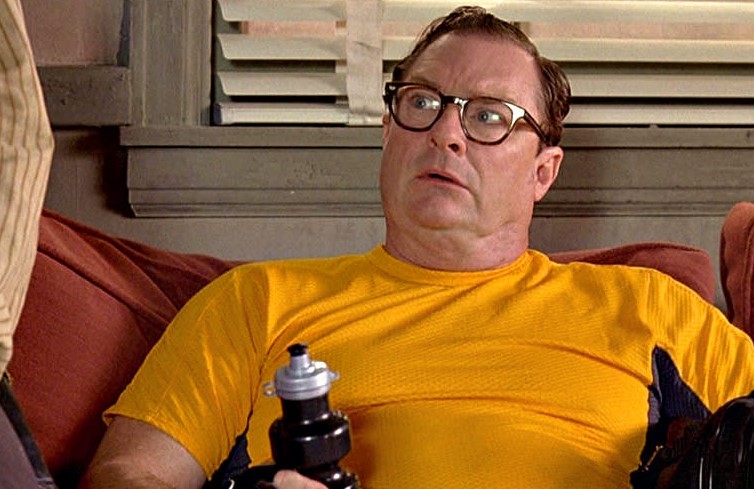
True movie and TV fans know this guy as he has well over 200 credits mostly in small parts (mostly as corrupt cops or middle men), but he owned his starring part in the Coen brothers’ 1984 debut BLOOD SIMPLE. From his first film role in ALICE'S RESTAURANT through appearances in everything from PLANET OF THE APES and AIRPORT sequels to classics like SLAP SHOT, THE JERK (the madman that shoots at Steve Martin’s Navin R. Johnson!), BLADE RUNNER, and SERPICO the guy put in memorably crusty work. Film critic legend, Roger Ebert once wrote, “No movie featuring either Harry Dean Stanton or M. Emmet Walsh in a supporting role can be altogether bad.” Amen.
More later...
Showing posts with label Coen Brothers. Show all posts
Wednesday, March 20, 2024
R.I.P. M. Emmet Walsh (1935-2024)
Labels:
Coen Brothers,
M. Emmet Walsh,
Roger Ebert,
Steve Martin,
The Jerk
Tuesday, June 02, 2020
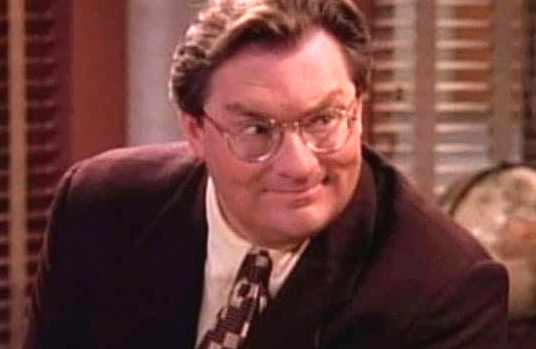
Actors You Recognize, But Don't Know Their Names: Stephen Root
I
started this series on Facebook a month ago, but thought I should transport it here so it
wouldn’t get lost down in the infinite scroll. The idea should be pretty
self-explanatory, to highlight some notable folks that we’ve all seen in
numerous movies and TV shows, but aren’t A-list leads. Many of these folks are
favorites of mine – actors who I always enjoy seeing pop up in various roles in
whatever films or programs I’m currently watching. I am going to begin with a
guy whose work I’ve enjoyed for nearly a quarter of a century:
Stephen Root
These are only a
handful of his big screen highlights as he’s been on seemingly every TV show of
the last 30 years too - from Roseanne to Seinfeld to King of the Hill to The West Wing to The Big
Bang Theory to Barry to the title character in The Man in the High Castle - you get the
idea, his filmography is nuts. So let’s salute Stephen Root.
Finally, Root may be the only actor in this series whose image in character is used in the packaging of a popular product:
Stay tuned for more in the Actors You Recognize But Don’t Know Their Names series.
More later...
Labels:
Coen Brothers,
Newsradio,
Stephen Root
Friday, February 05, 2016
HAIL, CAESAR!: Not Top Tier Coen Brothers, But At Times It Comes Close
Opening today at both multiplexes and art houses (but mainly multiplexes):
HAIL, CAESAR! (Dirs. Joel & Ethan Coen, 2016)
“This motion picture contains no visual depiction
of the godhead.” – End Credits Disclaimer
After the bleak, gray-toned terrain of their last few pictures, 2010’s TRUE GRIT and 2013’s INSIDE LLEWYN DAVIS, the Coen brothers mix it up with this colorful, star-studded satire of ‘50s Hollywood.
In his third film for the master filmmaking siblings, Josh Brolin heads the cast as Eddie Mannix, the head production chief for the fictional Capital Studios, who mainly works as a “fixer” (somebody who keeps actors’ scandals out of the press). We first meet Mannix in a confessional, where the man cries over the sin of sneaking cigarettes and lying to his wife (Alison Pill) about it.
From there, we learn about the troubled production of a big expensive Roman-Biblical epic (a film-within-the-film also titled “Hail, Caesar”), which stars Baird Whitlock, an idiot of a matinee idol played by another Coen bros. veteran, George Clooney. On the set, Clooney gets drugged by a couple of extras (Wayne Knight and Jeff Lewis), and gets taken to a Malibu beach mansion where he is held for ransom by an organization of communist screenwriters who call themselves “The Future.” That’s right, it’s another Coen brothers’ kidnap caper!
Intertwined are the tales of a few of Mannix’s other clients: Hobie Doyle (stand-out newcomer Alden Ehrenreich), a B-movie cowboy star actor who, while working on a western, is told that the studio wants to change his image, and DeeAnna Moran (Scarlett Johansson in her second Coen brothers film after THE MAN WHO WASN'T THERE), obviously modeled on MGM’s swimming superstar Esther Williams, whose pregnancy threatens to ruin another production (another film-within-the-film). Johansson, who speaks in a New Yawk accent that will be familiar to SNL fans, has a juicy albeit brief part, involving an even briefer Jonah Hill cameo.
Then there’s Tilda Swinton, also making her second appearance in the Coen canon, hamming it up in a dual role as Thora and Thessaly Thacker, twin sister gossip columnists who confront Mannix (separately, but one right after the other) for a scoop every time he leaves his office.
In a extremely well choreographed production number from yet another film-within-this-film, Coen brothers first-timer Channing Tatum steals the movie in a sailor suit in a helplessly homoerotic song and dance routine to a tune called “No Dames.” Tatum, and his fellow seamen, athletically tap dance up a storm around a saloon set on top of the bar, stools, and tables, while Tatum puts in some surprisingly smooth singing on top of it. It’s a smile-inducing highlight.
The more I think about it, the more I like HAIL, CAESAR! It’s not top tier Coen brothers, but at times it comes awfully close. Such times include an early scene in which Brolin’s Mannix assembles a group of religious leaders from different faiths to make sure that the “theological elements are up to snuff” in “Hail, Caesar!,” which humorously recalls the spirituality spoofing of A SERIOUS MAN.
The sitting room scenes involving “The Future,” with its wonderfully cast members including Max Baker, David Krumholtz, Patrick Fischler, Fisher Stevens, and Fred Melamed, who happened to be in A SERIOUS MAN, also share that period piece’s vibe, as well as more of a palpable sense of McCarthy-era paranoia than TRUMBO could muster.
Also up there, or at least one that I laughed out loud at, is a bit where Ralph Fiennes as a stuffy director (named Laurence Laurentz, because of course he is) of stuffy drawing room dramas is saddled with Ehrenreich’s Doyle and can’t get him to satisfactorily deliver one particular line (“Would that it were true” being the line that gets repeatedly massacred).
With its A-list ensemble running around in silly scenarios, I expected something more screwball, a lark a la BURN AFTER READING, but the lighter, restrained wackiness of HAIL, CAESAR masks layers of meaning underneath that I predict us critic folk will be trying to decipher for ages.
After saying that BURN was the last time he’d play an idiot for the Coens, I’m glad Clooney reconsidered and came back for what Joel Coen has jokingly referred to as “the fourth installment of the George Clooney numbskull trilogy.”
In his third film for the master filmmaking siblings, Josh Brolin heads the cast as Eddie Mannix, the head production chief for the fictional Capital Studios, who mainly works as a “fixer” (somebody who keeps actors’ scandals out of the press). We first meet Mannix in a confessional, where the man cries over the sin of sneaking cigarettes and lying to his wife (Alison Pill) about it.
From there, we learn about the troubled production of a big expensive Roman-Biblical epic (a film-within-the-film also titled “Hail, Caesar”), which stars Baird Whitlock, an idiot of a matinee idol played by another Coen bros. veteran, George Clooney. On the set, Clooney gets drugged by a couple of extras (Wayne Knight and Jeff Lewis), and gets taken to a Malibu beach mansion where he is held for ransom by an organization of communist screenwriters who call themselves “The Future.” That’s right, it’s another Coen brothers’ kidnap caper!
Intertwined are the tales of a few of Mannix’s other clients: Hobie Doyle (stand-out newcomer Alden Ehrenreich), a B-movie cowboy star actor who, while working on a western, is told that the studio wants to change his image, and DeeAnna Moran (Scarlett Johansson in her second Coen brothers film after THE MAN WHO WASN'T THERE), obviously modeled on MGM’s swimming superstar Esther Williams, whose pregnancy threatens to ruin another production (another film-within-the-film). Johansson, who speaks in a New Yawk accent that will be familiar to SNL fans, has a juicy albeit brief part, involving an even briefer Jonah Hill cameo.
Then there’s Tilda Swinton, also making her second appearance in the Coen canon, hamming it up in a dual role as Thora and Thessaly Thacker, twin sister gossip columnists who confront Mannix (separately, but one right after the other) for a scoop every time he leaves his office.
In a extremely well choreographed production number from yet another film-within-this-film, Coen brothers first-timer Channing Tatum steals the movie in a sailor suit in a helplessly homoerotic song and dance routine to a tune called “No Dames.” Tatum, and his fellow seamen, athletically tap dance up a storm around a saloon set on top of the bar, stools, and tables, while Tatum puts in some surprisingly smooth singing on top of it. It’s a smile-inducing highlight.
The more I think about it, the more I like HAIL, CAESAR! It’s not top tier Coen brothers, but at times it comes awfully close. Such times include an early scene in which Brolin’s Mannix assembles a group of religious leaders from different faiths to make sure that the “theological elements are up to snuff” in “Hail, Caesar!,” which humorously recalls the spirituality spoofing of A SERIOUS MAN.
The sitting room scenes involving “The Future,” with its wonderfully cast members including Max Baker, David Krumholtz, Patrick Fischler, Fisher Stevens, and Fred Melamed, who happened to be in A SERIOUS MAN, also share that period piece’s vibe, as well as more of a palpable sense of McCarthy-era paranoia than TRUMBO could muster.
Also up there, or at least one that I laughed out loud at, is a bit where Ralph Fiennes as a stuffy director (named Laurence Laurentz, because of course he is) of stuffy drawing room dramas is saddled with Ehrenreich’s Doyle and can’t get him to satisfactorily deliver one particular line (“Would that it were true” being the line that gets repeatedly massacred).
With its A-list ensemble running around in silly scenarios, I expected something more screwball, a lark a la BURN AFTER READING, but the lighter, restrained wackiness of HAIL, CAESAR masks layers of meaning underneath that I predict us critic folk will be trying to decipher for ages.
After saying that BURN was the last time he’d play an idiot for the Coens, I’m glad Clooney reconsidered and came back for what Joel Coen has jokingly referred to as “the fourth installment of the George Clooney numbskull trilogy.”
But as apt as Clooney is as a movie star dolt, it’s Brolin’s show, and it’s his best work for the Coen brothers - his jaded stoicism is the film’s rock. The character is the only one in the film that’s directly based on a real person of the same name (the real Eddie Mannix was a studio fixer for MGM), and Brolin puts in a weighty performance that would’ve fit right into serious-minded movies set in the same era like L.A. CONFIDENTIAL.
It doesn’t all flow seamlessly – there’s some HUDSUCKER PROXY-ish clunkiness, and some bits that flatline - but the film achieves BARTON FINK-style brilliancy more than a few times (it’s no coincidence that Capital Pictures is the studio in both films).
It’s too early to see how HAIL, CAESAR! ranks among the rest of the Coen brothers’ filmography, but I can already say that its miles above their lesser efforts (THE LADYKILLERS and INTOLERABLE CRUELTY).
The fun of its fake movie production numbers, its authentic Technicolor look (shot on film by longtime Coen brothers collaborator, cinematographer Roger Deakins), and, of course, its more than capable cast, make it a film that you don’t have to be a film buff to appreciate. But it sure does help.
More later...
Monday, September 08, 2014
Flashback: Film Babble Blog's Top 10 Films Of 1984
On a three episode series of the podcast, postmodcast,
Kevin Brewer (Twitter handle: @RealKevinBrewer) and I have been celebrating the pop culture of the year 1984. Our first installment, which dropped on August 19, 2014, dealt with the music of that era, including Michael Jackson, Prince, Madonna and Bruce Springsteen, so the second in the series (Episode 5: Movies of 1984), which dropped last week on September 2nd, focuses on the films (the upcoming third entry will cover television).
Because of all this babbling about 1984, I decided to post my top 10 films of that year. A few of them I re-watched recently after not seeing them for three decades, some I've been watching over and over in that time.
So here are my 10 favorites from 30 years ago:
1. BLOOD SIMPLE (Dirs. Ethan & Joel Coen)
This one shouldn't be a surprise to anyone who follows this blog. The Coen brothers are among my all-time favorite film makers and this, their cold thriller debut, is one of their best. It's also the film debut of Frances McDormand (she and Joel Coen were married in April of '84 and are still together), who plays the cheating wife of crusty Texas bar owner Dan Hedaya. The always reliable M. Emmett Walsh portrays a somewhat sleazy private detective that Hedaya hires to kill his wife and her lover (John Getz). It's dark, twisted, and absolutely essential stuff.
2. THIS IS SPINAL TAP (Dir. Rob Reiner)

Rob Reiner's directorial debut is one of the funniest, most quotable, and sturdiest satires ever made. As if you don't know already, the film is a "mockumentary" concerning Christopher Guest, Michael McKean, and Harry Shearer as the core members of a fictional heavy metal band who are followed on an ill-fated tour by Reiner as a documentary film maker amusingly named Marty DiBergi. I've seen it many, many times over the years, and am looking to many more starting with catching one of its multiple screenings at this year's Escapism Festival at the Carolina Theatre in Durham the weekend of September 19th, and on the NC Museum of Art's giant outdoor screen in the theater park on October 4th. Oh, yeah - it will also be shown as part of the long-running Cinema Inc. series on January 11th, 2015. Definitely one that never gets old.
3. REPO MAN (Dir. Alex Cox)
Read what I wrote about this also very quotable '84 offering on its 25th anniversary after attending a screening at the Colony Theater here in Raleigh as part of their Cool Classic series. An extremely cool classic indeed.
4. GHOSTBUSTERS (Dir. Ivan Reitman)
There's been lots of hubbub celebrating the 30th anniversary of this big-time box office champ (it battled BEVERLY HILLS COP for the #1 spot of '84) lately. A theatrical re-release, a new Blu ray special edition, and even a "National Ghostbusters Day" (August 28th, though the film was originally released in June) all go to show that this film has still got it goin' on. That's largely thanks to Bill Murray as the sarcastically cocky pseudo scientist Peter Venkman, but Dan Aykroyd and the late, great Harold Ramis (who both co-wrote the movie) aren't too shabby either. Now please, Aykroyd would you please back off making another one?
5. AMADEUS (Dir. Milos Forman)
Just re-watched this grandiose Oscar sweeper (it won 8) and loved how still powerful and funny it is. It may be a bit padded with too many scenes in which composer Salieri (F. Murray Abraham) looks on with both amazement and disgust from the wings as his unknowing rival Mozart (Tom Hulce) brilliantly conducts a lavish orchestra (we get it - you hate how great he is), but it has plenty of impact and it proves that lofty prestige pictures don't have to be devoid of fun.
6. ALL OF ME (Dir. Carl Reiner)
Another Reiner (Rob's father) makes the list. Steve Martin should've been Oscar nominated for his role in this fast paced farcical comedy also starring Lily Tomlin in one of her most invested performances. I mean, who else that year pulled off a convincing performance of a man who has a woman trapped in half of his body? Nobody, that's who.
7. STOP MAKING SENSE (Dir. Jonathan Demme)
This incredibly uplifting concert film, which captures The Talking Heads onstage at the Hollywood Pantages Theater in late '83, may be the most joyous rock and roll movie ever. The boundless energy of front man David Byrne, backed by his band mates (Chris Frantz, Jerry Harrison, and Tina Weymouth) and a well chosen mix of back-up singers and guest musicians (including members of Parliament-Funkadelic and The Brothers Johnson) bouncing behind him through an amazing set of some of the strongest songs of the '80s makes an exhilarating experience from start to finish. This is being celebrated with a theatrical re-release in many markets, and, I'm happy to report, will also be shown at the NC Art Museum next month.
8. BROADWAY DANNY ROSE
(Dir. Woody Allen)
It may be a throwaway Woody Allen to some, but I love how this is one of his works that's unconcerned with questioning meaning, or making any statement, it just wants to tell a silly story about a sleazy talent agent who gets caught up in a series of mishaps involving Mia Farrow (with a hilarious Brooklyn accent) as the mistress of his lounge singer client (a wonderful Nick Apollo Forte), that have him on the run from mobsters. The shenanigans are enhanced greatly by the sharp black and white cinematography of Gordon Willis, who recently passed.
9. PARIS, TEXAS (Dir. Wim Wenders)
This spare, visually stunning work is probably the closest to a Foreign film on this list despite being filmed in the scenic desert locations of middle-America. German film maker Wim Wenders, via the Robby Müller's exquisite cinematography, poetically presents Harry Dean Stanton in possibly his most affecting performance as a man on a journey through the Texas desert to reconcile with his wife (Nastassja Kinski).
10. STARMAN (Dir. John Carpenter)
I was a fan of Jeff Bridges long before he became re-branded as "The Dude" and this poignant sci-fi romantic drama (now there's a neglected genre!) is his best '80s film in my book (or on my blog). Bridges got an Oscar nomination for his acute portrayal of an alien that has inhabited the body of the dead husband of the grieving Karen Allen, who's pretty terrific in it too. It also serves as a fun road trip film, which I touched on a few years back in a series of posts covering "Obligatory Road-Trip Vegas Scenes." Other notable movies of 1984: W.D. Richter's THE ADVENTURES OF BUCKAROO BANZAI, Paul Mazursky's MOSCOW ON THE HUDSON (Robin Williams' first bearded dramatic role!), Albert Magnoli's PURPLE RAIN (mainly for its concert scenes), John Byrum's THE RAZOR'S EDGE, and Jim Jarmusch's STRANGER THAN PARADISE.
More later...
Tuesday, March 11, 2014
New Releases On Blu Ray & DVD: 3/11/14
The Coen brothers’ excellently icy INSIDE LLEWYN DAVIS (my #2 favorite film of 2013) is today’s most notable release on home video, in single disc Blu ray and DVD editions that only have one Special Feature: the 43-minute behind-the-scenes “Inside INSIDE LLEWYN DAVIS” mini-doc that’s been showing on HBO the last few months. It’s good stuff with interviews with Oscar Isaac, Carey Mulligan, T. Bone Burnett, and the filmmakers, but some other bonus material would’ve been nice. However, fans who've collected the Coen bros. work on DVD/Blu ray will know this is par for the course.
Next up, Brian Percival’s THE BOOK THIEF, a World War II drama that I didn't care for when it was released last December, is also available today in 1-disc Blu ray/DVD editions. The film, concerning Sophie Nélisse bonding with her kindly German foster parent Geoffrey Rush over stealing books from being burned by the Nazis, has about 40 minutes of Extras including the half hour doc “A Hidden Truth: Bringing THE BOOK THIEF to Life,” almost 7 minutes of Deleted Scenes, and the Theatrical Trailer.
Despite its stellar cast including Christian Bale, Woody Harrelson, Willem Dafoe, Zoe Saldana, Casey Affleck, and Forest Whitaker, OUT OF THE FURNACE, Scott Cooper's followup to his acclaimed country music drama CRAZY HEART (you know, the movie that won Jeff Bridges an Oscar), was largely ignored last fall. Now its out on Blu ray and DVD so it can be ignored all over again. No, just kidding - it's a not bad Rust Belt drama thriller about Bale as an ex-con whose younger brother (Affleck) goes missing after taking part in an illegal bare-knuckle fight run by the beyond evil Harrelson. It may not be as good as any random episode of True Detective, but it's not a waste of time either. Special Features: Four featurettes (“Inspiration,” “Scott Cooper,” “Crafting the Fight Scenes,” “The Music of OUT OF THE FURNACE,” and the Theatrical Trailer.
Nominated for the Best Foreign Language Film Oscar (it lost to THE GREAT BEAUTY) Felix van Groeningen's THE BROKEN CIRCLE BREAKDOWN also hits home video this week, but only on DVD. It's a tunefully sad drama which examines the relationship of tattoo artist Veerle Baetens and banjo player Johan Heldenbergh who fall in bluegrass soaked love, but that's put to the test by their terminally ill 6-year old daughter (Nell Cattrysse). Only one Special Feature is included: Interview with Director Felix van Groeningen.
Do we really need another documentary about the JFK assassination? Not really, but Malcolm McDonald's JFK: THE SMOKING GUN, releasing today only on DVD, is at least about one of the lesser known theories concerning the 50-year old event. It puts forth that the fatal head shot didn't come from the 6th floor of the Texas School Book Depository or the grassy knoll; it came from one of the cars full of Secret Service agents following Kennedy.
With testimony from witnesses, that, of course, were ignored by the Warren Commission, and computer graphic breakdowns, McDonald's thriller-emulating doc isn't without points of major plausibility, but its way too padded with reenacted bits with stiff actors playing out scenes that have already been recreated dozens, if not hundreds of times before - i.e. the doctor unsuccessfully trying to stop the Secret Service from taking JFK's body from Parkland Hospital, the overcrowded Bethesda operating room, etc. Bonus Features: Forensic Evidence Gallery, Behind the Scenes Clips.
Also out today: Gary Fleder's action thriller HOMEFRONT, starring James Franco, Jason Stratham, Winona Ryder, and Kate Bosworth; Takeshi Kitano's Japanese mafia thriller BEYOND OUTRAGE; Victor Salva's latest horror flick DARK HOUSE; Fabien Constant's documentary MADEMOISELLE C, about former Vogue Paris editor-in-chief and fashion stylist Carine Roitfeld; and the Criterion Collection release of David Gordon Green’s 2000 directorial debut GEORGE WASHINGTON.
More later...
Labels:
Coen Brothers,
Inside Llewyn Davis,
JFK,
oscars 2014,
Scott Cooper,
The Book Thief
Thursday, January 30, 2014
The Film Babble Blog Top 10 Movies Of 2013
Since it’s nearing the end of January and the Oscar nominations have been announced, I figured it’s about time that I post my Top 10 favorite films of 2013.
Any year that boasts such vital work by film makers as Martin Scorsese, Richard Linklater, the Coen brothers, Woody Allen, Alexander Payne, Edgar Wright, Alfonso Cuarón, and Spike Jonze is a good year for film, and this last year was the best in my book, or more aptly on my blog, since 2007.
My picks start off with what is, for sure, a very personal favorite:
1. BEFORE MIDNIGHT (Dir. Richard Linklater)
No other movie in 2013 spoke to me more than Richard Linklater's third film in the ongoing saga of Jesse and Céline, respectively rendered by Ethan Hawke and Julie Delpy. BEFORE MIDNIGHT catches up with the couple we first met as strangers in Vienna in 1995's BEFORE SUNRISE, having wed since meeting up again in Paris in 2004's BEFORE SUNSET.
Now on a summer vacation in Greece, Hawke and Delpy walk and talk down memory lane while dealing with whether they want to continue on the same path together. It could be that I'm the same age as this couple, and overly relate to the depiction of a marriage that keeps one philosophically on their toes, but, whatever the case, this film got to me big-time. Glad to see it scored an Academy Award nomination for Best Adapted Screenplay for Linklater, Hawke, and Delpy. My review is here.
2. INSIDE LLEWYN DAVIS
(Dirs. Joel & Ethan Coen)
The Coen brothers’ 16th film, concerning the failings of a fictional folksinger in early ‘60s New York, may be one of their most divisive films. While it’s won many awards from Film Critics associations (National Society of Film Critics, National Board of Review, New York Film Critics Circle), it didn’t get an Oscar nomination for Best Picture, and many folks I know, including my wife, thought it lacked an emotional connection. I, however, was transfixed by everything the brothers were going for from the film’s aesthetics aping the iconic album cover for The Freewheelin’ Bob Dylan to the T. Bone Burnett-produced soundtrack of authentic sounding folk tracks to the nuanced performances by Oscar Isaac in the title role, Carey Mulligan as his pissed-off former lover, and John Goodman, in his first Coen brothers’ film since 2000’s O BROTHER, WHERE ART THOU? Read my review.
3. THE WOLF OF WALL STREET
(Dir. Martin Scorsese)
I wrote in my review last December: “Martin Scorsese’s 23rd film, and fifth with Leonardo DiCaprio, nails the rampant excess of the ‘80s greed era with such a fearlessly funny, and raunchy as Hell glee that it makes Oliver Stone’s 1988 insider trading spectacle WALL STREET look like Sesame Street.” Read the rest of my review.
4. BLUE JASMINE (Dir. Woody Allen)
Cate Blanchett sure looks hard to beat in the Oscar race for Best Actress for her ace acting as hot mess Jeanette “Jasmine” Francis, a former Manhattan socialite previously married to Jack Abramoff-ish millionaire investment banker Alec Baldwin. Allen's film, one of the 77-year old film maker's most substantial later works, is also up for a Best Original Screenplay Oscar. Helping the film make my Top 10 is its excellent cast including the also nominated (for Best Supporting Actress) Sally Hopkins as Blanchett's adopted sister, the aforementioned Baldwin, Michael Stuhlberg, Peter Sarsgaard, and especially, and a bit surprisingly, Andrew Dice Clay. My review.
5. THE WORLD’S END (Dir. Edgar Wright)
Simon Pegg and Edgar Wright's Cornetto Trilogy concludes with this more than worthy follow-up to SHAWN OF THE DEAD and HOT FUZZ. Pegg, along with Nick Frost, Paddy Constadine, Martin Freeman, and Eddie Marsan, attempt to complete the “Gold Mile” pub crawl they never finished two decades ago and the results are uproarious. My review.
6. 12 YEARS A SLAVE (Dir. Steve McQueen)
McQueen's powerful period piece fearlessly tackles one of the most harrowing and hardest-to-take subjects in history: slavery in the pre-Civil War era Deep South. Chiwetel Ejiofor, Michael Fassbender, and Lupita Nyong'o all got well deserved acting Oscar noms as did McQueen for direction. The film itself at first seemed a shoo-in for Best Picture, but AMERICAN HUSTLE seems to be gaining momentum these days. My review of 12 YEARS A SLAVE.
7. NEBRASKA (Dir. Alexander Payne)
Read my review of this near perfect piece of major Payne here.
8. THE GREAT BEAUTY (Dir. Paolo Sorrentino)
This Italian film, nominated by the Academy for Best Foreign Language Film of the Year, hasn't opened in my area yet so I'll withhold my review, but I'll just say that its a visual feast of Fellini-esque proportions in which pretentious performance art is savaged by the wit of Toni Servillo, as a once promising but now jaded journalist.
9. GRAVITY (Dir. Alfonso Cuaron)
Click here to read my review of this Sandra Bullock/George Clooney outer space-set thriller in which I say that “it’s so refreshing to find a film set in the heavens, on the edge of Earth’s atmosphere to be exact, that doesn’t need attacking aliens or big ass asteroids to be scary - the prospect of being stranded, untethered in outer space is terrifying all by itself.”
10. HER (Dir. Spike Jonze)
I was delighted that this lovely poetic movie set in the near future about a man (Joaquinn Phoenix) who falls in love with his operating system (voiced by Scarlett Johansson) was nominated for a Best Picture Oscar. Read why here.
More later...
2. INSIDE LLEWYN DAVIS
(Dirs. Joel & Ethan Coen)
The Coen brothers’ 16th film, concerning the failings of a fictional folksinger in early ‘60s New York, may be one of their most divisive films. While it’s won many awards from Film Critics associations (National Society of Film Critics, National Board of Review, New York Film Critics Circle), it didn’t get an Oscar nomination for Best Picture, and many folks I know, including my wife, thought it lacked an emotional connection. I, however, was transfixed by everything the brothers were going for from the film’s aesthetics aping the iconic album cover for The Freewheelin’ Bob Dylan to the T. Bone Burnett-produced soundtrack of authentic sounding folk tracks to the nuanced performances by Oscar Isaac in the title role, Carey Mulligan as his pissed-off former lover, and John Goodman, in his first Coen brothers’ film since 2000’s O BROTHER, WHERE ART THOU? Read my review.
3. THE WOLF OF WALL STREET
(Dir. Martin Scorsese)
4. BLUE JASMINE (Dir. Woody Allen)
Cate Blanchett sure looks hard to beat in the Oscar race for Best Actress for her ace acting as hot mess Jeanette “Jasmine” Francis, a former Manhattan socialite previously married to Jack Abramoff-ish millionaire investment banker Alec Baldwin. Allen's film, one of the 77-year old film maker's most substantial later works, is also up for a Best Original Screenplay Oscar. Helping the film make my Top 10 is its excellent cast including the also nominated (for Best Supporting Actress) Sally Hopkins as Blanchett's adopted sister, the aforementioned Baldwin, Michael Stuhlberg, Peter Sarsgaard, and especially, and a bit surprisingly, Andrew Dice Clay. My review.
5. THE WORLD’S END (Dir. Edgar Wright)
Simon Pegg and Edgar Wright's Cornetto Trilogy concludes with this more than worthy follow-up to SHAWN OF THE DEAD and HOT FUZZ. Pegg, along with Nick Frost, Paddy Constadine, Martin Freeman, and Eddie Marsan, attempt to complete the “Gold Mile” pub crawl they never finished two decades ago and the results are uproarious. My review.
6. 12 YEARS A SLAVE (Dir. Steve McQueen)
McQueen's powerful period piece fearlessly tackles one of the most harrowing and hardest-to-take subjects in history: slavery in the pre-Civil War era Deep South. Chiwetel Ejiofor, Michael Fassbender, and Lupita Nyong'o all got well deserved acting Oscar noms as did McQueen for direction. The film itself at first seemed a shoo-in for Best Picture, but AMERICAN HUSTLE seems to be gaining momentum these days. My review of 12 YEARS A SLAVE.
7. NEBRASKA (Dir. Alexander Payne)
Read my review of this near perfect piece of major Payne here.
8. THE GREAT BEAUTY (Dir. Paolo Sorrentino)
This Italian film, nominated by the Academy for Best Foreign Language Film of the Year, hasn't opened in my area yet so I'll withhold my review, but I'll just say that its a visual feast of Fellini-esque proportions in which pretentious performance art is savaged by the wit of Toni Servillo, as a once promising but now jaded journalist.
9. GRAVITY (Dir. Alfonso Cuaron)
Click here to read my review of this Sandra Bullock/George Clooney outer space-set thriller in which I say that “it’s so refreshing to find a film set in the heavens, on the edge of Earth’s atmosphere to be exact, that doesn’t need attacking aliens or big ass asteroids to be scary - the prospect of being stranded, untethered in outer space is terrifying all by itself.”
10. HER (Dir. Spike Jonze)
I was delighted that this lovely poetic movie set in the near future about a man (Joaquinn Phoenix) who falls in love with his operating system (voiced by Scarlett Johansson) was nominated for a Best Picture Oscar. Read why here.
More later...
Tuesday, January 14, 2014
Musings On The Music In The Coen Brothers’ Movies: Part III
![]() |
| Ethan Coen, T. Bone Burnett, and Joel Coen share a laugh in the recording studio during the sessions for INSIDE LLEWYN DAVIS. |
The Coen brothers’ newest film, INSIDE LLEWYN DAVIS is one of their most musically minded movies so I’ve been taking a chronological look back at the songs and scores of the soundtracks throughout their fine filmography.
Part I covered BLOOD SIMPLE through FARGO: PART I: From the Dark Debut to the Snowblind Breakthrough (1984-1996).
Part II covered THE BIG LEBOWSKI through NO COUNTRY FOR OLD MEN: PART II: From a Movie Mix-tape Made By The Dude to a Muted De-Countrified Terrain With Some Soggy Mountain Boys Songs on the Side (1998-2007).
This update will carry us through BURN AFTER READING to their latest film which is now playing at an indie art house near you
Part III: From a Star Studded Spy-style Lark to a Dark Folksinging Farce (2008-2013)
The Coen brother’s follow-up to their Oscar-winning new fangled Western NO COUNTRY FOR OLD MEN was a lowbrow lark with a highbrow cast and production values: 2008’s BURN AFTER READING. George Clooney (returning for his third film with the brothers), Frances McDormond (her sixth), Brad Pitt, John Malkovich, Richard Jenkins, and Tilda Swinton find themselves caught up in a kooky Washington D.C.-set caper involving some not so intelligent members of the intelligence community.
Composer Carter Burwell, returning for his 12th film with the Coens, was called upon by Joel Coen to provide a score that’s “something big and bombastic, something important sounding but absolutely meaningless.” In a 2008 interview with Filmfocus.com, Burwell commented:
“I liked the idea that the composer is as deluded as the characters so that his soundtrack fits the movie the characters think they are in, rather than the actual film we are watching.”
The effect works wonders with the film’s dark thriller aesthetics right from the opening percussion-enhanced get-go in the Google Earth-esque credits opening (aptly named “Earth Zoom (In)” on the film’s issued soundtrack. (There's a “Earth Zoom (Out)” at the end too).
After the minimal music accompaniment in NO COUNTRY, BURN AFTER READING gave us a full wall-to-wall Burwell score that was singled out by many critics including Wendy Ide from The Times who wrote: “Carter Burwell’s brilliant score is the most paranoid piece of film music since Quincy Jones’s neurotic soundtrack for THE ANDERSON TAPES - it’s particularly well-judged as it brings a gravity to a collection of characters who we could otherwise dismiss as numbskulls and nincompoops.”
Burwell (again in Filmfocus.com) though had a different film in mind for inspiration: “What I was referencing was [the score for] SEVEN DAYS IN MAY, which is almost entirely percussion and has lots of snare drums and marching sounds. But the [percussion in the BURN AFTER READING] score wasn’t about the military but instead a sense of grandiosity.”
Despite good reviews and respectable box office, BURN AFTER READING has sort of faded away in the years since its release. Re-watching it for this piece I found that it holds up nicely. Sure, it can seem like a throwaway – i.e. the Coens taking a silly breather between bigger statements - but with the amusing actions of its A-list cast and Burwell’s satirically over serious score I think it’s definitely a keeper.
Burwell and the brothers, Coen, re-united the following year for A SERIOUS MAN, an even darker comedy that focused on the trials and tribulations of a Minnesotan physics professor (Michael Stuhlbarg) in the late ‘60s.
Autobiographical elements from the Coen brothers’ Jewish upbringing were obviously in the mix. The inclusion of three Jefferson Airplane songs on the soundtrack leads me to believe one of the brothers got stoned at their bar mitzvah just like Gobnik’s son (Aaron Wolff) does in one of the film’s best scenes.
Jefferson Airplane’s “Somebody To Love” appears, as I wrote in my original review of the film, as “a driving force throughout the movie.” Firstly, when the credits slowly start to hit the screen after the odd Yiddish-language opening scene, Burwell’s Stomp-style percussion segues into the 1967 Jefferson Airplane classic. Then we see Wolff listening to the song on his portable transistor radio earplug while sitting in his classroom. The song gets broadcast to the rest of the class when the kid’s instructor angrily yanks the earplug out while confiscating the radio.
Burwell discussed this with movingimagesource.us: “The idea was that during this transition from the shtetl to the Jefferson Airplane, you're traveling through the ear canal of this boy in Hebrew school. It’s a dark and mysterious tunnel, and when you finally get to the end it turns out that it’s the earpiece of his portable radio through which he's listening to Jefferson Airplane. That was the first piece of music I wrote for the film.”
Burwell also said of the film: “The script had specific musical references: Jefferson Airplane, F Troop, Sidor Belarsky. Belarsky was a Jewish opera singer who also made some Yiddish records, and there's one Yiddish song that [the Coens] just loved. These songs were in the script, and that was basically what I had to go on at first. Joel and Ethan had no suggestion about what the score should be. They just said, ‘Well, this is what you've got. You've got Jefferson Airplane and F Troop and Sidor Belarsky.’”’
A SERIOUS MAN’S soundtrack features 20 tracks - the aforementioned Jefferson Airplane song “Somebody To Love” along with the San Francisco band’s “Comin’ Back To Me” and “Today” join 17 tracks of Burwell’s scorings, mostly made up of spare harp, strings, and piano stylings.
While his son listens to Jefferson Airplane, Stuhlbarg’s put-upon professor puts Sidor Belarsky on the family parlophone in his downtime. Much of the film concerns Stuhlbarg trying to get in to see the rabbi emeritus, the famous Marshak in order to obtain some wisdom, but it’s his son Wolff who gets a sit-down with the senior rabbi (Alan Mandell) after the blitzed boy’s bar mitzvah. After some well measured silence, the rabbi slowly intones: “When the truth is found to be lies, and all the hope within you dies…” Yep, the opening couplet from “Somebody To Love.”
The rabbi then says “Then what? Grace Slick, Marty Balin, Paul Kantner, Jorma-something. These are the members of the Airplane!” The rabbi gives back the boy’s transistor radio and concludes: “Be a good boy.” Seems like the Coens are saying that the lyrics of a rock song hold just about as much meaning as any religious dogma does. Or something.
For TRUE GRIT, the Coen brothers’ 2010 adaptation of the novel not a remake of the 1969 John Wayne movie, Burwell explained to Variety that for the tale of a 14-year-old girl bent on avenging her father’s murder in the Old West: “I thought that hymns, or music that sounded like hymns, would remind you that what’s driving the whole story is a biblical sense of righteousness.”
“19th Century church music” was another way Burwell put it in the same interview, and that’s what’s all over TRUE GRIT especially in the 1888 hymn “Leaning on the Everlasting Arms,” which accounts for a fourth of the score. Iris Dement’s version of the song that accompanies the end credits isn’t available on the Original Motion Picture Soundtrack CD, but it’s available on the iTunes version of the release.
Other old timey hymns referenced in the orchestral score are “The Glory-Land Way” and “What a Friend We Have in Jesus.” “Hold to God's Unchanging Hand,” and “Talk About Suffering.”
Of course, because the hymns are considered pre-composed music, the movie didn’t get any Oscar nomination action for its score but it did get nominated for just about everything else (Jeff Bridges’ great grizzled turn as Rooster Coogburn nagged him his first Best Actor Academy Award).
The film also features a vocal turn by Bridges on the 19th century folk song “Greer County Bachelor,” but don’t go expecting Bad Blake from CRAZY HEART here.
In his very favorable review of the soundtrack, Tom Jurek of Allmusic.com remarked: “Of the 14 collaborations between the Coens and Burwell, this is among the most unique and satisfying for its enfolding of historic music into modern composition.”
Burwell wouldn’t return for the filmmaking sibling’s next film, but for the Coen brothers’ other favorite musical collaborator, T. Bone Burnett, it was a project he was born to produce.
Historic music is what the lead character of the Coen brothers’ 2013 film, INSIDE LLEWYN DAVIS, says he pays his rent with: “If it’s never been new and it never gets old, it’s a folk song” he tells the audience at the Gaslight Café in 1961 Greenwich Village.
Trouble is, Llewyn Davis (Oscar Isaac) has no home because he can’t afford to pay rent. Davis is loosely modeled on ‘60s folksinger Dave Von Ronk in his repertoire (Isaac’s Davis sings songs that Ronk covered like “Green, Green Rocky Road” and “Hang Me, Oh Hang Me”) his almost identical album cover, and, as Ilijah Wald writes on the Inside Llewyn Davis website “shares his background as a working class kid who split his life between playing guitar and shipping out in the Merchant Marine.”
Davis was once part of a folk singing duo, Timlin & Davis. Timlin’s vocal is provided by Marcus Mumford of Mumford & Sons on the soundtrack, but the character is not seen as he committed suicide before the events in the film. Justin Timberlake and Carey Mulligan portray a folk duo, Jim & Jean, based on the real life Jim and Jean (Jim Glover and Jean Ray) who were also one of the inspirations for Eugene Levy and Catherine O’Hara’s Mitch & Mickey characters in Christopher Guest’s A MIGHTY WIND.
One of the film’s catchiest moments, to Davis’s chagrin, occurs when Jim and Jean join Stark Sands as clean cut military man/folk singer Tom Nelson onstage to sing the popular folk song “Five Hundred Miles,” written by Hedy West. There also seems to be some Peter, Paul and Mary action in this bit.
Stark Sands’ Nelson is loosely based on folk singer Tom Paxton (confirmed by Nelson singsing Paxton’s “The Last Thing on My Mind” at the Gaslight), Ramblin’ Jack Elliot is represented by Al Cody (played by Girls’ Adam Driver), and John Goodman’s Roland Turner is somewhat based on Doc Pomus, who wrote the hits “Save The Last Dance For Me” and “This Magic Moment” (and was profiled in the biodoc A.K.A. DOC POMUS). Then again, some are surmissing that Goodman's Turner is modeled on Dr. John.
One thing many critics have agreed on is that one of the musical highlights of the film is “Please Mr. Kennedy,” a purposely hokey protest song written by Timberlake’s character that Davis reluctantly plays guitar and sings back-up on because he needs the money. The song is based on a few similar songs from the early ‘60s such as “Please Mr. Kennedy Don't Send Me Off to Vietnam” so this is why, as amusing and well performed as it is by Isaac, Timberlake, and Driver, the song won’t be eligible for an Oscar nomination.
As for the movie capturing the moment before Bob Dylan broke big, Dylan's name is never uttered in INSIDE LLEWYN DAVIS but Benjamin Davis, a dead-on Dylan lookalike, credited as “Young Bob” takes the stage at the Gaslight towards the end to sing (actually lip synch to) Dylan’s “Farewell.”
The song, one of many unreleased Dylan gems from that era, is overheard while Davis gets beaten up in the alley – a signifier of a coming sea change for sure. Incidentally the soundtrack has a different version of the song than is used in the film - a studio outtake of “Farewell” appears on the record while Dylan's Whitmark Demo version appears in the film.
Also significant is that Dylan's “Farewell,” which he adapted from the British folk ballad “Leaving of Liverpool”is a similar song and sentiment to “Fare The Well (Dink's Song),” which appears twice on the soundtrack. These songs about leaving one life for another encapsulate the themes that seem to be hiding under the cold surface of the film.
INSIDE LLEWYN DAVIS is a good example of how the music in the Coen brothers movies continues to be as memorable, or sometimes more memorable, as the imagery, acting, and thorny themes in their colossal canon. Here’s hoping that one day they’ll actually do an old school people-break-out-in-song Hollywood musical, and add that to the genres they’ve tackled.
Until then they’ve given us, as Stephen Root says in O BROTHER, WHERE ART THOU, some “fine a-pickin’ and a-singin’” Fare thee well for now.
More later…
Friday, January 10, 2014
INSIDE LLEWYN DAVIS: The Film Babble Blog Review
Opening today at a indie art house near you:
INSIDE LLEWYN DAVIS
(Dirs. Ethan & Joen Coen, 2013)
We first meet the protagonist of the Coen brothers' 16th film performing at the Gaslight Cafe in the Greenwich Village of the early '60s. Bathed in white light, Oscar Isaacs' Llewyn Davis beautifully sings the traditional folk song “Hang Me, Oh Hang Me” on the same stage that artists such as Ramblin' Jack Elliot, Phil Ochs, Dave Van Ronk, and Bob Dylan cut their musical teeth.
The film sets out to capture the moment right before Dylan exploded on the scene; before the '60s really became the '60s and there were only faint whiffs of the revolution to come in the air.
Davis is caught in a shaky place in his crumbling career - his partner in a folk singing duo (Timlin and Davis) commited suicide, his solo album (also named “Inside Llewyn Davis”) isn't selling, and he has no fixed abode or even a winter coat. Davis also gets the news that he got his friend Jim's (Justin Timberlake) wife Jean (Carey Mulligan) pregnant so he has to come up with the money for an abortion.
Oh, and there's a cat he's saddled with because he accidentally let it loose from the last place he crashed.
Yep, it looks like Llewyn's life is getting dumped on in the same 'what does it all mean' manner that previous Coen character Minnesotan physics professor Larry Gobnik (Michael Stuhlbarg) had to contend with in their next to last film A SERIOUS MAN (2008).
At least Davis has his music to help get him through, but even that seems to be less and less comfort during these dour days. Especially as the music others are making seem to be catching on much more - in one scene a despondent Davis watches disgusted as a Gaslight audience starts singing along with Mulligan, Timberlake, and Stark Sands as a clean cut military man/folksinger on Hedy West's “500 Miles.”
Seeking new management in the form of F. Murray Abraham as Bud Grossman (based on Dylan manager Albert Grossman), Davis goes on a road trip with a spaced out beat poet (Garret Hedlund) and a surly jazz musician (John Goodman).
It's a gas to see Goodman back in a Coen brothers film after well over a decade (his last was O BROTHER, WHERE ART THOU? in 2000) amusingly berating Davis, his music, and cat (“Is that part of your act? Every time you play a C major he pukes a hairball?”) from the back seat.
The film takes some troubling turns which I won't spoil in this extended side trip, but nothing that I grew weary of like I'm hearing in some other critics' grumblings.
I'm incredibly biased both because I'm a big Coen brothers fan and can follow them down just about any tangent no matter how seemingly meaningless, and because I'm a huge fan of the era they're meticulously depicting here.
The Coens and cinematographer Bruno Delbonnel, who they previously worked with on their segment for the short film anthology PARIS JE T' AIME (2006), used the iconic album cover of The Freewheelin' Bob Dylan as an aesthetic reference point. The slightly faded blue and yellowish tint adds to the film authenticity in the exterior show covered street scenes, while the interior atmospheric lighting in the Gaslight bits made me feel like I was there at that historic time and place.
Despite the dead-on look of the film, and the wealth of great songs and performances throughout, INSIDE LLEWYN DAVIS may still be a tough sell to some folks because its title subject can be a bit of a dick who doesn't seem to be going anywhere. There is a definite humanity to him as he tries to do the right thing whether its dealing with the angry Mulligan's pregnancy or taking care of the cat, but neither approaches real redemption.
There's a lot to the fact that the film begins and ends with the same scene, but from different angles and a notably different addition to the soundtrack the second time around, involving Davis getting beaten up by a mysterious stranger in an alley behind the Gaslight.
INSIDE LLEWYN DAVIS may not be one of their all-time greats, but it's still one of the best films of year because the Coen brothers keenly capture the times right before they really went a-changin,' and their week in the life of a failing troubadour premise explains precisely why somebody would want to beat up a folksinger.
More later...
Subscribe to:
Posts (Atom)