Monday, January 31, 2022

When A Celebrity Dies, Social Media Thrives

Celebrities used to die in threes, now they seem to die daily. That means that much of one’s time on social media is regularly spent reacting or simply observing the activity surrounding a famous fallen figure. In the days that follow, a consensus processing of the star’s demise can be witnessed. Here is the procedure presented day-by-day. You just may see yourself in it. 

Day 1: The celebrity’s death is a global event. Tons of people make R.I.P. posts on Facebook, Twitter, and every other social media platform. Some offer stories of loving the dearly departed’s work since childhood, others post YouTube clips, there are remembrances from folks who met them in person, memes, and photos galore. It all feels heartfelt, sincere, and we all seem to be on the same page about how this artist’s achievements made this a better world.


Day 2: The backlash. We wake up to posts by people who aren’t fans, who want to point out bad things the artist did, and tell us that the star wasn’t who you thought they were. Maybe the artist cheated on or was violent to their partner, or maybe their art was racist or sexist or offensive in some manner; whatever it is, internet posters want their objections to the previous day’s adulation heard.

Day 3: A mixture of the last two day’s sentiments. Though the posts about the famous deceased are less frequent, they still randomly appear as there are some people who didn’t hear about it until a considerable time after the fact, and are catching up. 


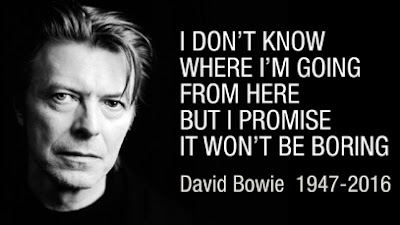
Day 4: The global event winds down. There still are tribute posts, but most people have moved on. Now, this applies mainly to A-listers, B and C-listers have a shorter online mourning period. Major stars like David Bowie, Carrie Fisher, Tom Petty, Prince, etc. are still getting tribute posts – hell, I just saw someone post likewise about George Harrison and he’s been dead since 2001.


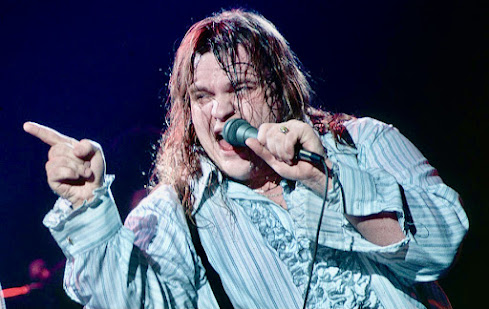
The one thing that can quicken the life of this cycle is if some other beloved celebrity passes not long after the original famous person passed. Example: A week ago, trash rocker Meat Loaf died. Less than a day later, comedian Louie Anderson died. That means that there were people who were mourning overtime.


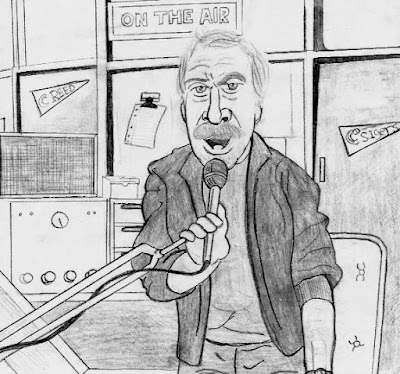
While writing this, I find out that Howard Hesseman just died. So, of course, folks are posting pictures and clips mostly of his iconic character, Dr. Johnny Fever from WKRP in Cincinnati. That’s what I did. Sadly, as much as I love the guy, he’s largely known to people of a certain age who watched him on TV 40 years ago so he’s not A-list, and his homage will be short lived. In a day or two, Hesseman’s demise will be put aside for the social media homage to the next famous fallen figure, and the cycle will restart.


I’ll end now with a picture of Dr. Johnny Fever that I drew 40 years ago. I think I was trying to capture him one of his greatest moments, his “Give it to me straight, Doctor, I can take it!!!” declaration from the show’s pilot.


More later...

Wednesday, January 26, 2022

‘Tis The Season For Some Screenings Part 2

The holiday season may be over, but the season for catching up with movies from the previous year continues, sometimes long into the new year. This sequel to a post by the same title (except for the numbers) from last month, so there may be more entries. Now, I saw very few films in the theater, so these are reviews of three films I watched on DVD or Blu ray. Enjoy!

THE TENDER BAR (Dir. George Clooney, 2021) *


I’ve long maintained that Ben Affleck isn’t a bad actor, he’s just not a very interesting one. He’s a likable guy, unless you’re an avid tabloid reader, but he’s not a very compelling, or vital presence in many of his movies. Here, in George Clooney’s eighth film as Director, he puts in a fine performance as the wise, and wise-cracking Uncle Charlie, a mentor to the film’s protagonist J.R. Maguire (a self-consciously ernest Tye Sheridan).

In flashbacks, J.R. is played by Daniel Ranieri, while Ron Livingston narrates Wonder Years-style as an older J.R. Much of the story is centered around the Maguires Long Island home, where J.R.’s mother (Lily Rabe) brought her son to get away from her ex-husband/his ultra-unreliable father (Max Martini). 
 

And then there’s the always reliable Christopher Lloyd. The gruff iconic actor embodies Grandpa Maquire, who also doles out advice to the young J.R., as well as accompanying him to a father/son breakfast at school. Affleck’s Charlie works as a bartender at a pub named The Dickens, where Sheridan’s J.R. drinks with his Yale schoolmates. J.R. finds love and heartache with classmate Sidney (Briana Middleton), pursues his dream of being a writer, tries to deal with his deadbeat dad, and bonds further with Uncle Charlie.


Beyond those broad strokes, not much happens. The film, based on J.R. Moehringer’s autobiographical novel of the same name, goes through these familiar coming-of-age motions without a lot to say. THE TENDER BAR isn’t a bad movie, it’s just not a very interesting one.


* THE TENDER BAR is available streaming on Amazon Prime.


CYRANO (Dir. Joe Wright, 2021) **


While every adaptation of Edmond Rostand’s 1897 play Cyrano de Bergerac that I’m aware of presents its lead character with an abnormally large nose, this version features the protagonist as a four-foot, five-inch dwarf. Peter Dinklage and his normal-sized nose, reprises his starring role in the off-Broadway production in 2019, as does Haley Bennett as Cyrano’s love interest, Roxanne. 

As in every version, Cyrano pines for Roxanne, but believes his physical size makes it impossible for him to win her over. Cyrano masks his heartache with his quick wit, and sword-fighting skills, both of which Dinklage swiftly carries off. Dinklage comes close to carrying the entire film, if it wasn’t for the strong ensemble that includes Kelvin Harrison Jr., Bashir Salahuddin, and Ben Mendelsohn.

What I didn’t know going in is that this adaptation is a musical. Its score, and songs were largely composed by Aaron Dessner, Bryce Dessner and Matt Berninger of the Ohio rock band, The National. I like The National, but although there a few solid tunes, mostly the music is forgettable. Dinklage would be the first to admit that he’s no singer as well, but somehow he, again, carries it off. Director Joe Wright’s filmography is full of polished, elegant films, and CYRANO is no exception due to it being the fourth collaboration between Wright and cinematographer Seamus McGarvey. 


The screenplay, written by Erica Schmidt, who happens to be Dinklage’s wife, is faithful to the original story, but constructs its own framework of sharp dialogue, and pleasing poetic stances. Overall, I enjoyed CYRANO, but I don’t think that it’s the definitive version of the classic stage play (not that I’ve seen every other revamping, but Steve Martin’s 1987 take, ROXANNE, is probably my favorite). Dinklage is clearly the reason this film is worth seeing. As lovely as the rest of it is, it’s mere decoration for Dinklage’s irresistible performance.


** CYRANO is set to go into limited release in theaters next month on February 25th.


ATTICA (Dir. Stanley Nelson, 2021) ***


I first became aware of Stanley Nelson at the Full Frame Documentary Film Festival some time ago. A number of his films, which for the most part deal with racial justice, have been a part of the long-running PBS program, American Experience. Nelson’s work is devoid of flashy stylistic packaging, which means that there aren’t animated segues, or glitzy graphics; they’re just collections of the most relevant footage of their subjects’ vital storylines, sometimes augmented with era-appropriate music. They’re bare bones and all the better for it. Nelson’s latest, ATTICA, is summed up in its opening text: “On September 9th, 1971, inmates at Attica, 20 miles from NYC, took over the prison.” 

Friday, January 14, 2022

Kenneth Branagh’s BELFAST Is A Loosely Autobiographical Charmer

Opening today exclusively in the Triangle at the Rialto Theater in Raleigh:

BELFAST (Dir. Kenneth Branagh, 2021)


K
enneth Branagh’s 19th film as Director, but only second as writer, is one of his best films.

Set in Belfast, Northern Ireland in 1969, the story concerns life in the time of “The Troubles,” a long-running conflict that pitted the Catholics against the Protestants. The riots that result, as well as the reactions of the townspeople are seen through the eyes of Buddy (Jude Hill), a 9-year old who witnesses a violent mob infiltrating his neighborhood in the film’s opening sequence.

Buddy’s Pa (Jamie Dornan), and Ma (Caitríona Balfe), have friction over whether they should relocate, as Pa commutes to England for work and wants his family with him. Ma doesn’t want to leave because she’s emotionally attached to her home since birth. More interesting is Buddy’s grandparents, Granny (Judi Dench), and Pop (Ciarán Hinds). Pop’s love advice to Buddy, harboring a crush on a classmate (Olive Tennant), oozes with wisdom and charm. I wish Dench were given more to do, but her dour appearance fits in authentically with the material.

Buddy falls into a bad crowd, well, mainly one member of a bad crowd really, Moira (Lara McDonnell) who tries to train him how to shoplift. This makes for an amusing scene in a local shop in which a frantic Buddy steals Turkish Delight, which he doesn’t even like. Dornan’s Pa has his neck breathed down heavily by the sinister Protestant rioter Billy Clanton (a perfectly cast, and effective Colin Morgan), who wants Pa (really, that’s how he’s credited) to join and be loyal to the cause.

Watching Buddy amble around his historically bleak environs may strike some as reminiscent of JOJO RABBIT, but, while there is a good deal of humor in BELFAST, it’s more grounded and less goofy. Completely different in its sentimental tone as well.

Although BELFAST is a black and white picture, it’s a nice touch that when the family goes to the movies, the scenes we see from CHITTY CHITTY BANG BANG, AND ONE MILLION YEARS B.C. are in color. There are other color moments as well.

The film is appropriately awash in mostly classic tracks by Irish singer-songwriter Van Morrison, including a new song, “Down to Joy.” The new tune is being talked about as a possible Oscar nominee, despite that it dates back to the early ‘70s. I guess because it was unreleased, re-recorded for the movie, and its title is slightly re-worded, it qualifies.

Even with feel-good contrivances such as how a confrontation with Clanton is thwarted, and Dornan’s rendition of the pop standard “Everlasting Love,” which I thought had to be someone else’s singing, but I was wrong), BELFAST is a modestly moving movie that’s optimistic about peace, families sticking together, and how childhood is a precursor to a complicated life. All of the cast are exceptional, but Hill as the conflicted kid in the middle of it all, puts in a convincing performance that provides the film with its heart. He's one to look out for.

Brangh, who considers this his most personal work, has produced a touching, loosely autobiographical period piece that ought to satisfy independent film audiences, and simply entertain whomever it happens upon. Expect BELFAST to get lots of awards season action (in fact, it already has).


More later...