Showing posts with label Orson Welles. Show all posts

Monday, September 09, 2024

The Best Of Film Babble Blog (A Self Indulgent 20th Anniversary/Birthday Post)


Film Babble Blog has been AWOL since my DEADPOOL & WOLVERINE review as things have been hectically busy lately, but I’m back to make a self-indulgent post on my Birthday. I’ve been meaning to do something to celebrate the 20th Anniversary of this blog (first post was March 12, 2004) all year, and I finally came up with compiling a list of my Top 10 favorite posts.


Among the movie reviews have been assorted articles, lists, and interviews and this what I consider the cream of the crop. By the way, the pic at the top is from Baz Luhrmann’s 2013 adaptation of THE GREAT GATSBY (I just wanted to have a lavish big screen party scene image, the movie isn’t even mentioned in any of these posts).


So let’s get right to ‘em (click on the highlighted titles to read the posts):


1. In Memorium: My Dearly Departed Cat Squiggy (September 14, 2014)


Of course, #1 would be honoring my first adoptive cat, Squiggy, who passed away 10 years ago (Sept. 12, 2014). This remembrance might be too icky for some who are not cat or pet people, but I think most folks will appreciate the sentiment. Squiggy lives!


2. William H. Macy Chats With Film Babble Blog About His New Film KRYSTAL (April 12, 2018)


Over the course of Film Babble Blog’s first two decades, I didn’t do many interviews, but I couldn’t pass up the chance to talk to the great William H. Macy. He was promoting his second film as director, the odd Rosario Dawson vehicle KRYSTAL, and it was an insightful, fun phone chat with the acclaimed actor. 


3. Ingmar Bergman: The Woody Allen Angle (July 31, 2007)


When the iconic Swedish filmmaker Igmar Bergman passed on 2007, instead of doing a standard obit, I decided to do a deep dive on his influence on the films of Woody Allen. Now Allen is a controversial figure these days, but this film geek’s noting the many elements whether they be thematic, technical, personal, or personnel that Woody Allen has borrowed from the movie master still holds up to me.


4. Apocalypse Then (September 11, 2021)


My 20th Anniversary recollections of the week of the tragic events of 9/11, which started off with a Birthday viewing of the then new APOCALYPSE NOW REDUX is one of my favorite pieces as it captures my what my world felt like during that sad, shocking time when it felt like the world stopped.


5. That Time Orson Welles Ended His Career (And Life) On An Episode of Moonlighting (December 30, 2023)


I was reminded of the legendary filmmaker’s final moments in front of a camera when Hulu started streaming the hit ABC series, Moonlighting, late last year and I exercise-bike binged it. It’s an interesting tale of how fortunately the late, great CITIZEN KANE actor/writer/director had one last gasp meaning that his ridiculous voice turn in the 1985 animated TRANSFORMERS wasn’t his last credit. The Film Babble Blog favorite Welles was also featured in the posts, A Birthday Tribute To Orson Welles With 10 Welles Wannabes (May 5, 2008), and Classic Cinematic Cameo: Orson Welles in THE MUPPET MOVIE (MAY 6, 2022). 


6. That Time THE BODYGUARD Soundtrack Saved Nick Lowe’s Ass (August 12, 2021)


An amusing look back at a happy happening involving the great British singer/songwriter benefiting greatly by the use of one of his classics (albeit a cover) on the best-selling soundtrack of the Whitney Houston/Kevin Costner hit, THE BODYGUARD. 


7. The Legacy Of Mrs. James Bond 007 (September 10, 2020)


Much like the Bergman post, I was wanting to pay tribute to a legendary figure who had passed (in this case Diana Rigg), but through an specific angle that most obits mentioned but didn’t fully investigate. Another post in this same vein is: How James Bond Was Indiana Jones’ Father Long Before Sean Connery Played Indiana Jones’ Father (October 31, 2020)


The final posts are lists, which I’ve done a lot of over the years. A few of these were featured on the Internet Movie Database when they used to update a “Hit List” on their main webpage. That got my page a lot of action back in the day, which I miss now.


8. 20 Great Modern Movie Cameos (6/5/07)


9. 10 Definitive Films-Within-Films (7/4/07)


10.
10 Movie Soundtracks That Think Outside Of The Box Office (9/01/09)


So there you go. Hope you enjoyed this trip down Film Babble Blogs memory lane.


More later...

Saturday, December 30, 2023

That Time Orson Welles Ended His Career (And Life) On An Episode of Moonlighting


Last October, the ‘80s comedy detective series, Moonlighting, began streaming for the first time ever. The ABC show was a huge must-see TV hit in the mid ‘80s, but because of its absence, it has been largely forgotten until this event. Now viewers can see Bruce Willis - now non-verbal, and retired due to dementia - at his most verbal as the wise-cracking gumshoe David Addison, trading quips with the softly-lit Cybill Shepherd as former model Maddie Hayes in all their 67-episode run on Hulu, and all of our pop culture worlds are better for it.

At least mine is, as I was a kid when it aired in the ‘80s, and it brought back a lot of memories, and one I was delighted to be reminded of was that Orson Welles made his last appearance on the program. The film-making legend, and personal favorite, passed away a week after shooting his introduction for the season 2 episode, “The Dream Sequence Always Rings Twice,” (aired: Oct. 15, 1985) capping off his incredible career in a much better, way more classy way than his last film appearance, the voice of Unicron in the animated 1986 flop, TRANSFORMERS: THE MOVIE (I kid you not).


According to Moonlighting writer, Debra Frank, Welles shot his bit, an intro in which he warned viewers that much of the night’s episode would be in black and white, on October 4, 1985, remembering that because it was her mother’s birthday.


After Welles passed on October 10th, they added this to precede his intro:


From the same 2005 Moonlighting DVD bonus featurette that revealed that, “Inside the Blue Moon Detective Agency, the Story of Moonlighting, Part 2,” Moonlighting creator Glenn Gordon Caron told the story of how they got Welles for the gig:


“They (the network) felt that, like THE WIZARD OF OZ, which was a movie that was shown in this country every year, and every year they went to great lengths to explain to people that the first part is in black and white, the second part is in color – there’s nothing wrong with your television set, ABC thought it was important to offer that kind of assurance to the audience. 


So we thought, well, who should do this? I don’t know, again, it just cracked me up, Orson Welles. You know, here’s the man who probably made the most beautiful black and white film, you know, ever. So I wrote this thing, which he ultimately said, you know, about which he ultimately said, ‘a very special monochromatic, blah blah blah blah, Moonlighting, so get Grandma and the kids and lock them in the basement…” A pretty funny thing, so I called him up, and said, ‘Would you be interested in doing this thing, and to my amazement he said, ‘Well, send it over,’ so I sent it over, and he called back and said, ‘I think it’s funny.’”


Caron misquoted his own writing so here is Welles’ opening intro to “The Dream Sequence Always Rings Twice” (and you can watch a YouTube clip of it below):


“Good evening, I’m Orson Welles. Tonight, broadcasting takes a giant leap backward. In this age of living color, and stereophonic sound, the television show, Moonlighting, is daring to be different, and share with you a monochromatic, monophonic hour of entertainment. Approximately 12 minutes into this evening’s episode, the picture on your television screen will change to black and white. Nothing is wrong with your set, I repeat, *nothing is wrong with your set*, tonight’s episode is an experiment, one we hope you’ll enjoy, so, gather the kids, the dog, grandma, and lock them in another room, and then sit back and enjoy this very special episode of Moonlighting.”


It’s quite something to think that this was the grand man’s last appearance before he shuffled off of this mortal coil. It’s not surprising after years of hard living, which his girth, and trademark cigar smoking (though it does look cool) in this short video does give ample evidence, that he died at age 70, but it’s a fitting testament that, a week before he died, he could put in such a witty, wise, and even warm cameo in what was then one of the hottest programs on, and go out on such a hip, and humorous final note.


It's also funny that there’s the Cybill Shepherd connection in that Welles used to stay in the guest room of her house with Peter Bogdanovich in the ‘70s, but that’s a whole ‘nuther blogpost.


More later...

Friday, May 06, 2022

Classic Cinematic Cameo: Orson Welles In THE MUPPET MOVIE


Today, Film Babble Blog is celebrating the posthumous Birthday of one of the all-time greats, Orson Welles, who was born on this date in 1915. 

So I’m going to pay homage in this post by looking at one of his less celebrated, but still mighty worthy, moments: Welles’ cameo in James Frawley’s 1979 family comedy classic, THE MUPPET MOVIE.

Since his passing in 1985, the legendary status of the writer/director/actor/ producer has grown into mythic proportions. This is largely due to the insurmountable acclaim that his 1941 masterpiece, CITIZEN KANE, has never stopped accumulating, despite the fact that there are, and have been many younger generations that have questioned its regular placing as the greatest film in movie history. Those fools.

But before I knew any of this, my first introduction to the larger than life icon came when I was an eight-year old kid when my grandmother took me to see THE MUPPET MOVIE in the summer of ‘79. The film, the Muppets’ first feature, was an origin story that told how Kermit the Frog journeyed across country from a Florida swamp to Hollywood to seek fame and fortune, while forming major bonds with such felt friends as Fozzie Bear, Gonzo The Great, Rowlf the Dog, the Electric Mayhem, and, of course, Kermit’s blustery love interest Mrs. Piggy.

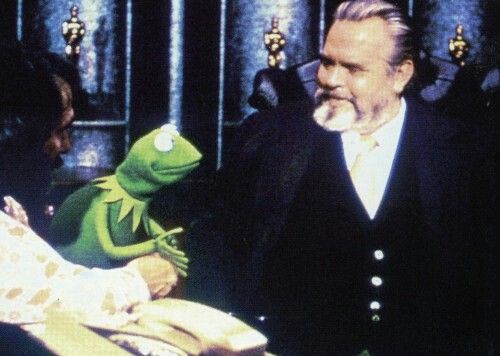
The Variety ad that Kermit was answering actually stated “World Wide Studios announces open auditions for frogs wishing to become rich and famous.” So the talented banjo-playing frog, figuring if they need frogs, they must need bears, pigs, dogs, etc. (which is sound logic), after wacky road trip adventures, shows up at the office of studio head, Lew Lord portrayed by a 63-year old, bearded, cigar-chomping, and very intimidating Orson Welles.

Watch the scene:


After regaining his composure from Lord’s initial harsh, and judgemental expression upon the Muppets’ entrance into his opulent office, Kermit says, “Please Sir, my name is Kermit the Frog, and we read your ad, and we’ve come to be rich and famous.”

After removing his cigar from his mouth, and giving the situation a hard, deep, yet comically brief pondering, Welles' Lord intercoms his secretary, “Miss Tracy, prepare the standard ‘Rich and Famous’ contract for Kermit the Frog and company.”

Kermit and company didn’t even have to audition at all to get green-lit by Lord and World Wide Studios, which, I guess, proves the adage “90% of success is just showing up.”

Welles powerful studio chief character was based by screenwriters Jerry Juhl, and Jack Burns, on British media mogul Sir Lew Grade, who gave Jim Henson, and The Muppet Show a big break in real life. The role was also notably empowering for Welles as he had spent the ‘70s (and much of his life after KANE) as an outcast from, and yet still inside Hollywood, hustling for financing for various dream projects, surviving by doing wine commercials and other cameos, while being ridiculed as a one of the industry's most notorious has-beens.

To see what Welles would’ve looked like as a towering titan of Tinseltown in his MUPPET MOVIE cameo is a beautiful thing. I, for one, want to live in that alternate universe where Welles had a colossal career in which he never had to fight for final cut, and was able to produce a rich filmography instead of the meager dozen or so movies he directed in our universe.


Welles’ love for the Muppets extended to a pilot episode of a never aired 1979 TV talk program, The Orson Welles Show, in which he interviewed Henson, Frank Oz, and the main Muppets. The footage from the show wasn’t available for decades, but due to the magic of YouTube, you can watch an excerpt of it here.

One of the wonderful benefits of seeing THE MUPPET MOVIE with my Grandmother was that she clued me into who the old stars putting in the cameos were like Bob Hope, Edgar Bergen (and Charlie McCarthy for that matter), Milton Berle, and Mel Brooks. But Welles made the biggest impression, maybe because he was literally the largest performer involved, but more the stature, and gravitas in how they presented him.

I had never laid eyes on Welles before his crucial scene in THE MUPPET MOVIE, but my eight-year old mind immediately knew that this was *somebody* incredibly important, and that I should take note. It was the beginning of my fandom for the man, and his movies, and, looking back, I can’t think of a better introduction for a kid poised for a life of loving film.

Happy Birthday in the afterlife, Mr. Welles. Maybe you didn’t reach the height of running a major film studio with the power to make a frog, and his buddies the biggest stars in the world, but for a brief, shining instance it looked, and felt like you did, and that’s how I choose to remember you.

More later...

Thursday, November 12, 2015

The Raleigh-Cary Area Finally Gets Around To Celebrating Orson Welles’ 100th Birthday


The 100th anniversary of the birth of legendary film-maker Orson Welles was half a year ago (May 6th to be exact), but here in N.C. it’s better late than never to celebrate as special showings of some of the man’s best work are hitting local screens this month.

Earlier this month The Cary Theater in downtown Cary hosted a Cinema Studies Screening of Orson Welles’ 1957 thriller TOUCH OF EVIL, presented by the Modern School of Film, and kicked off a Sunday afternoon series of November Welles screenings with the director’s 1942 adaptation of Booth Tarkington’s 1918 novel THE MAGNIFICIENT AMBERSONS.

The Sunday series continues at The Cary with Welles’ most acclaimed film, 1941’s CITIZEN KANE on the 15th at 2 pm. I previously wrote about seeing KANE at the theater last year (my first visit to the newly refurbished venue).

The following Sunday, the 22nd, the lesser known, but still essential, THE STRANGER (1946) will be featured, and the series wraps up on the 29th with Welles’ final completed film F FOR FAKE (1973).


On Friday, November 13th, the Colony Theater in North Raleigh is opening the new 4k digital restoration of Carol Reed’s 1949 film-noir masterpiece THE THIRD MAN for a week long run. While Welles didn’t direct, many film buffs feel that his film-making fingerprints such as use of deep focus, long takes, and abstract angles are all over the sublime post-WW II thriller. There’s no doubt to his contribution in his writing of his own dialogue as the iconic Harry Lime character, especially when it comes to the famous “Cuckoo Clock” speech.

As the Colony Theater is sadly closing next month, it’s great that they’re showing such a classic piece of cinema as THE THIRD MAN before shutting down (The Colony will also be showing such notable films as THE PRINCESS BRIDE, THE WIZARD OF OZ, and DARK STAR in the weeks ahead, click here for more info).

I have to work this Sunday so I’ll be missing The Cary’s screening of CITIZEN KANE, but I will be attending The North Carolina Museum of Art’s showing of the film on Friday, November 20th. It’ll be my first visit to the redesigned SECU Auditorium, and I’m taking my 17-year old nephew Linus, who’s never seen it or much in black and white for that matter.

Last summer, I was talking to Linus about the Netflix superhero series Daredevil and how good Vincent D’Onofrio is as the villain Wilson Fisk, and I mentioned that D’Onofrio had played Orson Welles more than once (in Tim Burton’s ED WOOD, and in his own short film FIVE MINUTES, MR. WELLES, which you can watch here).

“Who’s Orson Welles?” Linus asked, and, well, I was a bit taken back. Still, as this happens a lot when I babbling about some old thing to kids who are completely disconnected to it, I dropped the subject.

More recently, Linus told me that he may want to study film in college – he’s not sure where he’ll go to college, mind you – and I said that he really ought to see CITIZEN KANE – it’s Film 101.


My first experience with Welles was seeing THE MUPPET MOVIE with my grandmother when I was 9, something I’ve written about before. Welles had a cameo in the film as the powerful head of a movie studio who signs up Kermit and gang to be stars (“prepare the standard ‘Rich and Famous’ contract for Kermit the Frog and Company
). 

My grandmother, who is still alive, told me who Welles was – KANE, the “War of the Worlds” radio show, etc. – and the seed was planted, but it was years before I actually watched any of his work.

So now I’m attempting to pass on my Orson obsession, or, better yet, the movie-loving gene to my nephew – we’ll see how that goes.

For those of you out there that are new to Welles, there is a great documentary that came out last year, Chuck Workman’s MAGICIAN: THE ASTONISHING LIFE AND WORK OF ORSON WELLES, available now on Blu ray and DVD. It gives a fairly thorough overview of Welles career in 91 minutes, and despite its overly tidy summing up of some messy material, it makes for a good introduction to the man.

Scores of vivid vintage photographs, generous samplings of archival footage, and sound-bites from insightful interviews from the likes of Norman Lloyd, biographer Simon Callow, Steven Spielberg, Buck Henry, and Peter Bogdonavich help tell Welles’ tale, and it’s cool to see clips of Welles being portrayed by the aforementioned D’Onofrio, Christian McKay in Richard Linklater’s ME AND ORSON WELLES, Liev Schreiber in Benjamin Ross's 1999 HBO telefilm RKO 281, and Jean Guerin in Peter Jackson's 1994 crime drama HEAVENLY CREATURES in the mix. *

Of course, it’s the words from Welles himself that are the most notable. Some choice quotes: “I’m ashamed of Rosebud, it’s a rather tawdry device - it doesn’t stand up very well, ” “You know, I always liked Hollywood very much – it just wasn’t reciprocated,” and “I would’ve sold my soul to play THE GODFATHER, but I never get those parts offered to me.”

Well, that’s enough Welles for now. Hope to see a lot of folks coming out to see these classics on the big screen in Cary and Raleigh. And, by the way, this post is part of my new “Drag a kid to KANE” initiative. Yeah, that’s right – I’m really trying to start that as “a thing.”


* I posted about actors who've played Welles back in 2008 as well: A Birthday Tribute To Orson Welles With 10 Welles Wannabes (5/5/08)

More later...

Tuesday, September 02, 2014

Seeing CITIZEN KANE At The Cary


Last weekend I attended a 2 pm Sunday afternoon showing of Orson Welles’ immortal 1941 classic CITIZEN KANE at the newly restored venue, The Cary Theater in Cary, N.C.

I’ve been meaning to check out the theater since it re-opened earlier this year, especially since I’ve written a bunch of blurbs about their special screenings for the Raleigh N & O (like this one).

I was very impressed. Originally built in 1946, The Cary, which was an auto parts store most recently, has been beautifully renovated into a cozy 180 seat theater with shiny wood finish paneling, modern lighting, and state of the art sound system. The 6 million the town of Cary put into the place sure shows.

Now, I’ve seen CITIZEN KANE many times over the years on screens both big and small – I’m in the camp that considers it one of the greatest movies ever and all that. Unfortunately just like the last time I saw the film, at the Varsity Theater in Chapel Hill several years ago, it was in the wrong aspect ratio.

This isn’t the theater’s fault – from what I gather, the version of KANE that’s available for digital presentation is cropped for the image to fit the entire screen instead of its original “Academy Ratio.”

In the last few weeks, many bitched that the bulk of The Simpsons “every episode” marathon that FXX aired from August 21st to September 1st. was in the wrong aspect ratio but that didn’t really get in the way of my enjoyment of the large chunks of it that I took in.

Same with KANE as I enjoy the film so much, but the film purist inside of me was a bit pissed off.

Anyway, most of the people at the very well attended screening were seniors so I was one of the youngest people there, but not the youngest as I saw a few college aged folks, and maybe a couple of teens.

This was notable because I keep hearing that younger generations dislike KANE, mainly because they feel that it’s been overhyped as “the greatest movie ever.” Joel Frady, a local film critic friend, told me that he thought the film was “boring!” and I heard the same opinion (the same word with the same exclamation point) expressed by a 20-year old co-worker not long ago.


This baffles me because Welles' film, via dazzling visual techniques, sharp acting (by Welles and his Mercury Theater Players), and delicious dialogue, (written by Welles with Herman J. Mankiewicz who won a Best Screenplay Oscar) so swiftly tells its intriguing tall tale that I can’t understand how someone could be bored by it. Where in the midst of this rich vivid masterpiece is there time to yawn?

Dissolve critic Nathan Rabin recently posted this on Facebook:

“Calling something ‘boring’ or ‘dull’ has to be among the weakest, laziest criticisms. This is especially true when used to argue that something is overrated. Writing, ‘A lot of people claim Citizen Kane or The Miseducation of Lauryn Hall are great, well guess what: they’re actually boring’ says nothing about the art they’re ostensibly supposed to critique and a lot about the writer’s need to pass their own subjective judgements off as bold universal truths people are afraid to embrace.”

Amen. But there are dissenters who when they elaborate can make some valid points. I just haven’t heard any lately about KANE that didn’t seem like reactionary “I don’t see what all the fuss is about” blather.

If you have a anti-KANE stance though, let me hear about it in the comments section below. Just remember this Marc Maron quote before posting:

“If you find yourself dismissing universally acclaimed landmark achievements, saying, for example, ‘The Godfather is an okay movie,’ you might be bitter.”

More later...

Tuesday, April 15, 2014

New Releases On Blu Ray & DVD: 4/15/14


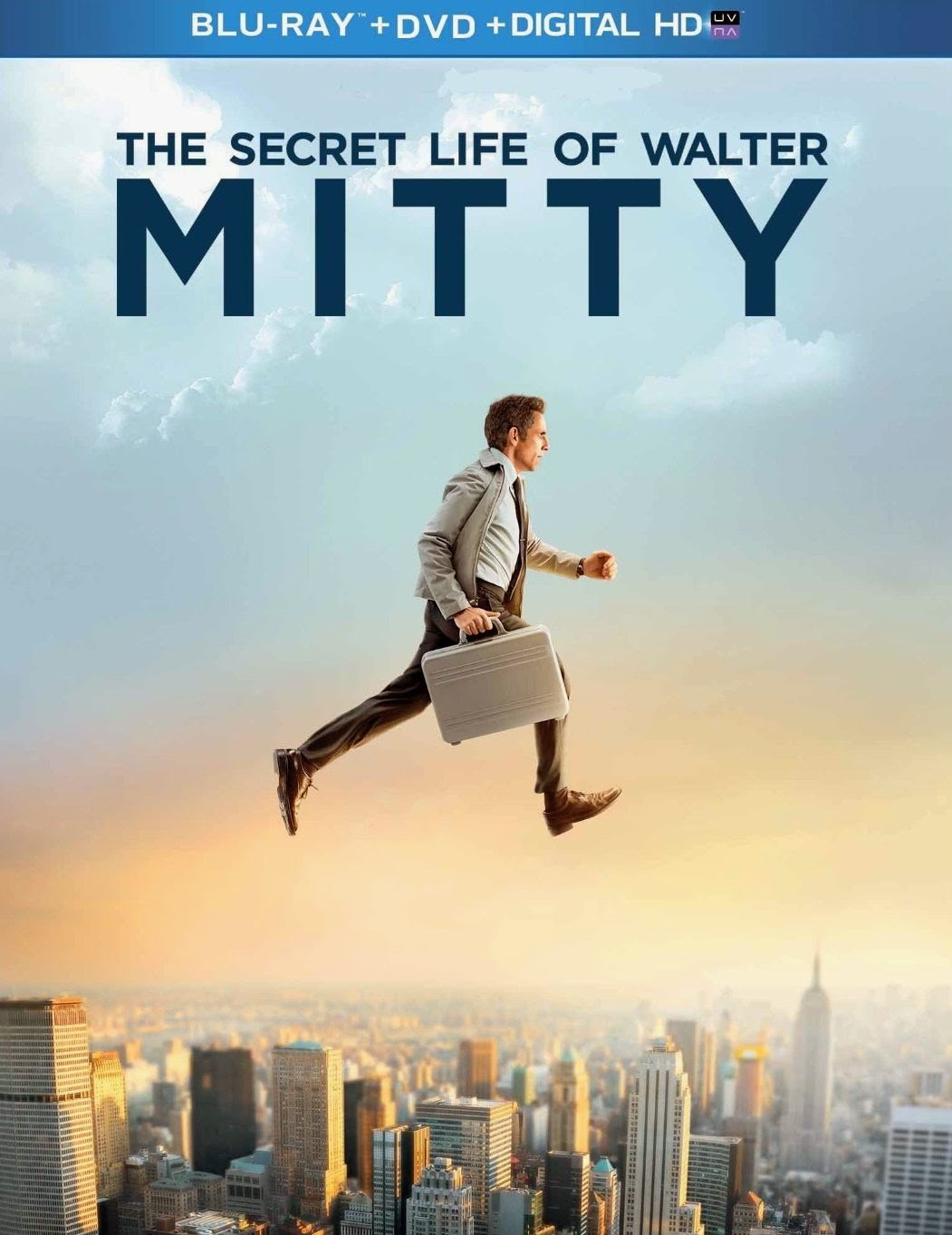
Ben Stiller’s THE SECRET LIFE OF WALTER MITTY, which I wasn’t too impressed by last December, leads the line-up of new releases on Blu ray and DVD today. Stiller’s adaptation of the James Thurber short story, which felt to me and many others (it has a 49% rating on the Rotten Tomatometer) to resemble a feature length commercial, comes with a slew of Special Features including Deleted, Extended, and Alternate Scenes (equaling around 15 minutes), a bunch of Behind the Scenes featurettes, Gallery: Reference Photography, "Stay Alive" music video (Jose Gonzales), and the Theatrical Trailer.

A movie I liked a little bit better, Stephen Frears’ PHILOMENA, starring Judi Dench and Steve Coogan, also hits home video today. Although the fine film, about a cynical journalist (Coogan, of course) aiding an elderly Irishwoman (Dench) in her search for the son she was forced to give up for adoption, didn’t win any of the four Oscars (surprisingly, it was up for Best Picture) it was nominated for, its Blu ray and DVD release boasts a bevy of high-end bonus material. First up, there’s a commentary with writer/actorpProducer Steve Coogan and Screenwriter Jeff Pope, “A Conversation With Judi Dench” (8:54), a short (under 3 minutes) featurette “The Real Philomena Lee,” and a almost 25-minute Q & A With Steve Coogan from the film’s Guild Screening in Los Angeles last December.

Next up, a film that I thought was just released theatrically (actually it was in January – the year is flying by) also releases this week: Tim Story’s poorly reviewed but crowd pleasing action comedy RIDE ALONG, starring Ice Cube and Kevin Hart. I skipped the film because I’ve not yet found Hart to be funny, but for those of you who do here’s what Special Features are included: Director’s commentary with Story, Gag Reel, Locations Tour, alternate ending, deleted scenes, and various featurettes.

Also out today: Peter Lepeniotis' animated squirrel comedy THE NUT JOB, Chris Nelson's high school sex comedy DATE AND SWITCH, Ralph Fiennes' Charles Dickens drama THE INVISIBLE WOMAN (read my review), Deborah Chow's adaptation of V.C. Andrews' 1979 bestseller FLOWERS IN THE ATTIC (starring Heather Graham and Ellen Burstyn), Steven Rosenbaum's 2002 9/11 documentary 7 DAYS IN SEPTEMBER, Kasi Lemmons' musical drama BLACK NATIVITYand Geoff Moore and David Posamentier's comedy drama BETTER LIVING THROUGH CHEMISTRY.

On the older films out this week in fancy new Blu ray editions front there's Orson Welles' undisputed 1958 classic TOUCH OF EVIL, Billy Wilder's 1944 thriller DOUBLE INDEMNITY (another undisputed classic), Anthony Mann’s 1957 Korean War film MEN IN WAR, Douglas Sirk’s 1948 film noir thriller SLEEP, MY LOVEand the Criterion Collection deluxe edition of Lars Von Trier's heated 1996 drama BREAKING THE WAVES


More later...

Thursday, May 09, 2013

DVD Review: CITIZEN HEARST


CITIZEN HEARST
(Dir. Leslie Iwerks, 2012) 

It should be no surprise that the large sha
dow of Orson Welles’ iconic classic CITIZEN KANE looms over this new documentary, out now on DVD about the media empire that William Randolph Hearst built. 

It’s something that can’t be ignored when viewing the old newsreel footage, hearing tales of Hearst’s political life and lavish San Simeon palace, with even the packaging for the DVD looking like it was designed for it to be shelved next to KANE in one’s home video collection.

But a half hour into Iwerk’s engrossing film, impeccably narrated by William H. Macy, Hearst, described here as “one of the world’s most powerful and controversial figures,” passes away (at age 88), the narrative shakes free of Welles' cinematic clutches as it takes us through the ups and downs of the Hearst Corporation in the post-World War II era.

In the age of flourishing consumerism and ultra specialization, magazines like Good Housekeeping, Harper’s Bazaar and Cosmopolitan revitalized themselves through the leadership of Ellen Levine, Diana Vreeland, and Helen Gurley Brown, who Hearst Corporation CEO Frank A. Bennack, Jr. says is “one of the most important figures in the history of this 125 year old company.”

Levine, now Hearst Magazines Editorial Director, the first woman to edit Good Housekeeping (90% of women’s magazines were run by men at the time) tells us that Good Housekeeping still thrives because its “the only magazine that I’m aware of that will refuse an ad if its claims cannot be proven.”

The late Vreeland, who not long ago was the subject of her own individual biodoc, DIANA VREELAND: THE EYE HAS TO TRAVEL (2011), is given a graceful segment in which we see examples of her experimental influence, via many magazine covers and double page spreads.

But while the Hearst Corp. was having success with these magazines, there was trouble in their newspaper divisions. San Francisco Herald Examiner employees held a strike in 1968 that resulted in injuries and one death, and ended with the paper being engulfed by the non-union Chronicle. Anybody who has been following the current struggle of print media to stay alive will be way into this material.

Iwerk’s film gets less interesting when it gets to the Hearst Corps acquisitions in the more familiar world of cable television, but maybe that’s because I don’t care as much about the history and inner workings of ESPN.

This doc makes a strong case for the modern media television landscape made up of 24 hour news channels (not to mention the yellow journalism of Fox News), reality shows, and self help gurus (Oprah is here to testify about her magazine O, a Hearst publication), is one largely of William Randolph Hearst’s devising. As in: it’s still his world we just live in it. It’s hard to imagine that Hearst’s fictional doppelganger Charles Foster Kane’s empire would still be a major power, which might be the real testament to the man.

Interview excerpts (much more of which can be found in the Bonus Features) from film critic Leonard Maltin, journalist/newscaster Dan Rather, NY Times Cultural reporter Robin Pogrebin, Hearst Magazines President David Carey, Fashion Designer Ralph Lauren and a few Hearst family members provide a lot of insightful anecdotes, but the lesser known Bennack Jr., who Houston Chronicle VP Jeff Cohen calls Hearst’s “spiritual heir,” may be the most engaging of the talking heads here.

The film concludes with a sequence about the building of the Hearst Tower (with some cool time lapse photography on hand), which was the first skyscraper planned in New York after the tragic events of September 11, 2001.

It may be seen as an ass-kissing tribute to the legacy of an overblown titan that glosses over a lot of darkness, but CITIZEN HEARST is a zippy informative overview of an American dream like none other.

Bonus Features: The “Hearst Castle” episode from the A & E television series America’s Castles, and over 30 minutes of deleted footage broken into 3 segments: “Growing Up Hearst,” “Hearst Tower Art Collection Tour By Gil Maurer,” and “State of News.”


More later...

Monday, April 01, 2013

Quentin Tarantino To Direct And Star In CITIZEN KANE Remake


Even in a world with so many remakes, reboots, and re-imaginings, Orson Welles’s 1941 classic CITIZEN KANE seemed to be safe as a sacred cow that nobody would even think of touching…until now.

Wunderkind writer, director, and sometime actor Quentin Tarantino has just announced that his next project will be a remake of Welles’ masterpiece, considered by many to be one of the greatest motion pictures ever, and that it will be his final film.

“I want to make one last epic statement as a film maker and then retire, and what better way to go out with a bang than to prove that I can make a better movie out of what people think is the best movie ever?” Tarantino told Empire magazine. “My version will blow Welles’ out of the water, and it’ll be in IMAX 3D. Imagine the shards of the snow globe coming right at you! It’ll be awesome.”

The casting of himself in the iconic Charles Foster Kane part will surely be controversial, but his selection of Christoph Waltz to play Jedediah Leland, a role previously inhabited by Joseph Cotton, means that the Academy should just go ahead and engrave his name on another Oscar.

Further shocking film fans, Tarantino claims, in an interview with Entertainment Weekly, that he’s never seen the original film in full. “I’ve seen parts of it on the monitor at Video Archives, the video store I used to work at before hitting the big-time, but I always had to go help customers and missed parts of it.”

Tarantino says he will view the movie once, but then never refer to it again. “I want my own vision to take over; I don’t want to make a shot-by-shot remake like Gus Van Zant did with PSYCHO. Man, that really sucked!”

So crazy that it just might work, Tarantino’s CITIZEN KANE is slated for a Christmas 2014 release.


More later...

Monday, July 26, 2010

A Smattering Of New Blu Ray & DVD Reviews

THE RUNAWAYS (Dir. Floria Sigismondi, 2010)


"Jail-fuckin'-bait! Jack-fuckin'-pot!!" - Kim Fowley as played by Michael Shannon. Not exactly. When this film came out last spring it cherry bombed at the box office. This absolutely by-the-numbers music biopic only comes alive when Michael Shannon is onscreen. 

As infamous record producer Kim Fowley, Shannon steals the film away from Kristen Stewart who does a convincing Joan Jett and an all angsty Dakota Fanning as Cherie Currie. Despite the title Stewart and Fanning are the only members of the legendary '70s all girl punk band that the film chooses to focus on - you can count the lines Scout Taylor-Compton as Lita Ford has on one hand and Alia Shawkat (Arrested Development) as Robin the bassist barely registers. Ditto Stella Maeve as drummer Sandy West. 

West died in 2006, but you wouldn't know that from the film's ending wrap up of only Jett, Currie, and Fowley's fates. Still it's fast paced and filled with a lot of great music. In the mix of the Runaways greatest hits you get David Bowie, Iggy Pop, Sex Pistols, and weirdly Don McLean blaring throughout the movie. It will most likely be remembered for being the movie that Kristen Stewart and Dakota Fanning made out in, but if that's what your looking for, those scenes are blurry in a manner mistaken for artsy, and there's little emotional conviction to make anyone care. 

Overall THE RUNAWAYS resembles the VH1 produced rock biopics that dramatized Behind The Music episodes and rerun constantly on VH1 Classic. That undoubtedly will be where this ends up.

ENTRE NOS (Dirs. Gloria La Morte & Paola Mendoza, 2009) 
This Spanish drama, produced and distributed by IndiePix Films, was one that didn't visit Triangle area theaters, but is now out on DVD and available for streaming on Netflix Instant. Paola Mendoza plays a Colombian immigrant who in the opening scenes is left by her husband (Andres Munar) to fend for herself and her 2 children in New York City.

All she seems to have going for her is that she can make great empanadas, but she can't seem to sell those on the street corners so she takes up aluminum can recycling. It's a tale of struggle and hardhip loosely based on a true story that has several incredibly moving scenes. The strength of Mendoza's performance creates much empathy for the severe situations she faces. Sebastian Villada Lopez and Laura Montana Cortez as Mendoza's children also register highly. Though some of the suffering may discomfort some folks, this is definitely worth a rental.

MOTHER (Dir. Bong Joon-ho, 2009) This gritty yet crisp looking thriller from South Korean writer/director Joon-ho only came as close as Cary to the Galaxy theater last spring. When she believes that her slow daft son (Won Bin) is innocent of a murder he's accused of, Kim Hye-ja investigates the crime on her own.

The murder is of a school girl (Moon Hee-ra) who as the rumors say was very promiscuous and has a cell phone full of pictures of possible suspects. Hye-ja fiercely fights through the elements and, of course, gets more trouble than she bargained for. “Mother” is immensely entertaining with true feeling for its characters, particularly the admirable lead. It also looks beautiful on Blu ray.

PRODIGAL SONS (Dir. Kimberly Reed, 2010) Another film that didn't play in the Triangle - a documentary about and by transsexual film maker Kimberly Reed (formerly Paul Reed) who returns home to Montana to face family and friends. Adopted brother Marc, who has brain damage from a car accident, is a big obstacle as he's never accepted his sibling's sex change.

"I just wanted us to be able to move on, but before I knew it, we ended up exactly like we used to be." Reed says on her more than abundant narration. For the first 20 minutes or so it feels like a typical fish out of water/culture clash but when Marc finds out that his grand parents are none other than Orson Welles and Rita Hayworth things get considerably more interesting.

The take away amounts to more than that as we see Kimberly deal head on with his/her past rerunning old football footage and facing old photographs. Marc meanwhile has some scary outbursts which results in jail time. Film of Welles, mostly from his last film F FOR FAKE decorates the second half of the film in morbid tribute. A worthwhile yet disconcerting doc - PRODIGAL SONS is available on DVD and streaming from Netflix Instant.

A TOWN CALLED PANIC (Dirs. Stéphane Aubier & Vincent Patar) This French stop motion animation movie only played for a week at the Colony Theater in North Raleigh last spring which is a shame because it’s a fun absurd romp that deserves bigger audiences. Little plastic figurines, simply named for what they are – “Cowboy”, “Indian”, and “Horse” are the protagonists of this beyond silly plot involving 50 million bricks, thieving blue pointy headed fish folks, and a gigantic penguin robot.

As ridiculous animated features go it's way better than DESPICABLE ME.

PANIC has more than enough laughs and ideas in it to be worth and hour and 15 minutes of your time so see what too many people missed last spring theatrically as its now on DVD and also available streaming on Netflix Instant.

More later...

Monday, December 21, 2009

A Swell Welles Period Piece

ME AND ORSON WELLES (Dir. Richard Linklater, 2009)
To be a young actor in the hustling bustling Big Apple of the 30's, cast by sheer chance as a player in an Orson Welles' Mercury Theater production is a dream many aspiring thespians have no doubt had, but is it believable that it would be a dream shared by "it" boy Zac Efron?


Sadly no, he's a blank slate of an actor who makes for a weak protagonist, but this period piece by cult director Richard Linklater is royally saved by Christian McKay's pitch perfect performance as the genius wunderkind Welles. It's a role he was seemingly born to play thanks to his uncanny likeness and delivery honed from over half a decade on stage in the one man show "Rosebud: The Lives Of Orson Welles".


As a wide eyed high school student, Efron is overjoyed to be cast in the small but crucial role of Lucious in Welles' controversial 1937 production of "Julius Caesar". It was controversial because Welles staged Shakespeare's play as contemporary commentary outfitting his performers in modern dress - specifically uniforms that resembled those of the Nazi party.


Efron is paired with a production assistant played by Claire Danes as a rehearsal partner and immediately falls for her. He also falls for the world of the theater; a world that Welles rules with a mighty swagger. McKay's Welles highjacks the film from Efron and breathes life into the predictable proceedings with every entrance. His powerful presence not only makes us forget Efron is in the room, it helps us forget he's in the movie.


When McKay isn't on screen the film suffers from the lack of chemistry between Danes and Efron and the simplistic nature of their relationship. It's funny (or more accurately damaging) that the excellent casting of McKay would be offset by the misguided miscasting of Efron. Luckily other members of the cast fare much better - James Tupper as a the wise witty Joseph Cotton, Eddie Marsan as the exasperated John Houseman, and Ben Chaplin as George Coulouris who has an effective scene dealing with stage fright right before going on as Marc Antony.


Linklater has one of the most intriquing and diverse filmographies of any working director out there. Since his brilliant breakthrough SLACKER (1991) his work has gone from indie (BEFORE SUNRISE) to mainstream (THE SCHOOL OF ROCK) and back again (BEFORE SUNSET) with mostly successful results.


Linklater's previous period piece effort, THE NEWTON BOYS, was one of his only major stumbles so it's wonderful to report ME AND ORSON WELLES is absolutely a superior and more assured work in the same arena.


The brisk pacing and solid structure show off Linklater's strengths as do the astute recreations of the original stage show - at times I wished the film would throw out the backstage bickering and just give us the play "Julius Caesar" in full.


Although my reaction to Efron and the presentation of the love triangle arc is decidedly mixed, this is still a worthwhile movie largely because of McKay. His Welles definitely deserves an Oscar nomination and that's quite a compliment considering that this is his first film.


A best-case scenario would be that HIGH SCHOOL MUSICAL fans that follow Efron will see it and they'll walk away under the spell of McKay. I know that's just wishful thinking, but it sure would be nice for all those teenyboppers to actually get a whiff of what real acting is all about.


Post note: Christian McKay appeared previously on this blog in a post entitled "A Birthday Tribute To Orson Welles With 10 Welles Wannabes" (May 5th, 2008). He would definitely rank much higher if I did the list today.
More later...

Wednesday, August 05, 2009

Another Round Of Great DVD Commentaries


Several years back I posted about great DVD commentaries with a top ten list of my favorites ("Let Them All Talk" Sept. 29th, 2005). Since then I've been collecting notes every time a new (or new to me) commentary was particularly interesting. I'd thought I'd share them in yet another patented Film Babble Blog list.

Now, I know a lot of folks don't listen to commentaries but I thought talking about some really notable ones would encourage folks to give them a try and turn that track on - if only just to sample. So, here goes:

10 More Great DVD Commentaries 
                                                  
1. THE PASSENGER
(Dir. Michelangelo Antonioni, 1975) 

A rare feature-length solo commentary track by Jack Nicholson puts this at the top of the list especially as he declares: "This picture, 'The Passenger', was probably the biggest adventure in filming I ever had in my life."

Nicholson's involving comments are helpful because without them the film can be a long haul. Most compellingly is Nicholson's breakdown of how the final sequence was filmed (contains Spoilers!):


Nicholson: "Now, that shot was the reason they built the hotel. The hotel, in order that the camera be able to dolly out through those bars and out the window...why I hope Michelangelo doesn't mind my revealing of the magic of his work...was that the entire hotel could be mounted on a crane and broken in half so that they could go out into the courtyard, shoot film back towards the hotel, after they exited, with the hotel having been pushed back together again and reconstructed for the remainder of the shot."

Whew! Hope Jack sees fit to do other commentaries 'cause that one's a keeper.

2. FERRIS BUELLER’S DAY OFF
(Dir. John Hughes, 1986)


This customer review on Amazon says it best: "Film buffs, DVD collectors, and John Hughes fans beware! The "Bueller...Bueller..." edition DVD does not include the commentary track by writer/producer/director John Hughes which was included on the original 1999/2000 DVD release. It is a great commentary and is sorely missed from this edition."

That's right, even the new Blu ray of this '80s teen classic is sans Hughes commentary and the DVD I was recently sent from Netflix was the "Bueller...Bueller..." edition.

The Hughes track on the 1999 edition is well worth seeking out because it truly is one of the most insightful listens all the way through. Some sample quotes: 

Hughes: "After the film wrapped, Mr. and Mr. Bueller (Lyman Ward and Cindy Pickett), in real life, got married. At the time we were shooting this, Jennifer Grey and Matthew (Broderick) were dating. It was kind of a strange situation because everybody in this scene is in love." And my favorite bit is the art gallery scene:


Hughes: "And then this picture, which I always thought this painting was sort of like making a movie. A pointillist style, which at very very close to it, you don't have any idea what you've made until you step back from it. I used it in this context to see that he's (Alan Ruck) looking at that little girl. Again, it's a mother and child.

The closer he looks at the child, the less he sees. Of course, with this style of painting. Or any style of painting really. But the more he looks at, there's nothing there. I think he fears that the more you look at him the less you see. There isn't anything there. That's him." Watch the scene sans commentary here.

Used copies can be found fairly easily of the 1999 version with the commentary as its only special feature (what more do you need?). 

3. TOUCH OF EVIL: THE 50TH ANNIVERSARY EDITION
(Dir. Orson Welles, 1958)

The packaging is mistaken when it lists the “Preview Version feature commentary” to be Charlton Heston, Janet Leigh and Restoration Producer Rick Schmidlin.

It’s the 1998 “Restored Version” that contains their commentaries. The other versions – the theatrical and preview cuts have fine bonus audio tracks with writer/filmmaker F.X. Feenet and historians Jonathan Rosenbaum and James Naremore, but it’s the Heston/Leigh/Schmidlin track on the first disc of the wonderful 50th Anniversary Edition that I strongly recommend.

Wonderful moments abound: Schmidlin pointing out: “When you see Joseph Cotton - listen to the voice, but it’s not Cotton…”

Heston: “It’s not Cotton?” Schmidlin: “It’s, uh, Orson’s voice.”
Heston: “For Heaven’s sake.” Leigh: “Orson did Joe’s voice?”

Also its amusing to hear Schmidlin call out which shots are Welles’s from which are Harry Keller’s later inserts to the repeated rekindling of Heston’s and Leigh’s memories. “You’ve really done your homework” Heston remarks with a slight chuckle in this charming and essential commentary.

4. BLOOD SIMPLE (Dir. Joe Coen, 1984)

This beyond odd track features audio commentary by "Kenneth Loring", the "artistic director" of "Forever Young Films" (a fictional gig - but whatever). Maybe the most surreal listen on this list.

(Dir. Ben Stiller, 2008)

As 5 time Oscar winner Kirk Lazarus in a tense moment making a Vietnam War movie, in black-face mind you, Robert Downey Jr. declares: "I don't drop character till I done the DVD commentary!" You know what? Like a real method actor, he keeps his word.

In this free form three way between Downey Jr., Stiller, and Jack Black, the snark level is high which is way apt considering the over the top tangents of said film. One such sample bit during the opening mock trailers - specifically "Satan's Alley" with Downey Jr. and Tobey Macquire as tortured homosexual monks:

Stiller: "Sort of an alternate universe for Spider Man and Iron Man."

Downey Jr.: "I was trying to ride Tobey when we was shooting this thing but he wouldn't have none of it. Talkin' 'bout happily married."

(Dir. Todd Haynes, 2007) 

Haynes’ odd yet transfixing meditation on “the many lives of Bob Dylan” (one of my top 5 films of 2007) confused a lot of people, particularly those unfamiliar with the troubled troubadour's background. Haynes delivers a commentary that should clear up that huge cloud of confusion as he sites references and breaks down various inspirations for every detail in every scene. Some sample quotage:

Haynes: "This is the entrance of Cate Blanchett in the film. The role of Jude was something that I'd always planned, from the very first concept of the film that I gave to Dylan in 2000, that it would be portrayed by an actress. And the reason for this was really for me to try to get to the core of what this next change really looked like and felt like to audiences at the time.

How he became this sort of feline character offstage and this sort of bouncing marionette onstage. Full of all these extravagant androgynous gestures that we'd never seen before and we'd never see again after." The commentary is filled with so many more elaborate descriptions, or justifications, for every aspect of Haynes' challenging anti-biopic.

7. SUPERBAD: UNRATED EXTENDED EDITION
(Dir. Greg Mottola, 2007)

                                                  
Every Judd Apatow production’s DVD commentary is entertaining, from Freaks ‘N Geeks to PINEAPPLE EXPRESS, but this group cast track with director Mottola, screenwriter Evan Goldberg, actors Seth Rogen, Michael Cera, Christopher Mintz-Plasse, Jonah Hill, and producer Apatow is IMHO the best of the bunch.

Largely because Apatow brought along his nine-year-old daughter Maude. Apatow tries to get the guys to keep it clean but it doesn't last long. A sample exchange:

Hill: "This scene is fuckin' hilarious, man."

Apatow: "Jonah, Jonah..."

Hill: "Yeah?"

Apatow: "Maude's over there."

Rogen: "You keep swearing, stop swearing Jonah!"

Hill: "Dude, what is this, bring your daughter to work day? I mean..."

Apatow: "Just be cool man, be cool! This is the only way I could do it...I don't have a babysitter, I'm in New York City here to do Conan and Colbert by the way...I don't have a babysitter so what am I gonna do? Leave her like, uh, with the concierge?"

Hill: "I dunno, dude I'm not..."

Cera: "Like 'Home Alone 2!'"

Hill: "It's "Superbad"! I curse the whole movie...the commentary, I mean, it's like...whatever."

Apatow: "You know, I'm not trying to ruin it...I'm not trying to ruin it..."

Hill: "Let's just go back to the movie; let's just go back to talking about the movie..."

Rogen: "It's kinda ruining the commentary Judd, if Jonah can't say what the fuck he wants to say."

Hill: "Yeah! I can't curse, why don't you just..."

Apatow: "You know what? I'm not 15 years old and don't have a kid - I'm an adult like Greg, I have a child. This is my reality."

Hill: "If I had a kid I wouldn't bring it to work with me."

Whoa - some actual drama there mixed with the laughs. Let's minus the laughs for this next one:

8. TAXI DRIVER (Dir. Martin Scorsese, 1976)


Writer Paul Schrader sounds a bit hesitant upon first opening up ("whatever comments I have...are really not from inside the director's vision") about the film and his screenplay's seminal 70's statement about urban alienation but once he gets going it's quite a cutting companion piece. Sample quotage:

Schrader: "What happens at the end happens at the beginning."

"When Marty first told me that he cast Albert (Brooks) I was sort of surprised because, you know, it was a nothing character. Well, that's the secret: cast the comic in a nothing character and you get somebody interesting."

"I don't believe the script should have any references to camera angles whatsoever. There's only one camera angle in the script, and that's the tracking shot at the very end, and I put that one in there because I thought that it was important we see this crime scene from the eye of God. And the only way we could make that point is if we put the camera on the ceiling and track."

(Dir. Lou Adler, 1982)

In the interest of space I'll refer you back to this post ("Talking 'Bout A Generation Gap" Oct. 3rd, 2008) in which I first babbled 'bout Diane Lane and Laura Dern's very funny commentary.

10. NASHVILLE
(Dir. Robert Altman, 1975)


Luckily before beloved "New Hollywood" auteur Altman died he recorded a number of worthwhile commentaries but this one is absolutely essential for his magnum opus.

As rambunctious as Altman was infamous for being, his gruff ingratiating commentary makes you feel like you're sitting on the couch with him as he rambles.

Some random rambles:

"When this film first came out, they hated the music. They said this wasn't real country music. But I wasn't looking for good music, not that they make a lot of it there..."

"We cast these cars as carefully as we did the people who drove them."

"Since we knew that I had no way I could control the palette of this film, the color of this film, because I knew I was going to be dealing in real situation for we were just invading an event. Even though if we created it, we had to deal with...we weren't paying these people as extras we just had to go where they were."

Special TV Series DVD Set Honorable Mention: 

Spaced (Dir. Edgar Wright, 1999-2001) 

This short lived but brilliant BBC series is outfitted in a nice 3 DVD set with multiple commentary tracks featuring guests like Kevin Smith, Diablo Cody, Patton Oswalt, Bill Hader, Matt Stone, and Quentin Tarantino sparring with Wright and various cast members including, of course, Simon Pegg and Jessica Haynes. Great stuff.

Okay! I hope that'll point out some good commentaries out there. I'd love to hear your thoughts on essential bonus audio tracks so please send 'em on.

More later...