Showing posts with label Jeff Tweedy. Show all posts

Tuesday, July 26, 2022

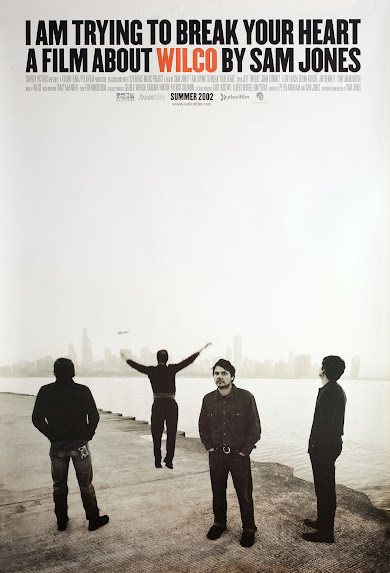
20 Years Ago Today: I AM TRYING TO BREAK YOUR HEART: A FILM ABOUT WILCO Hit The Big Screen


On this date in 2002, Sam Jones’ I AM TRYING TO BREAK YOUR HEART: A FILM ABOUT WILCO was released in theaters. It came on the heels of the release of Wilco’s fourth studio album, Yankee Hotel Foxtrot, which became a major story in the music business (and for fans) when the band was dropped from Reprise after turning in the album, multi-instrumentalist Jay Bennett was unceremoniously dropped from the band, and Wilco found a new home with Nonesuch Records. Much of this activity was captured by Jones’ 16mm black and white camera in over 86 hours of footage, and then edited down to a mostly crisp 96 minutes that gave insights into Wilco’s creative process, and personal interaction, as well as presenting a bunch of killer live performances. Since I saw it in the summer of ’02 at the Varsity Theater in downtown Chapel Hill, it’s been one of my all-time favorite rock docs ever.
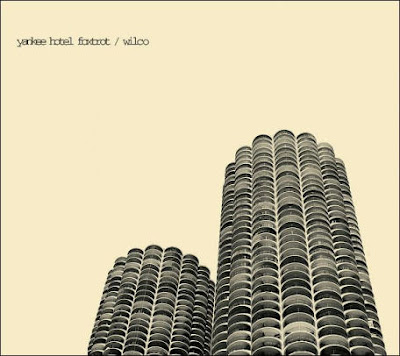
As this was back in the day with a much sparer internet, news of what your favorite band was up to could come rather slowly, but word was out in mid 2001 that Wilco’s much anticipated album, which had been set for a September 11 release (that’s right) was rejected by their label, and that both Bennett, and drummer Ken Coomer were now out of the band, so fans like me were clamoring to hear the record at the heart of this turmoil. Before Wilco themselves started streaming it for free, I found it somewhere online (can’t remember where) and it immediately became an all-time favorite record. It and Bob Dylan’s Love & Theft (which actually was released on 9/11/01) were my go-to albums for a long ass time, and still hit my turntable regularly.

The news that a film was being made about the sessions and album release aftermath was also in the mix as Jones was streaming unedited footage on his site (which is long gone) throughout late 2001-mid 2002. Yankee Hotel Foxtrot was finally released on April 23, 2002, an anniversary which celebrated around that date by Wilco with shows in New York and Chicago, and will be further commemorated with several different box set collections being released in September, but since the film itself hasn’t gotten much notice lately, I thought a timely look back was in order.

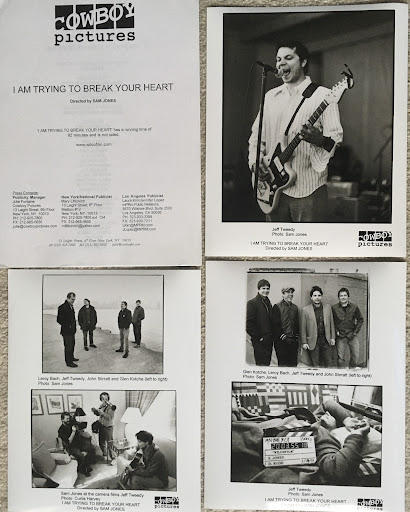
From the press kit for I AM TRYING TO BREAK YOUR HEART (2002)

I rewatched I AM TRYING TO BREAK YOUR HEART again last night for the first time in I don’t know how long, and found it to be a little more rough, and disjointed than I remembered, but still a solidly structured narrative about a band and an industry in flux. Many critics were on the money hailing its cutting depiction of art versus commerce as the film begins with the band deep into sessions for YHF, and feeling like Reprise has got their backs. 

After footage of Wilco front man, Jeff Tweedy, laying down a vocal track for “Poor Places,” and a lovely credit sequence featuring Chicago as shot through the rain-covered windows of an automobile in motion set to an acoustic demo of “I Am Trying to Break Your Heart,” we see the band rehearse and work on material at their Loft studio. The movie began shooting on the first day that drummer Glenn Kotche officially joined the band so that’s pretty damn notable.

We watch as Tweedy and Bennett talk up their situation with Bennett even saying, “I know it’s cool to bitch about your record label, but, I mean, they’re letting us make a record in our loft, and they haven’t heard a word of it. They’re giving us $85,000, and they haven’t heard a word of it.” As I wrote in Wilcopedia, “Like many of the multi-instrumentalist’s statements during the first half of the film, these words come back to bite Bennett’s ass in the second half.

But before we get to the central conflict, Jones gives us great, grainy footage of work-in-progress portions of the aforementioned “Poor Places,” “Ashes of American Flags,” and a fuzzy workout on “Kamera” (referred to as the “Troggs version in the DVD commentary.” There’s also some superb DONT LOOK BACK-esque excerpts (including “Via Chicago,” “Laminated Cat,” and “Sunken Treasure”) from a Tweedy solo show at the Great American Music Hall in San Francisco.

Now let’s dive into the stand-out scene in the – the argument between Tweedy and Bennett that foreshadowed the end of their relationship as collaborators and band members. This is an excerpt from my book of how it went down:

“Wilco reconvene at Chicago Recording Company Studios (aka CRC), where noted cellist Fred Lonberg-Holm is seen working out his part for ‘Reservations.’ There then follows a sequence of shots from the mixing board during work on ‘I’m The Man Who Loves You,’ which are used largely to set up the first event of friction in the film.

That would be the clash between Bennett and Tweedy, described in the commentary as the lowest moment in the making of the record, over the crucial edit between ‘Ashes of American Flags’ and ‘Heavy Metal Drummer.’Bennett keeps over-explaining his position about how to handle the mix while Tweedy tries and fails to be the peacemaker. It’s an incredibly awkward and painful scene that foreshadows Bennett’s dismissal from the band, and considering all that Bennett brought to Wilco during a key period in their career, it’s a shame that he’ll be largely remembered for this tense, awkward moment.

During a gig with his musical partner Edward Burch at the Local 506 in Chapel Hill, North Carolina, in 2002 not long after the release of the documentary, Bennett said from the stage, ‘I’m not an asshole, despite what you’ve seen at the movies.’ Meanwhile, while recording their commentary for the DVD, the other members of Wilco found the scene so hard to watch that they left the room while it played, leaving Jones to do his best to give some insight into what happened. They return after the worst of the scene has gone by—just in time for the bit where a migraine-suffering Tweedy goes into a restroom to throw up (filmed by Jones over the top of the stall).”

Following that, Wilco continues to hone the YHF material, with live performances at First Avenue in Minneapolis, and Bennett’s last live show with the band, which takes place at Petrillo Music Shell in Chicago on July 4, 2001. 

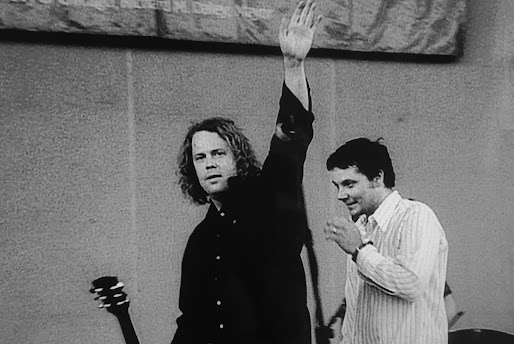
Jay Bennett waves goodbye after his last show with Wilco, Chicago 7/4/01.

The next thing we know, Bennett is out of the band, and Reprise has let them know that if they don’t change the album they should take it elsewhere. We witness Wilco’s manager Tony Margherita bitch on the phone about the situation, while rock critics Greg Kot, who wrote the first book about the band, 2003’s Wilco: Learning How to Die; and Rolling Stone’s David bitch about the sad state of the music biz in the early aughts.

The film’s musical climax is a blistering version of “Monday” from the aforementioned Fillmore concert. Interestingly, “Monday” was one of Bennett’s favorite songs to play live, and Tweedy and Company performed live it in tribute to him when he passed in 2009. The film then closes with the song that Wilco would often use to open their shows around this time, Anthony Newley and Leslie Bricusse’s ‘Pure Imagination,’ from the soundtrack to Willy Wonka & The Chocolate Factory, as we see the four members of Wilco—Bach, Kotche, Stirratt, and Tweedy—walking around a Chicago lakefront with the skyline behind them and their now brighter future in front of them.

In 2015, Tweedy discussed the doc at a special screening of one of his favorite films, Chris Smith’s AMERICAN MOVIE (1999) with the Modern School of Film’s Robert Milazzo at the Carolina Theater in Durham.

Tweedy: “I haven’t seen it in a long time, but there were a lot of moments watching that movie, well, there were a lot of moments during the filming of that movie where, uh, the first time there was an observing ego in the room – the camera…”

Milazzo: “Camera – you do such a beautiful song called ‘Kamera,’ which speaks to that…

Tweedy: “It just felt like, I don’t know if I’ve ever been able to put myself outside of myself enough to see what a camera might be seeing. And so there were a lot of moments during the process of making that record where I was like ‘oh, no – oh, no, that’s what the camera is seeing.’ Obviously, this is not – our relationship with Jay (Bennett) for example was made painfully obvious that there was a big problem in the way we were interacting, the way he was interacting with the band. And it’s really sad that it took a camera to do that or that we weren’t together enough, or grown up enough as people to see that without a camera.”
Sadly, I AM TRYING TO BREAK YOUR HEART isn’t as easily available as it should be these days. It’s not streaming on any of the majors – Netflix, Amazon, Hulu, Apple, etc. – and the DVD is out of print with used copies being pretty pricey, but it can be found, broken up into segments on Youtube. It was long available on Vimeo for rent and purchase, but has been recently removed.

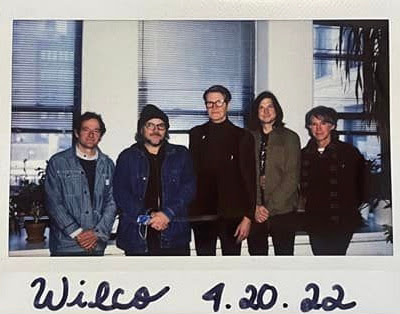
The day before the anniversary of the retail release of YHF back in April, Wilco was photographed at the offices of Criterion, which may be a sign of an upcoming re-issue of the DVD (with hope a Blu ray edition) of the doc.


This would be fantastic for Criterion to add this film to their esteemed Collection. If you don’t know Criterion, they put out deluxe, often definitive editions of movies, and while the original had an extra disc of excellent material, fans know that there was a lot of stuff (the aforementioned 86 hours) Jones shot for the film (Jay Bennett said “We gave him three movies. It should’ve been a box set”), and this would be a great way for that stuff to see the light of day. 

I wrote to suggestions@criterion.com to request it, and hope my fellow fans will do the same. It ideally would help get it streaming again on their channel too.

So Happy 20th Anniversary to I AM TRYING TO BREAK YOUR HEART. Here’s hoping more folks, whether hardcore or casual Wilco fans, will give it a watch in tribute.


More later…

Thursday, May 28, 2015

Wilco’s Jeff Tweedy Talks AMERICAN MOVIE For Film Acoustic


Last weekend, possibly my favorite installment so far of The Modern School of Film's series, Film Acoustic, went down in Durham: Jeff Tweedy of Wilco screened and discussed Chris Smith's 1999 cult favorite documentary AMERICAN MOVIE.

The film was well received by the audience at Fletcher Hall at the Carolina Theatre - many of whom had raised their hands when MSOF founder and moderator Robery Milazzo asked afterwards how many had never seen it before - and I enjoyed seeing it on the big screen for the first time, especially considering it was an original 35 mm print.

AMERICAN MOVIE focuses on aspiring Milwaukee filmmaker Mark Borchardt's attempts to complete his short horror film COVEN, so that he can finance his dream project, an epic full-length feature named NORTHWESTERN.

Borchardt's sidekick, the lovably sclubby Mike Schank, who composed the music for movie, got a lot of laughs, but it was the director's Uncle Bill, who skeptically financed the project and is recruited to act, that most got the crowd rolling. 

After the screening ended, Milazzo relayed a message from Schank: “Happy Memorial Day. Thank for showing the film and thank you, Jeff Tweedy.” Milliazzo then added, “An hour later he texted me back and said ‘Oh, if there are any hot girls in the audience that would like to call me, you c an give them my number.’ And then he texted me a half an hour later – ‘Girls only though.’

Millazzo introduced Tweedy as “former lead singer of Land Ho! And Black Shampoo,” and the Wilco singer came out to rousing applause. 


Tweedy discussed the film and several other subjects with Milazzo, including the Wilco rock doc I AM TRYING TO BREAK YOUR HEART, his contribution to the BOYHOOD soundtrack, and his mother's love of movies. Tweedy's 15-year old son Sam also came on stage for a brief bit and answered some questions.


But the best news for fans was that Tweedy had brought his guitar and performed solo acoustic versions of “Less Than You Think,” “I Am Trying To Break Your Heart” (see video below), “The Losing End (When You’re On)” (Neil Young cover), “One By One,” and “You Are Not Alone.”


Here are some other highlights from the excellent evening:


On why he choose AMERICAN MOVIE:


Tweedy: “One of the reasons that we wanted to watch this movie together is the idea that making things and immersing yourself in making things is an incredibly healthy and sustaining thing to do. I really have this fantasy that if everybody in the world were given the opportunity to make things, uh, it sounds pretty naïve and simple saying it out loud, but I think the world would be a much better place. Everybody would be on the side of existence as opposed to destruction. Creation as opposed to destruction.


That’s the main focus in our house that it’s ‘study hard, do good, try to be kind to people, and try to make stuff – it makes you happy.’”

“I see him (Borchardt) as a very optimistic and vocal person. He preaches it to everybody around him. To Bill, to everybody in the community, you know ‘Do something! You gonna die and not do something? Do something!’ 

I think people might, on one hand might be sort of cynical in indulging him, On the other hand I think that there’s a deep sense that they have to honor that. They have to honor that least there’s somebody in their midst that doesn’t feel like giving up.

Milazzo: “You guys are roughly the same age, you and Mark, I think there’s a year apart – what separates you from Mark?”

Tweedy: “I ask myself that question all of the time. I think that anybody that has had any modicum of success whatsoever asks themselves that question periodically. ‘Why me? Why not a lot of other people that have worked very very hard or our very talented people.”

On Sam Jones' 2002 documentary I AM TRYING TO BREAK YOUR HEART:

Milazzo: 
Was it a big decision to kind of open yourself up that way?


Tweedy: “No, I can honestly say it was a naïve decision. I didn’t feel like Wilco had a persona worth any spending any amount of effort to prune or shape, I just didn’t think there was anything that could come from it that would be that, I don’t know. I felt that a lot of people who spend time on their personas, and their image, were people like Madonna, and I don’t know, maybe Bob Dylan, somebody like that, but it has never been a part of how I view what it is that I’m doing.

But I learned a lot - after the fact I realized that I would’ve never done that again. We basically just let him make the movie, and we didn’t have any say. Well, I mean, we probably could’ve pulled our songs from the movie, you know, so we could have some control if it was really really terrible, but we didn’t. We didn’t do anything. We just saw it when it was done, and said ‘oh, that’s uncomfortable.’ Imagine how very similar Mike and Mark might’ve felt if they went to a screening of this when it first came out.”

Milazzo: “What did you learn about yourself though? You know, in the sense of watching the documentary of Wilco, did you ever have a moment ‘oh, that’s my response’ or ‘that’s my process’? In a sense worrying that you don’t want to put yourself in that again, did you see yourself differently?”

Tweedy: “Yeah, there are…I haven’t seen it in a long time, but there were a lot of moments watching that movie, well, there were a lot of moments during the filming of that movie where, uh, the first time there was an observing ego in the room – the camera…”

Milazzo: “Camera – you do such a beautiful song called ‘Kamera,’ which speaks to that…

Tweedy: “It just felt like, I don’t know if I’ve ever been able to put myself outside of myself enough to see what a camera might be seeing. And so there were a lot of moments during the process of making that record where I was like ‘oh, no – oh, no, that’s what the camera is seeing.’ Obviously, this is not – our relationship with Jay (Bennett) for example was made painfully obvious that there was a big problem in the way we were interacting, the way he was interacting with the band. And it’s really sad that it took a camera to do that or that we weren’t together enough, or grown up enough as people to see that without a camera.”

On Tweedy's mother, Jo Ann Tweedy, who passed in 2006:

Milazzo: “One thing I thought was interesting about your cinema DNA is how it connects for your Mom, and Judy Garland of all people. Because when we asked about a movie I thought we’d be getting a Judy Garland film, not that that would’ve been wrong at the time. But what about when you were young and your Mom watching films with you or around you…”

Tweedy: “My mother was a night owl. She was a high school drop-out who had my sister when she was 16 years old, and I was born much much later than everyone else in my family. I’m 10 years younger than my youngest brother. And so by the time I came around, she had really given up on parenting. You know, there weren’t a lot of boundaries so I was up all night watching movies while my Mom fell asleep with cigarettes in her mouth. 


Yeah, right, it sounds like a terrible parenting thing – it is. But my memory of it looking back is actually really warm. It’s a warm feeling. It’s actually one of the images that comes to mind when I miss my mother. But in St. Louis, the St. Louis TV stations had a movie program, or a late night movie called the “Bijou Picture Show.” I think that’s kind of a Midwestern thing. There were a lot of Judy Garland movies that they would show, a lot of black and white, now it’s Turner Classic Movies – it’s the same thing.”

Milazzo: “If performance cures a sort of anxiety, what does writing cure for you?”

Tweedy: “Well, I think that, I have a lot of thoughts about this. Because I can’t help myself, we’re pretty philosophical in our house and we end up talking about a lot of things like this. I think the best that I can come up with, is that it’s like a really really healthy way of killing time for me. It’s actually, uh, I don’t know, I like not being there. I like to be gone, unburdened enough of having an ego. Which is like what happens when I get completely immersed in the process of making a song. Or making something – it becomes, you become this thing – it’s a maker.

But it’s not necessarily…in fact the more the ego gets involved, the more it suffers. It really suffers when you start to think ‘well, are people gonna think I’m cool because this is so great?’ Then you’re done. The song is done and you can’t return from that. You should put it away until some other time when you can get lost in it again. 


That’s why I said ‘once a song is done, it’s on a record, or finished recording it, or finish writing it even, it’s already done all the good stuff that it was going to do for me. After that it’s all pain and suffering. Because even if people like it, it’s never enough. Or they see it somehow different, or they’re indifferent – that’s the worst of all. ”

On his songs in BOYHOOD:

Milazzo: “BOYHOOD, the great Richard Linklater film, which to me was the best film of last year…”

Tweedy: “I think it should’ve been called ‘Motherhood.’ (Audience applauds) I think the most compelling character in the whole movie was Patricia Arquette. Beautiful.”

Milazzo: “Speaking of beauty, one of your songs is in it. How did that come about? Could you demystify that process? What’s it like to hear your song in a really killer movie in a really killer moment?”

Tweedy: “Well, in that movie there’s a Wilco song “Hate it Here” is in a scene, an actual scene where they’re talking about the song. And I didn’t know it was in there, so it was a little, it actually took me out of the movie a little bit which is kind of a drag. I was like ‘Abbey Road’?”


But anyway, and then the song ‘Summer Noon’ is in the movie also, but it’s kind of on the radio in the background, and I think they wanted something that would be really contemporary when the movie came out. And so they asked me to write a song for the movie and I was working on ‘Suikerae’ so we sent them that. ‘How about something like this?’ Then they said ‘great,’ and they put it in the movie. And then for some reason it was disqualified for an Oscar though. So Maybe you could talk to somebody about that.

“Summer Noon” is basically cut and pasted like a Warhol, like Zerox. I thought, people do that with art, why don’t they do that with songs? I had a minute and a half long song, and I thought, why don’t I just put it on the record twice? Back to back.”

On Wilco’s breakthrough album “Yankee Hotel Foxtrot”:

Milazzo:
“The first attempt at a release was at an interesting moment in history, because the first attempt at release was…”

Tweedy: “‘Yankee Hotel Foxtrot,’ the original release date was September 11th, 2001. The artwork, the entire package, everything was done. And we were dropped so we lost that release date. Obviously, over time it’s weird that it’s become associated with that.

“The lyrics on the whole record were really meant to be…I was thinking a lot about America, and I really wanted to know what I thought of America. Having grown up being somewhat skeptical of America, growing up in a time where I was heavily influenced by punk rock as a young teenager. Very, I don’t know, not willing to submit to the party line of America. I don’t know, I just really, I think a lot of things, ‘oh, there’s a cash machine, is that evil? Is a cash machine evil, or is it just blue and green. You know, what actually is the evil part of America? Because I really don’t think like anything I grew up seeing was particularly evil, but I also knew a lot of things weren’t right.

Anyway, lyrics aside, I don’t know how cinematic they might be, but the actual construction of that record, very very consciously constructed with the idea of cinematic pacing.

Milazzo: “And the transitions, the lack of thereof…”

Tweedy: “Everything was recorded in a lot of different formats, and what we would end up doing is we would mix the first verse of a song and then completely wipe the board and everything completely clean, and start all over for the second verse. And then splice those two together. So we could never remix that record if we wanted to – it doesn’t exist.

And one final thought from the evening:


Tweedy: “It’s one of the weird things about rock music – it’s a youth obsessed culture within a youth obsessed culture, and it’s disheartening sometimes when you start to become known as ‘Dad Rock.’ That doesn’t help.”


The next installment of Film Acoustic, on Monday, June 22nd, looks like another winner: Will Butler of Arcade Fire screens and discusses Terry Gilliam's 1996 sci-fi thriller TWELVE MONKEYS. Tickets are on sale now.


More later...

Thursday, August 27, 2009

Bjork's Volta Tour Live & A Few Other New Live Concert DVDs


Although this is primarily a film blog I like to review recent concert DVDs and musician bio-pics every so often. Here are some brief blurbs about some new favorites:

(Nonesuch, 2009)

I was told that this was a "a gorgeous cinematic interpretation of the tour" and it certainly is. With all the theatrical bombast we're come to expect from Björk, this beautifully shot concert film features a 10-piece female Icelandic brass section augmented by Chris Corsano of Sonic Youth on drums, Jonas Sen on keyboards and electronic composer Mark Bell from LFO providing computer sequencing.

It's an energetic, at times fiery ensemble as on highlights such as "Army Of Me" and "The Pleasure Is All Mine". A showstopping "State Of Emergency" oddly doesn't appear in the track listing but that's my only quibble with this rousing and powerfully pleasing performance film.


As fans of the former Alt.country Chicogoan band Wilco well know, there have been many personnel line-up changes in the 15 years since their debut. 

The highly recommended documentary I AM TRYING TO BREAK YOUR HEART (Dir. Sam Jones, 2002) is essential for some background dealing with one extremely pivotal era in the band's existence but this DVD isn't about their past; it's a representation of where the band stands now. Judging from this, they stand strong indeed.

Filmed at various venues over the last tour from Tulsa to Washington DC, Jeff Tweedy leads his crew through a set-list mainly made up of songs from their last few albums ("Monday" from the 1996 album "Being There" is the oldest selection). 

Fellow film makers Christoph Green and former Fugazi member Brendan Canty handle the camera and editing duties while Wilco brings the rock they've majestically fine tuned over the years. From their rapturous applause at the end of every song, the audience sounds very satisfied - viewers at home will surely be too.


Not a concert film or a bio-doc (though there are elements of both), this is more a "bonus featurette" DVD that accompanies the Brooklyn band's first live CD. That said this 53 minute film is as alive and boisterous as their live shows as it actually acts a sort of mission statement.

As front-man Craig Finn reflects right off the bat: "There's so many of these indie rock shows that you go to that are so joyless. I people to feel this joy and the celebratory nature of rock 'n roll when you go see the Hold Steady." 

From fan testimonials to scrappy live footage, "A Positive Rage" lives up to its title and gives newcomers an inside look at a band just starting to hit its stride. Because it only has a couple of full songs ("Chips Ahoy" and "Stuck Between Stations") coupled with the ramshackle approach of the interviews, it's not really one for repeated viewings, but as a companion to the live disc (which is pretty scrappy itself with its bootleg audience recording sound quality) it's worth one good concentrated viewing.

Okay! There's a few choice music DVDs for you. If you have any recent favorites - hit that comment box below and let me know.

More later...