Showing posts with label Full Frame Documentary Film Fest. Show all posts

Wednesday, April 13, 2022

The Final Fest Report: Full Frame 2022: Part 3

Russian opposition leader Alexei Navalny and pictures of his poisoners in Daniel Roher’s NAVALNY

My coverage of the 25th Annual Full Frame Documentary Film Festival now concludes with my musings on the last three docs I watched while exercise-biking, and wearing pajama pants - the only pluses to having to watch the festival’s offerings at home instead of at the Carolina Theatre, and the surrounding venues in downtown Durham, N.C. Here’s hoping we can all get back to that in 2023. I’ve made this joke before, but when Full Frame does return in full effect from all the pandemic-set conditions, the program will be nothing but documentaries about the pandemic. Yeah, it’s not really that much of a joke.

Anyway, onto Daniel Roher’s NAVALNY, which has been likened by many critics to a thriller for its detailing of the investigation into the poisoning of Russian opposition leader Alexei Navalny. The 44-year old anti-authoritarian was infected with a nerve agent, later to be revealed as Russian president Vladimir Putin’s “signature poison,” on a flight home to Moscow from Siberia in 2020. After recuperating from a coma in exile, Navalny goes undercover in Germany to find the men behind the assassination attempt, and further expose the wide-ranging corruption of Putin’s regime with the help of journalist/hacker Christo Grozev.


The media-savvy Navalny is a charismatic, jovial dude who makes a great protagonist/narrator for the film, as he takes us through the paces of his procedural, which involves an elaborate evidence board (also known as a “crazy wall,” or “murder map”) - you know, a wall covered in pictures of people, newspaper clippings, charts, etc. connected with strings - and, funnily enough, tik tok videos. One of the film’s most crucial moments comes when Navalny, posing as a fellow conspirator in the poisoning plot, gets a Federal Security Service (FSB) scientist to confirm in great detail how the state-sanctioned murder endeavor went down.


NAVALNY is indeed a thrilling portrait of a driven man, and his mission, and is the best film I experienced at Full Frame 2020. Look for it on the festival circuit now, and, with hope, in theatrical release later, before it finds its eventual home on HBO and CNN, the outlets responsible for its production.


Next up, Jon Ayon’s doc short NO SOY ÓSCAR, which insightfully displays s a lot in its 15-minute running time as it follows the journey of the filmmaker through the treacherous border regions between the U.S. and Mexico in search of the area where Salvadoran migrants Óscar Alberto Martínez Ramírez and his young daughter, Angie Valeria, drowned. 


While it contemplates harrowing, heady issues, the film is more meditation on the meaning of the definitely divisive, and deadly dangerous border wall which Ayon describes as a “Trump inspired, ridiculous monstrosity of concrete and steel.” NO SOY ÓSCAR won the President’s Award for Best Short at this year’s fest, but no word yet as to its availability either theatrically or streaming in the coming months. I’ll keep you posted. 

Finally, a very fascinating doc that ended my Full Frame 2022 experience nicely, Yaara Bou Melhem’s UNSEEN SKIES, which explores the work of landscape artist, photographer, geographer, and author Trevor Paglen, who specializes in studying mass surveillance. We witness his processes via his time-exposure photographs showing the streaks of light left by classified satellites taken in the Nevada desert, as his prepares to launch a 100-foot-long mylar sculpture into space, a $1.5 million project dubbed Orbital Reflector.


The project runs into red tape as it apparently didn’t fit into Trump’s concept for Space Force, but the bureaucratic hassle doesn’t deter Paglen from his life’s passion of watching the skies. The film has a glossy look, but it well contains Tom Bannigan’s cinematography, which captures the rocky terrain, and the milky way above it so stunningly that it certainly makes this the doc with the most eye-popping scenery at the fest this year. Bou Melhem’s film equally honors technology, and art, but like many of the best docs at Full Frame (or docs in general) it most celebrates perseverance in the face of odds no matter what size. 

So that’s my coverage of Full Frame 2022. While there were a good number of worthwhile docs, the festival as an online-only event is wearing thin. There were times throughout the four-day event that when I took a break from the films and would do other stuff, that I would almost forget the fest was happening, and that is unacceptable in my world. This can’t be how it goes down next year, new strains of coronavirus be damned. Come April 2023, this thing better be back on in full. You hear this lowly blogger? You Full Framers get on it!


More later…

Tuesday, April 12, 2022

So Many Docs, So Little Time - Full Frame 2022: Part 2

THE MARTHA MITCHELL EFFECT (Dirs. Anne Alvergue, and Debra McClutchy)

So many documentaries, so little time. I crammed as many doc viewings as I could in the four day window of the online offerings of the 25th Annual Full Frame Documentary Film Festival around working shifts at two different jobs, and, of course, sleep. I was able to see some good ones (check out Part 1), but I was sorry I missed the winner of the Full Frame Grand Jury Award, Reid Davenport’s I DIDN’T SEE YOU THERE, and the other award winners, Alejandro Alonso’s ABYSSAL, and Jannis Lenz’s SOLDAT AHMET, which won The Charles E. Guggenheim Emerging Artist Award, and the The John Hope Franklin Humanities Institute Award respectively.

A prize-winning doc that I did catch was Timothée Corteggiani, and Nathalie Giraud’s THE SILENT SHORE (French title: LE SILENCIEUX RIVAGE) which scored The Full Frame Jury Award for Best Short. Running a swift 36-minutes, the film concerns famous fantasy author, Pierre Dubois, and his wife Aline’s quiet life living an idyllic yet haunted home and garden existence in Cartignies, a village in northern France. The couple recount the suicide of their daughter as they go about their days in their lush, often foggy settings, and the aura, and warmth of their resigned sentiment will likely remain in the minds of this film’s audience long after the last credits have faded. 

There always has to be at least one retro political doc in the roster at Full Frame, and this time it comes in the form of Anne Alvergue, and Debra McClutchy’s 40-minute short, THE MARTHA MITCHELL EFFECT. Mitchell was the loud-mouthed socialite wife of President Nixon’s Attorney General, who became an unlikely whistle-blower in the aftermath of the Watergate break-in in the early ‘70s. One of the burglars, James McCord, had been one of Mitchell’s bodyguards, which tipped her off that it had been an inside-job, so the cabinet wife blabbed about it over-time to the press leading to her being sequestered in a hotel room, injected with a tranquilizer, and held for four days to quiet her (one headline was “Who’s Needling Martha Mitchell?”).  

While the White House and the Republican Party did what they could to discredit her, there was a leftwing “Free Martha Mitchell” movement making itself known at the Democratic National Convention in 1972. Mitchell, known as “The Mouth of the South,” channeled her cause célèbre into a stint co-hosting The Mike Douglas Show, and stealing nearly every doc on Nixon and Watergate in the following decades with her outspoken soundbites. Alvergue and McClutchy wonderfully weave the archival footage into a supremely entertaining narrative, which organically mimes the material for key laugh lines.


Mitchell was memorably portrayed by Madeline Kahn in Oliver Stone’s 1995 biopic NIXON, and later this month, Julia Roberts will step into her shoes for the Starz series, Gaslit, so this doc could serve as a primer if its production company, Netflix, would give it a premiere date in time. Whenever TMME becomes available, folks should seek it out as its illustration of how someone who’s widely painted as being delusional, but later turns out to have been telling a crucial truth, makes Mitchell’s story so much more than just a funny footnote. 


Next up, Kevin Shaw’s LET THE LITTLE LIGHT SHINE shines a light on the fight to keep a high-performing predominately Black public elementary school, Chicago’s National Teachers Academy, from being replaced by a new gentrified high school in 2017. We get close up to the heated concerns of the students, and educators as they protest against the Chicago Public School system, and we watch as Isaac Castelaz gets in way over his head as the stressed-out NTA principal in the middle of it all (Castelaz gets frowned on by the board for wearing a “Black Students Matter” T-shirt at one point).

This professionally polished, and compelling film, the second doc I saw this fest about African American educational predicaments, has a lot of emotional drive in its conventionally stream-lined structure, and doesn’t waste any of its 86-minute screen-time in getting us to care about this community, and pull for these passionate people’s plight. The appearance of Chance the Rapper, an advocate for Chicago Schools through his foundation Social Works, certainly helps to power up the protests. Director Shaw has obviously learned well from documentarian great Steve James (HOOP DREAMS), with whom he worked with on America to Me (another Starz series), in making this inspirational crowd-pleaser. This is one that would’ve been great seeing with a packed Full Frame audience on the big screen. 


So that’s a few more docs from Full Frame 2022. I’ll wrap up the remaining films I saw at Full Frame 2022 in Part 3 so stay tuned.


More later…

Monday, April 11, 2022

Online Only, But Still Thriving - Full Frame 2022: Part 1

A shot from the new Full Frame trailer produced by Adam Pyburn Motion Design

In an alternate universe where the COVID-19 pandemic never happened, thousands flooded to the Carolina Theatre, and the Durham Convention Center over the last weekend to celebrate the 25th Anniversary of the Full Frame Documentary Film Festival.

The globally-celebrated milestone, which was commemorated with massive parades, street parties, nightly fireworks, and a special live telecast appearance by President Hillary Clinton, boasted over 200 new documentaries, with the just launched Full Frame streaming platform hosting hundreds more.

But in our sad reality, because of the cautious conditions of the last two years, the quarter of the century celebration of Full Frame is an online-only virtual event, with a roster of under half of the titles than the last fest in the Before Times. So there are 37 titles from 18 countries - 22 feature films and 15 short films, all of which were available from April 7 at 12pm-April 10 at 11:59pm, and I watched what I could in this window.

In previous years (I’ve been attending all four days of the event since 2009), I would cover Full Frame day-by-day, but here I’m simply going to run down, and sum up the docs I viewed over two posts.


The first doc I watched was Dan Chen’s ACCEPTED, which tells the story of T.M. Landry Preparatory, an unconventional K-12 school in rural Louisiana, that went viral in 2016-17 with videos of black students from working-class families opening acceptance letters from Ivy league colleges. This highlighted T.M. Landry’s 100% acceptance rate into the top universities, but a New York Times investigation brought forth allegations of academic fraud, and abuse of many students. 

Chen’s camera focuses on four juniors - Alicia, Adia, Isaac and Cathy - who withstand the harsh, harassing treatment doled out by the school’s aggressive co-founder, Michael Landry, in order to get to the higher education of their dreams. In glossily shot interviews, we learn about these students’ drive, but more their defensiveness over their their situation. ACCEPTED is a polished, and very watchable doc, but while it provocatively bandies headlines, sound-bites, and charges like the school being a “glorified daycare” around, it doesn’t go deep enough into the details for it to be a really insightful examination. Perhaps some outside commentary would’ve helped it nail its subject more definitely.

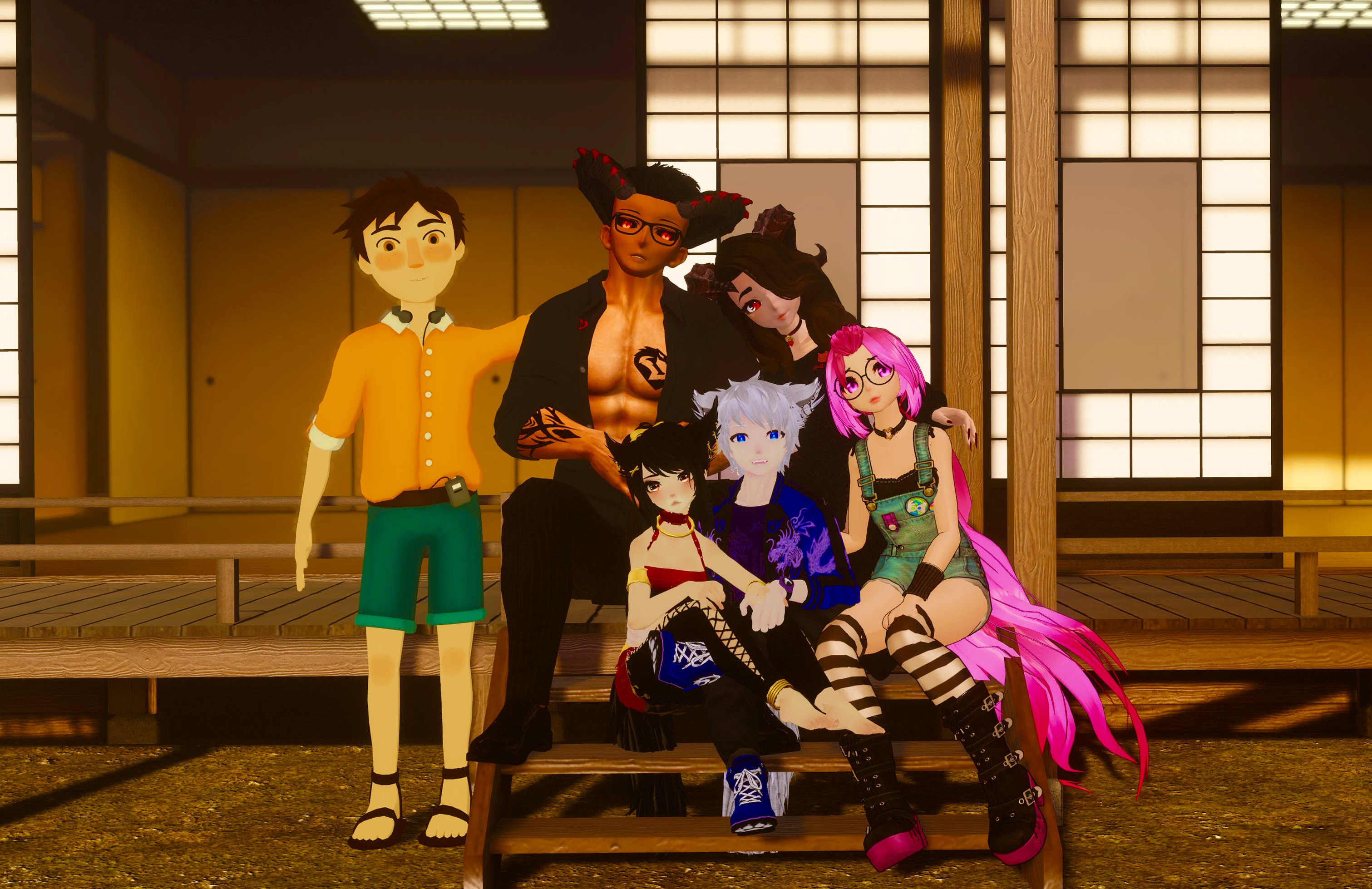
Next up, I dove into Joe Hunter’s WE MET IN VIRTUAL REALITY, which is completely set in the online virtual world platform VRChat, in which users are anime-styled avatars with flashy backgrounds of exploding colors. The film follows the paths of a group of VR community members including a sign language teacher named Jenny, and two long-distance couples, DustBunny and Toaster, DragonHeart and IsYourBoi, as they digitally connect in the metaverse (or maybe “Meet-averse”) that serves as a shelter from the pandemic in the real world.


Via disembodied voices, these characters touchingly share their vulnerable emotions through their evolving avatars, but too much of the film is without their vocals as it displays dance sequences, and other visual distractions instead of getting us further into these peoples’ headspaces. It’s just all too easy to dismiss the film’s thoughtful themes or attempts to explore love under a lockdown as asides, and just see Hunting’s film as eye candy that’s questionable in its qualification to be a true documentary. This is not to say that WMIVR isn’t an authentic doc, because what Hunting captures with the virtual camera app VRCLens is as much a reflection of reality as any other film at Full Frame, but it’s going to take a leap for many viewers, including me initially, to see it as something more than just a big cartoon.


William David Caballero’s 10-minute short, CHILLY AND MILLY, is another doc dealing with animation, but in a simpler style that has no resemblance to the previous film. Caballero utilizes 3D modeled composite characters to bring to life his father’s battles with chronic health problems as a diabetic with kidney failure, and his mother’s role as his eternal care-taker in poignantly measured stop-motion.

The filmmaker mixes these animated scenes of their current medical struggle, with video from 13 years earlier of his Puerto Rican parents at their trailer-home in Fayetteville, N.C., and the result is a loving portrait of the perseverance of Caballero’s family. 


Shortly after I watched the next doc, CHERNOBYL: THE LOST TAPES, it was announced that it garnered a Grand Jury Honorable Mention at this year’s festival. It’s well deserved too, as director James Jones’ assemblage of never-before seen archive footage with new interview embellishments brings new light to the 1986 disaster that led to thousands of deaths, and the collapse of the Soviet Union. The event has been thoroughly well documented as the world’s worst nuclear power plant accident before, but here we get to go through the narrative through the eyes of the workers, the firefighters, soldiers, janitors, miners, etc. who had to suffer through both the excruciatingly dangerous clean-up, and being blamed for what happened by the Russian government in full cover-up mode.

Of course, unsurprisingly, there are many moments of disturbing imagery and activity in this doc that can never be unseen. For me, what really got burned into my brain was grainy footage of a rescue helicopter there to drop sand on a fire hitting a crane, crashing to earth incinerating its crew. The accounts of the far-reaching effects of the radiation on millions are also painful to process, as is the reveal that the official Soviet death toll still remains at only 31 ignoring scores of evidence to the contrary. As the Chernobyl plant, still the most nuclear contaminated area on the planet, has been in the news recently for being occupied by Russian troops as part of the invasion of Ukraine, CHERNOBYL: THE LOST TAPES provides a timely back story. But while it’s a vital addition to the many docs previously produced on the disaster, as well as the excellent HBO mini-series on the subject, it for sure won’t be the last word. 

Alright, so that’s my first batch of docs watched at this year’s Full Frame. Stay tuned for Part 2, coming soon to this blog in front of you.

More later...

Thursday, April 07, 2022

5 Things I Miss About Attending The Full Frame Documentary Film Fest In Person

The Carolina Theatre marquee for Full Frame

The 25th Annual Full Frame Documentary Film Festival is now underway (April 7-10), and like last year, the event is entirely virtual. This is the second year of the fest being an only online affair – 2020 was cancelled all together is it fell right when COVID-19 was beginning to hit big.

Obviously, the fest, hosted in the Before Times at the Carolina Theater in Durham, and the Marriott Convention Center, is being held this way because we’re still in a pandemic, and I get that and all, but damn, do I miss driving to Durham, N.C., and doing up four days of premium infotainment! So, while I have a bunch of streamable docs locked and loaded, I thought I’d wax nostalgic about some of the things I really miss that have decorated Full Frame over the years.

Of course, the documentaries are a given. Sure, it’s not the same without seeing them on the big screen, and there are a lot fewer films available than in the Before Times, but there’s still a rich roster of feature and short form docs to choose from. What I’m talking about is the packaging around all the special screenings that I’ve enjoyed covering the sacred event as a very thankful member of the press such as:

1. The marquee (at the top of this post), all the spiffy signage, and, of course, the wonderful staff

It’s such a nice feeling to walk through the entryway into this doc lover’s heaven each morning of the fest, and be welcomed by the Full Frame brand in full effect, as well as the fine staff, who are always friendly people who clearly really enjoy working the event.

2. The lanyards


When I got my first press pass lanyard, it felt like the film festival equivalent to having my name up in lights! Well, not really. People rarely looked at mine, so my dreams of spreading the word of Film Babble Blog to the masses never materialized. Still, the lanyards are a nice keepsake for me to hang from doorknobs around my home.

3. The panels


Look at this panel for SAINT MISBEHAVIN’: THE WAVY GRAVY MOVIE from 2009. There’s cinematographer Daniel B. Gold, documentarian God D.A. Pennebaker, Director Michelle Esrick, Wavy Gravy, his wife (Jahanara Romney), and composer Daniel B. Gold onstage at Fletcher Hall at the Carolina Theater. I’ve seen many great panels throughout my adventures at Full Frame, but this one really stands out in my mind. They gave out red clown noses to the audience too. I still have mine.

4. The bustling crowds buzzing about the docs they are about to see or just have seen


Many a time I have sat people-watching on the outside stairs to the second level of the Carolina Theater eating a meal from George Bakatsias’ great Greek grill in the fancy tent in the venue’s courtyard. The high level of doc excitement contained in the plaza was always powerfully palpable.

5. The programs

Ah, the programs. They are usually 100-130 pages thick with lotsa pretty pics decorating each doc entry, and handy schedules, filmmaker interviews, and other informative features. I implore festival planners or whoever deals with these things, I know they’re expensive to produce, but please don’t let this be a casualty of the pandemic! When Full Frame comes back next year (I’m not saying “if”), I want to see a brand new 2023 program for festival #26 or, uh, I’ll be sad. 

And one more bonus thing I’m a-gonna miss:

6. The Saturday night rock doc


Many of the years that I’ve attended and covered have had one of the offerings on a late Saturday evening to be rockumentaries about such luminaries as Arcade Fire, The Magnetic Fields, Nick Cave, The National, the Avett Brothers, and even Pussy Riot. These tuneful treatments always hit the sweet weekend spot, and I wish I could replicate that feeling at home this go round, but, unless I missed it, there aren’t any music-themed doc options in this year’s line-up. 

Okay, enough of my lamenting about the past. It’s time to dive deep into the docs of Full Frame 2022. I’ll be posting as I go so stay tuned to this space, and follow @filmbabble on Twitter.

More later...

Monday, June 07, 2021

Full Frame 2021: Part 3

The 24th Annual Full Frame Documentary Film Festival is winding down, and I've just got a couple more docs to sum up. I saw way less non fiction films this year due to the limited roster of the online-only event, but I was mostly satisfied by the works I watched. Here's hoping that next year we can get back to the Carolina Theater, and the Marriot Convention Center for a return to a real in-person big screen festival.

I’d like to give a shout out to Adam Pyburn Motion Design for providing a great but all too brief animated trailer that ran before each feature. I worked with Pyburn, who’s produced trailers at previous Full Frames, at the Colony Theater in Raleigh over a decade ago, and I’m happy to see his art getting displayed in this fine forum. The image at the top of this post is from the spot for this year’s festival - you can see the full trailer at Pyburn’s website.

Now onto my last few films from Full Frame 2021:

HOMEROOM (Dir. Peter Nicks, 2021)

Filmmaker Nicks’ third feature-length doc comes off as more home movie-ish than the other docs at this year’s Full Frame, but that’s not a bad thing as it puts us up close to its passionate subjects. It’s surely a premise that will most likely anger conservatives with its repeated refrains to “defund the police” since it deals with students at Oakland High School in California protesting the police presence on the institution’s grounds. The film also covers how the spread of covid-19, and police shootings such as the tragic killing of George Floyd triggers the activist teens and fuels their opposition.

The closest this film has to a star is Denison Garibo, a Latino student member of the Oakland School Districtwho tries to keep his cool as he attends meetings and hearings with cops and even Oakland’s mayor Libby Schaaf, who is as condescending as humanly possible. THE HOMEROOM, which is considered the third film in Nicks’ Oakland trilogy (the other films being 2012’s THE WAITING ROOM, and 2017’s THE FORCE, is a talk-filled time, but it’s never not compelling, and if you’ve never heard the term “hella” * (as in “a hella lot of food”) you’ll hear it a hella lot here.

* The slang word originated in Oakland, something I did not know before this doc.

STORM LAKE (Dirs. Beth Levison & Jerry Risius, 2021)

My final film at the fest focuses on the daily operations at a Pulitzer Prize winning newspaper in the small town of Storm Lake in Iowa. The central figure of the doc is Art Cullen, the Editor of the Storm Lake Times, who is described as lanky, and white haired by one commenter, and “the voice of the Democrats in BV (Buena County).” Members of Cullen’s family also work for the paper, which has been in business since 1990.

The subjects that are tackled in the doc’s less than 90 minute running time are immigration, farming, and local politics. As the film largely takes place in early 2020, the Presidential campaign is touched upon with brief cameos by Elizabeth Warren, Pete Buttigieg, and Amy Klobuchar, who quips that she can “see Iowa from her porch.” A couple of things this modest movie taught me were about News Deserts, which are small communities that have no newspaper outlets, and that there are still newspapers that have TV listings.

I enjoyed STORM LAKE greatly. This is partly because I’ve written for newspapers and find their processes compelling. One of the only issues I have is that the pandemic is clumsily introduced into the narrative. But overall this is a stimulating look at people who love their jobs and take them seriously. As newspapers are fading, it’s inspiring to see one that’s still thriving in the world of fake news, even if they have years with little profit. I haven’t seen any of Directors Levison and Risius’ previous projects, but this fine film encourages me to seek out their other work.

So thats yet another Full Frame. Obviously it was a very different experience as I had to watch all the docs on the small screen usually while in pajama pants. I am extremely hopeful that things will be better in the future normal, and that I can join my fellow film fans in dark rooms for powerful picture shows. That can’t be too far off, right?

If you haven’t already, please check out my coverage in Part 1, and Part 2.

More later...

Sunday, June 06, 2021

Full Frame 2021: Part 2

It’s a few days into the Full Frame Documentary Film Festival, now in its 24th year, and I’m continuing to make my way through a plethora of non-fiction offerings. As this is an online-only event, I sorely miss spending time at the Carolina Theater, and the Marriot Convention Center in Durham where I could hobnob with other film fans, and watch these brand spanking new docs on the big screen. Due to the pandemic, the Carolina will be closed until later this month so right now, the main cinema, Fletcher Hall, looks like it does above (except for the lights probably being off):

Without further ado, here’s the last few docs that I’ve watched.

TRUMAN & TENNESSEE: AN INTIMATE CONVERSATION (Dir. Lisa Immordino Vreeland, 2020)

The relationship between two of the most famous American writers of their time, novelist Truman Capote and playwright Tennessee Williams, is lovingly explored in this beautifully bitchy biodoc.

Director Vreeland, whose film about her fashion icon mother, DIANA VREELAND: THE EYE HAS TO TRAVEL, was shown at Full Frame in 2012, weaves together a narrative anchored by excerpts of Capote and Williams’ separate appearances on The David Frost Show in 1969, ’70, and ’72. In between these load-bearing clips, are hundreds of photos (some never seen before), archival footage, scratchy audio recordings, and sequences that feature voice-over work by Jim Parsons (you know, Sheldon from The Big Bang Theory) reciting Capote’s words, while Zachary Quinto (uh, oh yeah - Spock!), recites William’s.

After meeting in 1940, when Capote was 16 and Williams was 29, both writers burst onto the literary scene in the ‘40s. Their paths crossed over the next few decades as they each had their runs of successes, including Capote’s In Cold Blood, and Breakfast at Tiffany’s (both books were adapted into popular movies), and William’s theatrical productions, A Streetcar Named Desire and Cat on a Hot Tin Roof. The question keeps coming up – were they best friends or best enemies?

I’ll make a case for the latter as the juiciest material here involves the wordsmiths mercilessly mocking the other’s work. Most deliciously, Williams sums up Capote saying “I don’t think bitchery is the most attractive element in human character, but bitchery is beginning to be a very strong selling commodity in writing.” There is a wealth of wit in TRUMAN & TENNESSEE, Vreeland’s often poetic portrait of these two troubled artists, which as a conversation is as intimate as it is brutal.  

And finally for today, a couple of doc shorts (short docs?):

THE RIFLEMAN (Dir. Sierra Pettengill, 2021)

This nearly 20-minute film is the story of Harlan Carter, who went from being a Laredo, Texas Border Patrol Agent to a leader in the National Rifle Association. But before his ascension in the NRA, a 17-year old Carter shot and killed Ramón Casiano, a 15 year-old Mexican, with a shotgun in 1931. Carter only served two years in jail for the racist murder as the conviction was overturned, but the incident was largely unknown until 1981 when it was uncovered by journalists.

Like Director Pettengill’s only feature-length doc, 2017’s THE REAGAN SHOW, the short relies mostly on archival footage, but also contains shots of relevant newspaper and magazine clippings. The narrative is effective, but the film goes by too fast. It might have been better as a longer study of the man who coined the NRA’s slogan, “Guns don’t kill people, people do,” but it does timely touch on the debate over gun control that obviously still rages strongly today.

WE WERE THERE TO BE THERE (Dirs. Mike Plante & Jason Willis, 2021)

The American bands, the Cramps and the Mutants, are punk legends, but the gig that this film details may be just as legendary. In 1978, both bands performed a show at a California mental institution that was shot with a black-and-white video camera, and a single microphone, by an outfit named Target Video. The short, whose title comes from the words of one of the concert’s 100+ attendees of the event at Napa State Mental Hospital, features the patients losing their inhibitions to the loud, raw, in-your-face tunage. It’s an entertaining, and punchy punk short, that runs over 25-minutes, but the existence of another film, The Cramps: Live at Napa State Mental Hospital, makes me think that the footage may not be as rare as it’s billed here.

Stay tuned for the third and final installment in my coverage of Full Frame 2021, and if you haven't already, check out Part 1.

More later...

Friday, June 04, 2021

Full Frame 2021: Part 1


In April 2020, the 23rd Annual Full Frame Documentary Film Festival was cancelled due to rising concerns about the coronavirus pandemic. It was sad, but, of course, completely understandable. Now, Full Frame is back, but with a catch: the entire festival is a virtual event. That’s despite the promotional image above that shows an outdoor screening - there will be none of those. So my yearly trip back and forth to the Carolina Theater, and the Marriott Convention Center in Durham is replaced by staying home, and watching a bunch of docs on the small screen.

Another thing that is different is that there is a much smaller roster this time around – only 36 titles are being presented, which is way less than the over 100 films that usually make up the program. To be exact, 21 feature films and 15 shorts will be available via fullframefest.org. This means that folks may actually be able to see all of the docs that are offered.

Because of these changes, I am conducting my coverage differently. Regularly I would post each day of the festival – i.e. Day 1, Day 2, and so on – but since I won’t be adhering to a schedule, the posts will be Part 1, Part 2 and so on. Besides, Full Frame began two days ago, on June 2, so there’s that.

I’ll start with the first two docs I watched, and we’ll see where this online-only event takes us.

TELEVISION EVENT (Dir. Jeff Daniels, 2020)


Several years ago, an episode of the FX series The Americans, a show about Russian spies in the ‘80s, reminded me of the controversial TV movie, THE DAY AFTER. The 1983 ABC telefilm dramatized the effects of a nuclear attack on various people in the Midwest, and I remember seeing it as a 13-year old, and getting pretty scared. President Reagan himself even felt that way. This doc, directed by Jeff Daniels (no, not that Jeff Daniels), puts the THE DAY AFTER into fascinating perspective, with interviews and footage, that take us into the film’s making, its airing, and the overwhelming reaction that came from the fact that 100 million viewers watched its original broadcast.

Despite that one of the producers said that they “didn’t want to have recognizable stars,” the film starred Oscar winner Jason Robards, Oscar nominee John Lithgow, Oscar nominee Jobeth Williams, and Steve Guttenberg (yes, that Steve Guttenberg), who will never come close to winning a Oscar.

Director Nicholas Meyer (TIME AFTER TIME, STAR TREK II: THE WRATH OF KHAN) dominates the interview segments, and that’s a good thing too as he talks about his fights with Standards and Practices, and the producers, as well as revealing that he “was thinking if I just made a movie showing what nuclear war was, I could unseat Ronald Reagan when he ran for re-election.” The “making of” segments are equally interesting as they show how effects such as people vaporizing, and convincing mushroom clouds were created. THE DAY AFTER had a major impact spawning extensive media coverage, considerable classroom discussions, and even a news panel moderated by Ted Koppel that aired after the film that included Carl Sagan, Henry Kissinger, Elie Wiesel, Robert S. McNamara, and William F. Buckley. Now, ain’t that a brain trust!

Despite a few too many aerial shots of the Century City towers in Los Angeles where ABC’s offices are located, TELEVISION EVENT is a crisp, swift breakdown of what went on behind the themes of arguably the most devastating depiction of nuclear war ever shown on television. I’m not sure it’ll make me rewatch THE DAY AFTER all these years later, but I’m thankful for all the transfixing insights that this doc delivers.

THE FACILITY (Dir. Seth Freed Wessler, 2021)


This short doc, which runs nearly 27 minutes, concerns immigrants detained at the Irwin County Detention Center in Ocilla, Georgia, during the early days of the pandemic. We are first introduced to Nilson Barahona, an inmate from Honduras, who has been incarcerated for 20 years despite that the rest of his family are U.S. citizens. Then there’s Andrea Manrique, from Columbia, who while on a tourist visa was detained for revealing she feared returning to her home country, and says that her stay at the ICE facility has been “a living hell.”

Director Wessler conducts his interviews with Barahoma, Manrique, and a few other detainees through a site called gettingout.com, a site devoted keeping prisoners in touch with their families. When a few people (an employee and one of the immigrants) contract the virus, the inmates go on a hunger strike, and refuse to work at the facility. This is followed by protests when a whistleblower alleges medical neglect at the Center including unnecessary surgeries. Although it ends on a positive note with the release of Barahona and Manrique, and the closing of the facility, the takeaway is how disturbing the conditions of many of these places are. It probably won’t be seen by enough people, but the ones that do view THE FACILITY will most likely look at the issue of immigration just a little bit differently.

Okay, so those are my first two docs of Full Frame 2021. Stay tuned for more coverage as I consume more non-fiction film goodness.

More later...

Friday, April 19, 2019

AMAZING GRACE: Even More Glorious Than I Expected

Opening today at a theater near me:

AMAZING GRACE (Dirs. Alan Elliott, Sydney Pollack, 2018) 


This Aretha Franklin concert film, finally released after 46 years of legal wrangling and technical issues, is even more glorious than I expected it to be.

I had more than an inkling of its wonder as I’ve heard the live recordings, released on the 1972 Grammy-winning album, Amazing Grace, many times, but actually seeing the Queen of Soul at the height of her power, performing her vocal gymnastics, backed by Reverend James Cleveland and the Southern California Community Choir is a mind-blowingly emotional experience for which I wasn’t quite prepared.

The audience I saw it with at the Full Frame Documentary Film Festival a few weeks back definitely agreed as they acted like they were at a real live Franklin show. They rapturously applauded after every song, and sometimes even during songs when the passion of Franklin’s unbelievable belting was hard not to respond to with loud clapping.

The footage of the original real live Franklin show was shot by Sydney Pollack over two nights in January 1972 at the New Temple Missionary Baptist Church in Los Angeles. The shoot well wonderfully, as evidenced by the resulting we have here, but Pollack failed to use clapperboards, which assist in synching visuals with sound, so it took decades before the problem could be solved via digital technology.

Former Atlantic Records A&R man Alan Elliott, who bought the film rights in 2007, had the sound remastered, and, with editor Jeff Buchanan, cut this pleasing 90-minute concert movie out of 20 hours of raw footage.

Meanwhile, Franklin sued to block the film’s release multiple times for reasons that differ in just about everything you would read about the film but seem to all come down to money.

But all that background aside, the film, that was “produced and realized by” (that’s an actual credit) Elliot, is one of the most joyous musical movies I’ve ever seen. Above I’ve called this a concert film rather than a music documentary as it’s a straight-up collection of performances from two nights, with only the context of opening and ending sum-ups. In a documentary there would be interview segments, and explanations to things like how it is that Mick Jagger came to be in the back of the church, but in this live documentation, Jagger’s just there dancing along with the rest of the congregation.

Too many highlights to list here (just basically look at the song listing and see all the highlights listed), but I was particularly moved by the 29-year old Franklin’s take on Marvin Gaye’s “Wholy Holy,” her leading the choir through the rousing AF gospel standard “Old Landmark” (this is the song that James Brown performs in THE BLUES BROTHERS with the same choir btw), and her sweet 
sequeing of Thomas A. Dorsey’s “Precious Lord, Take My Hand” into Carole King’s “You’ve Got a Friend.” All show-stopping stuff. 

Rev. Cleveland should be also be noted as he confidently conducts both evening’s programs and adds his baritone vocal throughout.

For me, AMAZING GRACE is already up there with such concert film classics as STOP MAKING SENSE, THE LAST WALTZ , and GIMME SHELTER. It’s a shame Franklin never made peace with the production before she passed last year, and that Pollack was never able to get the film together before he passed in 2007, and that it took almost half a century for it to see the light of day (or darkness of a movie theater), but it’s here now and it’s a glorious must see. Even if you’re not religious (I’m not), or don’t like gospel (I like some), it’s still powerful enough to make an atheist say “Amen.”


More later...

Tuesday, April 09, 2019

Full Frame 2019: Day Four


The fourth and final day at this year’s Full Frame may have been my favorite. That’s largely because of the Closing Night film, but I’ll get to that below. Here’s some takes on the films leading up to that. 

Avi Belkins’ MIKE WALLACE IS HERE started off my day. It’s yet another biodoc (not that I’m complaining – I love biodocs) of a famous figure told through the testimonials of family, friends, and admirers, and a large supply of footage, video, and photos. This time, legendary broadcaster Mike Wallace gets the treatment and we are taken through six decades of the man’s work, taking us beyond his best known work as the co-host on 60 Minutes.

I was unaware that Wallace, before he became one of the most feared TV journalists, had been an actor, a game and variety show host, and a commercial spokesman for many products including Parliament Cigarettes, something that came back to haunt him. I also didn’t know about the mid ‘50s late night interview show, Night Beat, which, from the clips shown here, looks like a ginormous influence on every hard-hitting interview shows.

I enjoyed all the bits from the many famous interviews he conducted throughout his career, the most notable being Salvador Dalí, Eleanor Roosevelt, Barbara Streisand, Malcolm X, the Ayatollah Khomeini (!), and the eight U.S. Presidents he interviewed from J.F.K. to Bill Clinton – there’s even a snippet of a piece with a young Donald Trump, who says he’s not going into politics.

I would’ve liked Belkins to have gone deeper into Wallace’s suicidal dark period, touched on THE INSIDER, Michael Mann’s 1999 film about a controversial 60 Minutes segment on a tobacco industry whistleblower (Wallace wasn’t happy with how he was portrayed), and maybe a little something about his son, Fox News Anchor Chris Wallace, who is only mentioned in passing. Nevertheless, it’s a fine primer to the life of a television icon with a lot of choice cuts from his illustrious career. I can’t really say it’s another RBG or WELCOME TO THE NEIGHBORHOOD, but there should still be an audience out there for it.

Following that was Kenny Dalsheimer’s YOU GAVE ME A SONG: THE LIFE AND MUSIC OF ALICE GERRARD, a portrait (yep, another biodoc) of the Durham-based folk singer Alice Gerrard. 


The lovingly crafted film takes us through the multi-instrumentalist’s history and love of traditional music largely through interviews with Gerrard, her family, a score of fellow musicians, and mostly photos as precious little footage exists from her early years.

Gerrard’s marriages to Jeremy Foster and Mike Seeger (both musicians) are explored, but it’s partnership with Hazel Dickens, who performed with her in the Black Creek Buddies, that is focused on the most. The duo battled sexism, and injustice while carrying the folk/country/bluegrass torch forward. In the ‘80s, Gerarrd extolled the values of her musical loves by becoming the editor-in-chief of The Old Time Herald, a magazine devoted to trad tunes. 

YOU GAVE ME A SONG is a touching tribute to an extremely talented lady, whose name, and music I’ve heard often but never knew her background. It’s as insightful as it is a toe-tapper, but more importantly it’s a film festival crowd pleaser. Even if you don’t like this kind of music, it’s must see. 

Finally, the Closing Night Film that I mentioned above was Alan Elliott and Sydney Pollack’s AMAZING GRACE, about Aretha Franklin’s legendary performance at the New Bethel Baptist Church in Watts, Los Angeles in January 1972. More a straight-up concert film than a probing doc, the movie is even more glorious than I had expected. 

Since the film will be released in my area next week, I’ll wait until then to post a review, so I’ll just leave you with the trailer right now. Watch it and I bet you’ll want to see it. If you don’t, I’ll just assume you don’t possess two ears and a heart. 


So that’s Full Frame 2019. I had a great time and saw some great docs. Of course, I always do at this Festival – that’s why I have gone every year for over a decade. I’m already looking forward to next year.

More later…

Monday, April 08, 2019

Full Frame 2019: Day Three


There’s a lot to cover from my third day at the Full Frame Documentary Film Festival this year so let’s get right to them. These entries are more blurb-y than usual because it’s a long roster, and I’m exhausted from the onslaught of docs.

First up, David Hambridge’s KIFARU
, which concerns James Mwenda & Joseph ‘JoJo’ Wachira, two Kenyan rhino caretakers, and one of their herd, Sudan, the last male northern white rhino in the world. 


At first KIFARU was killing me as it was drawn out and had a skimpy storyline mainly involving watching James and JoJo walk around with rhinos, but a compelling narrative forms, and I really began to feel for the 45-year old Sedan.

James tells us that when Sedan was born, “thousands of northern white rhinos roamed Africa,” but “violent wars and intense poaching drove these rhinos towards extinction.” Later in the film he concludes that “extinction is the definition of human extremes of greed.” But as heartbreaking at Sudan’s death as the caretakers and the audience, there is a silver lining in that the rhino’s DNA can be used by scientists to possibly clone the species. KIFARU * may have moments that make it the saddest doc I’ve seen at this year’s festival but it’s also among the most endearing. 


In Kiswahili, Kifaru means Rhino.

Following that was François Verster and Simon Wood’s SCENES FROM A DRY CITY, a 12 and half minute short about the water crisis in Cape Town, South Africa. Massive drought hit the region in 2015, and continued in the years since forcing residents to pay for very limited quantities or seek elsewhere for water. But this fine film is more about imagery than information as gives us stirring shots of people struggling to find water by even dancing with flags to make it rain, bleak landscapes with dried up lakes, and police trying to enforce water regulations. 

Alexander Glustrom’s MOSSVILLE: WHEN GREAT TREES FALL, which came next, is about the town of Mossville, Louisiana, a community founded by former slaves that is threatened by a high concentration of industrial plants and their toxic emissions. 


One resident, Stacey Ryan, refuses to pack up and move from his house which is in the way of a large factory’s expansion. “Welcome to beautiful downtown Mossville – population: one,” Ryan sarcastically says at one point.

While security from the South African-based chemical company Sasol that’s creeping closer to his property harass him, Ryan also has to deal with sickness, no doubt caused by the chemical exposure from the nearby plant. Many moments in MOSSVILLE are rich with poignancy as residents lament about the history of their area, but overall it’s an angering portrait of how uncaring corporations can cause fence-line communities to crumble. Another devastating doc in a festival full of them. 

Stanley Nelson, who directed the day’s last film, MILES DAVIS: THE BIRTH OF THE COOL, is no stranger to Full Frame, having had several of his docs, including JONESTOWN: THE LIFE AND DEATH OF PEOPLES TEMPLE, THE FREEDOM RIDERS, and THE BLACK PANTHERS: VANGUARD OF A REVOLOUTION, screen at the festival over the years (Nelson also won Full Frame’s Tribute Award in 2012).

Nelson’s latest is a musical biodoc of the jazz legend Miles Davis, which by its title made me think it was specifically about Davis’ work in the ‘50s as there was a compilation covering that period by the same name, Birth of the Cool. But, no, it’s a career overview that traces Davis’ history from his birth in Alton, Illinois in 1926 to his death in Santa Monica in 1991, via scores of engrossing performance footage, little seen photos, and testimonials by folks like Herbie Hancock, Quincy Jones, Ron Carter, Wayne Shorter,

This material is decorated by narration provided by actor Carl Lumbly reading in a familiar rasp from transcripts of 55 hours of Davis interviews. There are also intriguing bits of studio outtakes from such as the master trumpeter’s iconic work, Kind of Blue. The film doesn’t shy away from Davis’ darkness - his drug use, and spousal abuse * are touched upon as much as his jazz innovations.


From the ‘40s bebop era to his electric period of the ‘70s, which was highlighted by one of his most successful albums, Bitch’s Brew, this doc provides a non flashy straight forward portrait of Davis for the uninitiated. It may be too formulaic a doc for the hardcore, but I bet even they will dig some of the rare treats within.

* Davis’ first wife, Frances Taylor Davis, one of the most touching interview subjects here, sadly passed away late last year.


More later...