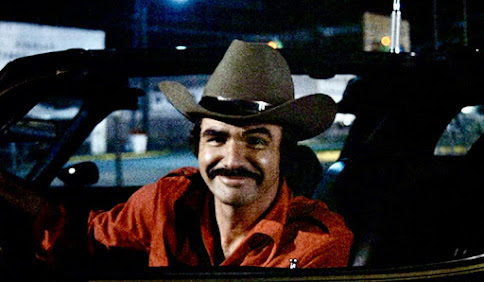
“Could you turn it off? This is important. This is not art, this is life!” - Charleen Swansea in SHERMAN'S MARCH (Dir. Ross McElwee, 1986)
Being a lover of local film making and documentaries I was elated about the recent release of a DVD box set of the work of Ross McElwee, which contains his films CHARLEEN (1978), BACKYARD (1984), SHERMAN’S MARCH (1986),
TIME INDEFINITE (1993), SIX O’CLOCK NEWS (1997), and BRIGHT LEAVES (2004).
So I thought it would be a good occasion to have a chat with the subject of his first doc, poetry teacher Charleen Swansea. Swansea was as funny and feisty as she was in the four films she made with McElwee as she discussed those docs, her experiences with such luminaries as Ezra Pound and Albert Einstein, and her new film project LIVING HISTORIANS.
Film Babble Blog: With the release of this DVD box set what stands out the most to you looking back at those films?
CHARLEEN SWANSEA: I loved watching Ross evolve into his style. Kind of the like the TV series that Alfred Hitchcock had. It would come on and show Alfred Hitchcock and the shape of his profile and then he would slowly walk into it. I felt like that was what I watched Ross do. He walked into his own profile.
SIX O'CLOCK NEWS and TIME INDEFINITE,were originally one film. Ross knew what he was working on was getting much too long but he was so in to what he was discovering as he continued to film that he just kept going and looking at what was coming up. It felt right and so he just kept filming, thinking I'll sort it out later.
When I said to him, I think this is getting too long he answered "no this isn't long enough". He turned out to be right and he got 2 really fine films. They are of a piece to me because Ross comes out of the closet with his own spirituality in those 2 films. He lets go and lets you see what he is really made of.
He's a sentimental spiritual man who also happens to be a film genius. The style he found is something no film maker tried before. It is such an insightful and appealing style that everybody wants to try recording their “personal history” now.
FBB: I rewatched SHERMAN'S MARCH yesterday and I loved the fact that your great line – "this is not art its life" is the name of a chapter heading on the DVD.
CS: Ross quotes that a lot - frequently when I see him.
FBB: In that scene and others in that movie you seemed genuinely annoyed at him having the camera on so much.
CS: Well I was! So was his father. You see that in TIME INDEFINITE. Dr. McElwee is on the phone talking urgently about a patients care. When he hangs up he sees Ross who has been watching through the camera lens all the while he was talking about saving somebody's life or cutting somebody open or something serious and there is Ross, just watching while his father in exasperation says "I'll be glad when that big eye is out of here."
Thank God his father, whom Ross adored and I did too, lived long enough…you know he died suddenly of a heart attack while driving in the snow. It was devastating for the family but he lived long enough that came to admire what Ross was doing and to tell him so.
There was a lot of pressure on Ross as an adolescent boy. He is the first born son in a large family. He was expected to become a surgeon like his father. His brother Tommy did do that. And there was another boy. Did you know that?
FBB: No, I was unaware.
CS: Nobody talks about it much. The McElwee family with 4 kids would go on the weekends to the lake. They went swimming, diving off the dock. One day a speed boat came by and cut one of the boys in half. Dr. McElwee was there. So was Ross. And the mother they adored. She grieved and then came down with cancer. Nobody spoke of the connection but many thought the loss killed her.
That pain played like a cello in Ross’s growing up and I think of it sometimes watching the films. I can feel the wounds in Ross’s heart. And I think sometimes that in his films that Ross is…trying to make things okay. The viewer senses that things are not okay.
FBB: Trying to make order out of chaos?
CS: You know Ross cares about the heart and soul of people. He is not always capable of taking care of details. When we were filming BRIGHT LEAVES we went to the Duke mansion where the film opened. We stayed there an hour and a half then we went to his house which I call "Buck Duke's outhouse" and when we left, I don't remember where we were going, to Raleigh or someplace. 20 minutes down the road Ross said "you know I left the soundtrack for the film on the column outside the Duke Mansion."
In SHERMAN'S MARCH he is talking to the camera and he steps backward and disappears. He actually stepped back ward into a river! He chose the scene for its beauty but then, talking to the audience and forgot where he was and went down.
FFB: (Laughs) Yes, that's a great moment.
CS: He's a klutz. He's incurable. He's inept in a lot of ways. But one reason he's inept is because he believes what is really important is making things right in his own heart and mind and with his own family, with his Grandma, with black people, with violence in the world.
I mean he really is after doing something about it! That's why I love and admire him no matter what he steps into or loses. Ross leads with his heart and completely trust his intuition.
FBB: When you've talked before about being embarrassed about the material in CHARLEEN, it's notable that there many embarrassing moments for Ross in his movies where it is amazing to me that he left some of the stuff in – the conquests of the girls in SHERMAN'S MARCH.
CS: There's no conquest! He never had one conquest!
FBB: Not a conquest then but his trying to talk one woman into being in a relationship with him.
CS: Yeah right, that was pitiful wasn't it?
FBB: Sometimes I look back at my life and feel like its nothing but one embarrassing episode after another, and it seems that there's the truth in art – to show that and not be afraid. Yeah, that's who I am. That's what I get. Within that kind of thinking I was so amused by the weird Burt Reynolds bit in SHERMAN'S MARCH.
CS: Wasn't that funny? That was so funny.
FBB: So Ross is trying to break through the barriers to get Burt's take on concepts like masculinity in the South. I mean he's on the set of a redneck car race movie, I doubt he'll be Mr. Insight and have much to say on that. It was so amusing to me that he would be going after that angle at all.
CS: Well you know Ross is really an intellectual. We don't think about that because we don't see it. His ineptness and his being embarrassed and what you're saying about him is all true. And it is amusing to all of us – we think "thank God that's not me". While the movies are playing we don’t see the strength of his intellect.
However, one of the most exciting intellectual conversations that I've ever had in my life (and remember I've had conversations with Einstein, Bucky Fuller, and Ezra Pound) was with Ross.
We were going to Ocracoke to shoot that scene in which my sister had just been buried. The ferry ride took 5 hours. On the way over Ross and I sat together and he told me about what he thought BRIGHT LEAVES might take as a direction.
Not what it was about because that's not the way he works.
It might be this and it might look at that and it might...and he threw on the table all different kinds of ideas as if they were children's building blocks - blue and green and red and purple and there were a couple of yellow bridges.
Remember those blocks from when we were kids? I said "you have more than you want to use in front of you because if you use them all it is really going to be complicated."
But Ross seemed determined to use ALL of those ideas that it took 5 hours to bring up and speculate about. He was determined to find the way that it all fit together, to discover the relevance of each of the many parts. And darned if he didn't do it !!
When I saw BRIGHT LEAVES for the first time I wanted to stand up and cheer. But I was so overcome by surprised and amazement at what he had accomplished, and I was so proud of him that all I could do was to cry.
I had heard his thinking out loud about so many of those ideas and now here they were put together in a profound way.
A way that is also includes humor and a depth of intellect and emotion. I thought Ross had made something like a 3 dimensional puzzles of Chartres or the Louvre. Something really complex with flying buttresses at every side and spires and bells.
CS: Yes. By the time he's making BRIGHT LEAVES he's the Jack and the Beanstalk giant and he's striding across the terrain. Given that a dog is nipping at his heels as he walks.
FBB: Do you still think Ezra Pound is the greatest teacher of the 20th century like you said some 20 odd years ago?
CS: Yes. What he taught was sometimes crack-pot and stupid but his methods were, I think, incredible. I've based my whole teaching life on what I learned from him while sitting in the yard at the insane asylum.
That experience gives to rise all these metaphors about different color blocks. Pound never used that metaphor, but it's a metaphor for what I saw him do. I turned it into building blocks and took a thousand of them to Hawaii where I was lecturing to an international conference on thinking skills. It changed my life – that idea and that conference and that metaphor. That's where I thought up my company called Mindworks.
FBB: How long has, your company, Mindworks been around?
CS: Danny I don't know because I've had so many careers. I've had 5 careers. I started as a publisher because I couldn't find my niche.
At first I decided I wanted to be a ballerina and go to New York and be trained by George Ballenchine, and then my dance instructor said "Charleen, that's wonderful but you do realize you have one leg that's an inch and a half shorter than the other and I don't think he'll take you honey."
I tried to be a painter and I had no talent for it. Then I went on a voice scholarship to Westminster Choir College at Princeton and I wasn't there but a week until they moved me laterally into conducting class because my voice was "precious."
Because I couldn't figure out what I was going to do I ran away to Pound so he could make me famous and help me. While I watched Pound interact with creative ideas and people I figured that I wanted to do the same thing he did: Put things together.
Synthesize! And that’s what I have done ever since.
It’s like making a found sculpture. I can take pots and some pails and ribbon and dirt, a dictionary and a bunch of kids and make up something wonderful that will utilize ALL of those resources.
That's what I do in CHARLEEN, I'm putting together a bunch of scraps. So when Ross decided to make a movie about me, it was because Ross and I have a lot in common.
We're both synthesizers. We love the process of putting things together and we especially like it if the materials are complicated and difficult. That leads to surprises and sometimes to something beautiful or profound. I can name a few people that do that and they all turn out to be people I'd admire very much. People like Marvin Minsky who at MIT works with Artificial Intelligence.
He puts together metal and fur and batteries and other stuff and calls it a robot and tells us this is our future.
And Buckminster Fuller did that.
Bucky said "no, no, no – you don't understand what an automobile is, it can have 3 wheels, one here, one here, one here. Its called the Dymaxion car – I invented it. I built one - here it is! "
Okay let's go test it.” Went out in the street to test it and it ran over somebody.
It was a fabulous car but there was an accident that ended the development of that fabulous idea right there on the street the first time they drove it. Buckminster Fuller was in love with architecture, design and mathematics. And so am I.
FBB: Speaking of mathematics, how did you get in with Einstein?
CS: "Get in with him" doesn't seem right to me - I was just a little girl! I was 14 years old and I was conducting a choir and I didn't do it very well and Einstein laughed at me and I cried.
He felt bad about that. He was a gentle, sensitive man. When I met him he was head of the Institute for Advanced Research. He had worked on the atomic bomb and he was suffering from regret and anxiety about developing such destructive power and anxiety over how it would be used.
Everyday at lunchtime he would come to Westminster Choir College. 11:00 am was the time that the Conducting class took place in the Chapel. Einstein was sitting in the back almost unseen. I was on stage standing on a box in front of the choir. I was not doing it well and when the students laughed at my clumsiness, I heard Einstein laughing at the back and sat down on the box to cry.
The bells for lunch began to ring and the chapel emptied of everyone but me and Einstein who, with his cane walked to the front to comfort me.
He told me how he loved Bach, and explained to me that music was a lot like math. I realized that he was the person who had been playing the music I listened to everyday at lunchtime.
Many students would sit on the grass outside the chapel eating sandwiches and listening to the music of Bach and Handel that was coming from the chapel organ. I remember thinking that the person who was playing did it like I did it like I did it: more with his heart than his fingers.
I later was told that it was the very famous Dr. Einstein and that he was also a excellent violinist. I also knew that he was very kind. After I messed up at conducting, he said, "Let's go outside for a walk. It is a beautiful day and – I want to show you something."
We went along the hedge leading into the town and suddenly he turned to point his cane at a large black spider, a writing spider - in the middle of a white web with yellow zig-zagging lines. “It’s horrible I said.”
“No, no. It’s wonderful and it’s writing something."
"What's he writing? I can't read it."
We watched for a while before I asked “Can you read it? What does it say?”
“No, I can not read it.”
“Then why is he doing it? Can anybody read it? Can we learn how to read it?"
"Yes, yes. One day we will be able to read it."
Then he seemed to start thinking about something else. He walked off and got on a bicycle – a girl's small pink bicycle. After he died and for years now I have kept in my office a poster of Einstein riding a bicycle. And I think often about how music and math and spiders are connected in many ways.
Einstein was the first man whose mind I admired. There have been others since: Ezra Pound, Buckminster Fuller, Marvin Minsky, and now Ross became one of them after I saw BRIGHT LEAVES.
Gentleman genius is how I think of them all, and what a privilege it is for me to have had them as mentors.
FBB: What can you tell me about the film project you are working on now?
CS: It's about war and I don't know why I'm working on it because I'm a Quaker!
FBB: Well it's most likely not pro-war, right?
CS: It is a re-enactment of what life was like on the Battleship North Carolina.
There are still a few veterans of World War II who have not died yet! The name of this film is LIVING HISTORIANS.
The historians are going to be a couple of kids – my Grandkids! They will be interviewing these old gentlemen who are 80 years and older. I think this will provide a lively viewpoint.
The children will cut to the heart of things by asking questions like: Were you afraid? Which was your gun and can I shoot it? Raven, my 11 year old grand daughter will probably want an explanation of why there were no women allowed on the ship.
No, it will not celebrate war. But neither are we going after this topic in order to prove something. It is going to be a real Documentary film, an investigation and report, unlike Michael Moore’s work in which he sets out to prove a conclusion he came to before he films.
I'm excited about it. My daughter-in-law Cyndi is going to be running the camera – I'm the producer/photographer, and all husbands and children are the actors and working crew. Cyndi is passionate about history, my husband Mark’s father flew helicopters in the Vietnam War, and Mark himself is a former officer in a nuclear submarine that served during the Cold War. We have all gotten has gotten very interested in the many people and groups that are putting together “re-Enactments” of the Civil War, the history of other wars and regions and monuments and cultures in order to make history come alive.
It seems peculiar to me that people take seriously dressing up like King Arthur's Round table and rehearse shows where they run at each other with bayonets and shields and garbage cans on their head. Our “LIVING HISTORY” crew wants to learn what kind of people would do that? Why do they spend so much money on their costumes?
Making replicas of whole towns that are gone now. Is it important to keep history alive. Can we do it and take it as “recreation?” This coming week end is Re-enactment day at the Battleship North Carolina and that’s where we're going.
One of the funniest things that has happened which charmed me into the project because I love projects that are funny…the funniest thing that has happened is that my husband Mark, who is a former commander of a nuclear submarine, was in the Navy and under the ocean for 7 years with his thumb on the red button that was pointed at Moscow from where he was stationed deep in the ocean, under the ice…when he goes back to the Battleship North Carolina he encounters a group of guys who have never done military service but want to play like they are doing it now!
However they are selective and have attitude. Few want to be a sailor in a “Dixie Cup” hat and Navy bell bottom pants. They prefer to wear the white uniforms of an Officer's uniforms.
They must buy their authentic WWII Navy issue clothes which are not cheap or easy to come by so Mark picks up the “swab the decks version.” to wear in our movie. In fact Mark has already been to Wilmington twice to help clean the ship up for the important Memorial Day when we will be shooting the film.
He has special value to us because he knows so much about what went on in Navy life. I don't know how else we would get some of the data that we hope will give an interesting perspective to this movie. Otherwise we would have to ask the re enactors: "were you on the ship? Were you in the Navy? No, no? - well anyhow, you look good!"
More later...